
 EN
EN
 English
 中文简体
中文简体
Home / News / Industry News / Create a Comfortable Space for your Pet Shop pet homes and accessories
News


Create a Comfortable Space for your Pet Shop pet homes and accessories
 2026.06.08
 Industry News
Content
- 1 Why the Right Pet Cage Makes a Measurable Difference for Your Pet
- 2 Structural Features That Define a High-Quality Metal Dog Cage
- 3 How to Choose the Right Size: A Sizing Guide for Dogs and Cats
- 4 Comparing Cage Types: Which Format Suits Your Household?
- 5 Surface Finish and Corrosion Resistance in Indoor Pet Cages
- 6 Pet Cage for Training: Introducing Your Dog or Cat Without Stress
- 7 Global Pet Industry Trends and the Growing Market for Quality Pet Accessories
- 8 Foldable Pet Cage and Playpen: Flexibility for Modern Households
- 9 About Fujian Pet Home Co., Ltd.
- 10 Frequently Asked Questions
- 10.1 Q1. How large should a dog cage be for my breed?
- 10.2 Q2. Is a heavy-duty metal dog cage suitable for indoor home use?
- 10.3 Q3. How long should I leave my dog in a crate each day?
- 10.4 Q4. What is the difference between a foldable pet cage and a standard metal dog cage?
- 10.5 Q5. Can pet cages be ordered in bulk for wholesale or retail distribution?
- 10.6 Q6. How do I clean and maintain a metal pet cage?
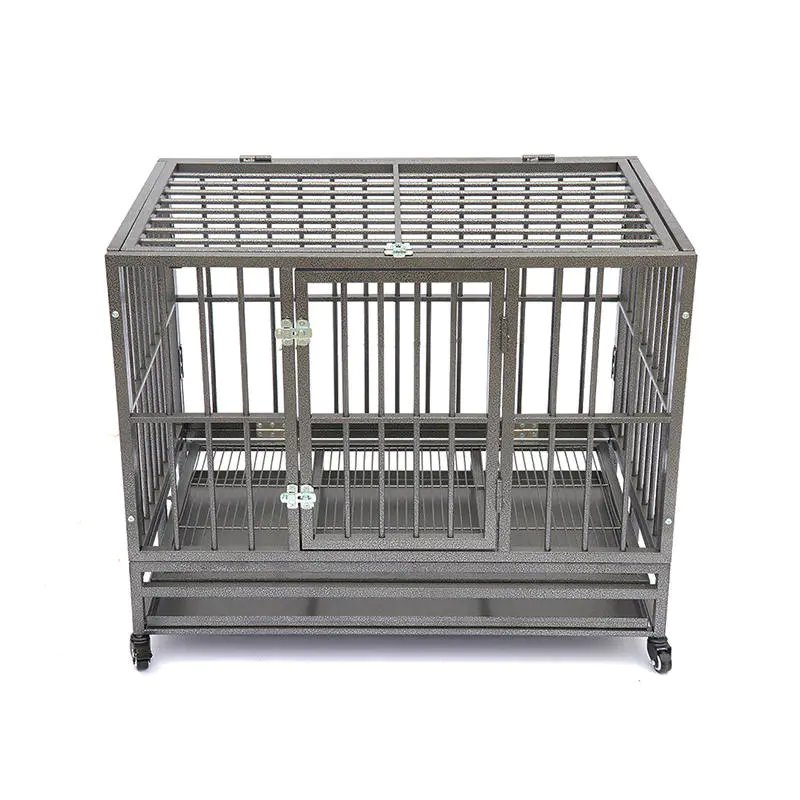
Choosing the right pet cage is one of the most practical decisions a pet owner or retailer can make. A well-designed indoor pet cage provides a safe, comfortable personal space for dogs and cats, supports behavioral training, and protects household furnishings during unsupervised periods. The heavy-duty metal dog cage shown below represents the current standard for secure, durable confinement: thick-gauge square steel tubing, dual-bolt latch doors, a removable slide-out tray, and lockable caster wheels that allow the unit to be repositioned without lifting. Whether you are a pet owner searching for a reliable dog crate or a retailer sourcing wholesale pet cages, understanding the structural, material, and sizing factors covered in this guide will help you select the right product with confidence.
Why the Right Pet Cage Makes a Measurable Difference for Your Pet
Research published in the Journal of Veterinary Behavior (Todd, 2018) confirms that crate training, when introduced correctly, reduces anxiety-related behaviors in dogs by providing a consistent, predictable refuge. A pet cage for training is not a punishment tool — it is a management aid that works with a dog's natural denning instinct. Puppies and newly adopted dogs trained with a crate show lower incidence of destructive chewing, house-soiling, and separation anxiety than those given unsupervised free range before behavioral foundations are established.
For cats, an indoor cat cage or multi-tier cat enclosure serves a different but equally important function: it provides vertical space, a secure retreat during multi-pet introductions, and a controlled recovery environment after veterinary procedures. The American Association of Feline Practitioners (AAFP, 2022) recommends that newly adopted cats be given access to a limited, defined space during the first 7-14 days to reduce stress and support social adjustment.
From a household management perspective, a quality durable pet cage protects furniture and flooring, reduces the risk of ingestion hazards, and gives owners peace of mind during work hours. The total cost of one chewed sofa, one emergency veterinary visit for foreign-body ingestion, or one flooring replacement typically far exceeds the cost of a well-constructed cage used consistently over several years.
Structural Features That Define a High-Quality Metal Dog Cage
Not all metal pet cages are built to the same standard. The structural quality of a cage determines how long it will last, whether it can contain an escape-prone or anxiety-driven dog, and how easy it is to clean and maintain in daily household use. The key structural variables to evaluate are tube gauge, weld quality, door latch design, floor grate and tray construction, and the coating or surface finish applied to resist corrosion.
Frame Material and Gauge
The cage pictured in this article uses square steel tubing rather than round wire rod. Square tube construction provides superior rigidity per unit of material weight: the flat contact surfaces of welded square sections create a larger bonding area, resulting in stronger joints that resist the lateral and torsional forces generated when a large dog pushes, jumps, or leans against the panels. For dogs weighing over 30 kg (66 lb), square-tube frames with a wall thickness of at least 1.5mm are recommended. Round-rod wire cages, while adequate for small and medium breeds, flex more under load and are more susceptible to panel distortion over time.
Door Design and Latch Mechanism
The front panel of this dog crate features a split double-door design: two independently latching panels that can be opened separately or together. Each panel is secured by a heavy-duty bolt latch with a secondary slide lock — a two-stage mechanism that prevents a clever or determined dog from nudging the door open. Independent upper and lower doors also allow ventilation management: the upper panel can be left open for airflow while the lower panel remains secured, which is particularly useful in warm climates or during overnight crating.
Slide-Out Tray and Floor Grate
The removable slide-out tray is one of the most practical features of a well-designed indoor dog cage. It allows waste and bedding to be removed without opening the main door or disturbing the dog — a significant advantage during early housetraining when frequency of cleaning is high. The floor grate elevates the dog above the tray surface, keeping the pet dry and reducing contact with soiled material. Both components should be made from coated steel or heavy-duty plastic for easy washing. On this model, the tray slides out from the front, allowing cleaning in confined spaces where side access is limited.
Caster Wheels and Mobility
Four 360-degree lockable caster wheels allow the cage to be moved freely across hard floors for cleaning or repositioning, then locked in place to prevent the unit from drifting when the dog shifts its weight inside. For cages used in veterinary clinics, grooming salons, or multi-pet households, mobility is a significant operational advantage. The wheels on this unit are rated for the full weight of the cage plus a large dog, and the locking mechanism engages with a simple foot press — no tools required.
The annotated isometric diagram above identifies the five primary structural features that distinguish a well-engineered heavy-duty metal dog cage from a standard wire crate. The removable roof panel allows access from the top for dogs that resist front-entry or for use in veterinary examination settings. The dual bolt latch door system provides two independent locking points on each door panel, preventing escape by dogs that learn to manipulate single-latch mechanisms. The slide-out cleaning tray runs the full floor area of the cage and is accessible from the front without requiring the cage to be moved — a practical advantage in apartments or rooms with limited side clearance. Lockable caster wheels rated for loads of up to 100 kg allow the unit to be repositioned across hard floors without scratching the surface, then fixed in place during normal use. The square-tube steel frame provides structural rigidity superior to round-wire construction, resisting the twisting and panel-flex forces generated by large or active dogs over extended daily use.
How to Choose the Right Size: A Sizing Guide for Dogs and Cats
Correct cage sizing is the single most important factor in whether a pet accepts and uses the cage comfortably. A cage that is too small causes physical discomfort and increases anxiety; a cage that is too large may not provide the enclosed, den-like feeling that makes crate training effective. The standard sizing rule, recommended by the American Kennel Club (AKC), is that the cage should be large enough for the animal to stand at full height, turn around in a full circle, and lie down in a natural stretched position — but not so large that a corner can be used as a toilet area during housetraining.
| Dog Size | Adult Weight | Recommended Cage Length | Typical Breed Examples |
|---|---|---|---|
| Extra Small | Under 5 kg | 45 - 55 cm | Chihuahua, Toy Poodle |
| Small | 5 - 10 kg | 60 - 70 cm | Shih Tzu, Beagle, French Bulldog |
| Medium | 10 - 25 kg | 75 - 90 cm | Cocker Spaniel, Husky, Labrador |
| Large | 25 - 45 kg | 100 - 110 cm | Golden Retriever, German Shepherd |
| Extra Large | Over 45 kg | 120 cm and above | Great Dane, Rottweiler, Mastiff |
To measure your dog for a cage, add 10 to 15 cm to the dog's body length (nose to base of tail) for the cage length, and add 10 cm to the dog's standing shoulder height for the minimum cage height. For breeds still growing, measure at adult size projections provided by the breeder, or select an adjustable-divider cage that can be partitioned smaller during puppyhood and expanded as the dog grows.
Comparing Cage Types: Which Format Suits Your Household?
The pet cage market offers several distinct format categories, each with practical strengths and limitations. Understanding the differences helps buyers — whether purchasing for personal use or sourcing wholesale pet cages for retail — select the format best matched to their specific needs and living environment.
The horizontal bar chart compares four practical performance attributes — durability, portability, ease of cleaning, and containment security — across four common pet cage format categories. Heavy-duty metal cages score highest in durability and containment security, making them the reference standard for large or escape-prone dogs and for commercial or veterinary use where consistent performance under demanding conditions is required. Foldable wire cages offer a balanced profile across all four attributes, making them the most versatile choice for household use with medium-sized dogs that do not have escape-related behavioral issues. Soft fabric crates rank highest for portability, earning their place as travel and event crates for calm, trained dogs, but their low containment security score reflects the risk of zipper failure or fabric tearing when used with anxious or untrained animals. Furniture-style crates prioritize aesthetics and blend into living room environments, trading some portability for the ability to serve as an end table or TV stand when not in active use as a crate. Understanding this tradeoff matrix helps buyers make a rational selection rather than defaulting to the cheapest or most visually appealing option available.
For retailers and distributors sourcing a range of pet products and pet accessories, stocking a mix of heavy-duty metal, foldable wire, and furniture-style formats covers the majority of consumer purchase scenarios. A curated range of small dog cage options (45-70cm) alongside large-breed units creates a complete category offering without excessive SKU complexity.
Surface Finish and Corrosion Resistance in Indoor Pet Cages
The surface coating of a metal pet cage determines its resistance to rust, ease of cleaning, and long-term appearance in a home environment. Three finish types are used across the industry, each with distinct characteristics:
- Powder coating: An electrostatically applied dry powder cured at high temperature, producing a hard, impact-resistant surface that resists chipping and abrasion better than liquid paint. The hammertone grey-brown finish visible on the cage in this article is a powder-coat application. Powder-coated surfaces clean easily with damp cloths and diluted pet-safe disinfectants and maintain appearance with minimal maintenance over years of indoor use.
- Electro-galvanized (zinc plated): A thin zinc layer applied by electrochemical deposition, providing moderate corrosion resistance. Commonly used on wire-rod cages. Adequate for indoor use but less durable than powder coating in humid environments or when regularly exposed to urine splash.
- Hot-dip galvanized: A thicker zinc coating produced by immersing the fabricated component in molten zinc. Provides the highest level of corrosion protection and is used on cages intended for outdoor kennels, humid climates, or commercial breeding facilities where wash-down cleaning is routine.
For indoor pet cage use in a typical household, powder coating is the preferred finish: it is available in a range of colors, produces no sharp surface edges (unlike wire-rod products), and maintains a clean appearance that suits home interiors. Avoid cages with visibly thin paint that chips easily, as bare steel exposed to pet waste corrodes rapidly and may harbor bacteria in surface pitting.
Pet Cage for Training: Introducing Your Dog or Cat Without Stress
A pet cage for training works most effectively when the introduction process is gradual and consistently positive. Forcing a dog or cat into a cage and closing the door before the animal has voluntarily explored it is the most common error in crate training, and reliably produces negative associations that take weeks to reverse. The following approach, based on guidance from the American Veterinary Society of Animal Behavior (AVSAB), is effective for both dogs and cats:
- Placement: Place the cage in a room where the family spends time, with the door open and bedding inside. Allow the animal to investigate freely without pressure for 1-3 days.
- Feeding near the cage: Begin feeding meals near the cage entrance, then progressively move the bowl inside over 3-5 days until the animal eats comfortably with the door closed.
- Short closures: After the animal enters willingly, close the door for 5-10 minutes while remaining in the room. Gradually extend duration over 1-2 weeks.
- Extended absences: Once the animal is comfortable for 30-minute closures, begin leaving the room. Build up to 2-3 hour periods before leaving the house.
- Overnight crating: Introduce overnight crating only after the animal is reliably calm during daytime closures of equivalent duration. Place the cage in or near the bedroom to minimize distress from isolation.
Adult dogs and cats adopted from shelters may require a longer adjustment period than puppies. Patience and consistency are more effective than speed in crate training. A durable pet cage with good ventilation, familiar bedding, and access to water during crating periods supports a positive training outcome.
Global Pet Industry Trends and the Growing Market for Quality Pet Accessories
The global pet care market is one of the most consistently growing consumer segments over the past decade. According to the American Pet Products Association (APPA) 2023-2024 National Pet Owners Survey, 66 percent of U.S. households — approximately 86.9 million homes — own at least one pet. Global pet care expenditure reached an estimated USD 261 billion in 2022 and is projected to exceed USD 350 billion by 2027, driven by the humanization of pets, rising disposable income in emerging markets, and growing awareness of behavioral training benefits (Grand View Research, 2023).
The pet cage and confinement product segment benefits directly from these macro trends. As more households adopt dogs and cats as primary companions, demand for structured, high-quality living and management products grows alongside the overall market. The shift toward remote and hybrid work has also accelerated adoption of dog crate and training products as pet owners spend more time at home and invest more in their pets' behavioral management and physical environment.
The line chart tracks the estimated global pet care market from 2019 through a projected figure for 2027, based on data reported by the American Pet Products Association and market projections from Grand View Research (2023). The market grew steadily from approximately USD 190 billion in 2019 to USD 261 billion in 2022, with the pandemic period of 2020-2021 showing an accelerated adoption rate as millions of households acquired pets during extended home confinement periods. Projections indicate continued growth to approximately USD 355 billion by 2027, representing a compound annual growth rate (CAGR) of approximately 4.5 percent over the forecast period. This sustained market expansion directly supports demand for household pet products, including both everyday consumables and durable pet accessories such as cages, playpens, and sleeping products. For manufacturers and retailers sourcing wholesale pet cages and related products, the trend confirms that the pet housing category represents a structurally growing, recession-resilient segment worth sustained investment in product quality and range depth.
Foldable Pet Cage and Playpen: Flexibility for Modern Households
The foldable pet cage and pet playpen category has grown rapidly in response to the needs of apartment dwellers, frequent travelers, and multi-pet households that require cage configurations that can be set up, stored, and relocated with minimal effort. A well-engineered foldable cage collapses flat in under 60 seconds and stores under a bed or in a closet, occupying a fraction of its operational footprint.
The pet playpen format — an open-top or closable enclosure without a floor panel, available in panel counts of 6 to 12 sections — offers flexible configuration for indoor and outdoor use. For households with young puppies that require a contained play area during owner supervision, an octagonal or hexagonal pet playpen provides substantially more movement space than a conventional crate at a comparable cost. Playpens are also widely used for rabbits, guinea pigs, and small dogs in shared living spaces where a permanent cage installation is not practical.
Key quality indicators for foldable metal cages include the thickness and material grade of the wire panels, the quality of the fold-lock latches that hold the unit rigid in the open position, and the surface coating uniformity at fold lines — which are the highest-stress points and the most common location for coating failure and corrosion initiation.
About Fujian Pet Home Co., Ltd.
Fujian Pet Home Co., Ltd. was founded in 2009 and operates as an integrated manufacturing and trading company specializing in professional design and export-oriented production of pet cages and household products. With more than 15 years of experience in pet cage production and sales, the company has developed a comprehensive product range covering metal pet cages, dog crates, pet playpens, soft pet crates, furniture-style pet crates, cat litter boxes, wooden dog houses, rabbit hutches, chicken coops, cat trees, and pet beds — more than 150 products in total.
Production facilities include two dedicated metal dog cage production lines and one furniture-style pet crate production line, supporting an export volume of more than 50 containers per month. Products are exported to over 20 countries, including the United States, Australia, New Zealand, Japan, Germany, the Netherlands, France, Switzerland, Norway, Denmark, Poland, Belgium, the Philippines, Mexico, Greece, Taiwan, and Hong Kong. As a professional pet cages manufacturer and pet household products factory, Fujian Pet Home Co., Ltd. maintains a dedicated professional design and sales team and holds quality as its core operational commitment — providing reliable pet products and responsive service to both domestic and international customers.
Frequently Asked Questions
Q1. How large should a dog cage be for my breed?
Add 10-15 cm to your dog's body length (nose to tail base) for cage length, and 10 cm to shoulder height for the minimum internal height. The dog should be able to stand, turn around, and lie stretched out without touching the walls. For puppies still growing, select a cage with a divider panel that can be removed as the dog reaches adult size.
Q2. Is a heavy-duty metal dog cage suitable for indoor home use?
Yes. Powder-coated heavy-duty metal cages are designed specifically for indoor use. The surface finish resists rust and is easy to wipe clean with pet-safe disinfectants. Lockable caster wheels allow repositioning across hard floors without scratching. The cage is well-suited to living rooms, bedrooms, and utility spaces in standard home environments.
Q3. How long should I leave my dog in a crate each day?
As a general guideline from the Humane Society of the United States, adult dogs should not be crated for more than 6-8 hours at a time, and puppies under 6 months should not exceed 3-4 hours. Regular exercise and interaction before and after crating periods support healthy behavior. The crate should always be a positive, voluntary space — never used as punishment.
Q4. What is the difference between a foldable pet cage and a standard metal dog cage?
A foldable cage uses hinged wire panels that collapse flat for storage and transport, making it more portable but generally lighter in construction than a heavy-duty square-tube cage. A standard heavy-duty metal cage uses welded rigid frames with thicker-gauge tubing, offering superior containment strength and durability for large or escape-prone dogs, at the cost of weight and reduced portability.
Q5. Can pet cages be ordered in bulk for wholesale or retail distribution?
Yes. Wholesale pet cage orders are available for retailers, distributors, and pet store chains. Minimum order quantities, available sizes, and packaging specifications can be discussed directly with the manufacturer. Custom labeling and packaging options are typically available for established wholesale accounts, and many manufacturers offer product testing documentation and compliance certificates for major import markets including the United States, Europe, and Australia.
Q6. How do I clean and maintain a metal pet cage?
Remove the slide-out tray and floor grate weekly for washing with warm water and a pet-safe enzymatic cleaner. Wipe the frame bars and interior surfaces with a damp cloth and allow to air dry fully before replacing bedding. Inspect latch mechanisms monthly and apply a small amount of silicone lubricant if latches feel stiff. Avoid bleach-based cleaners on powder-coated surfaces as they can degrade the coating over time.
Related Products
Your pet deserves good, Contact now.
Whether you want to become our partner or need our professional guidance or support in product selections and problem solutions, our experts are always ready to help within 12 hours globally.
 CONTACT US

QUICK LINKS
PRODUCTS
-
Address
- Room 501,Unit 1 ,Buliding 6,Wuyi Guoji Xincheng,No.379,Zhuxi Avenue,Jianyang District,Nanping City, Fujian Province.
- No. 139-6 , Tongyu Middle Road, Nantong, Jiangsu, China
-
Mobile
- +86-13616986006
-
E-mail :

Copyright © 2025 Pet Home (Haian) Co., Ltd All Rights Reserved. Custom Pet Cages Manufacturers OEM/ODM Pet Household Products Factory

