
 EN
EN
 English
 中文简体
中文简体

Metal Dog Cage Manufacturer
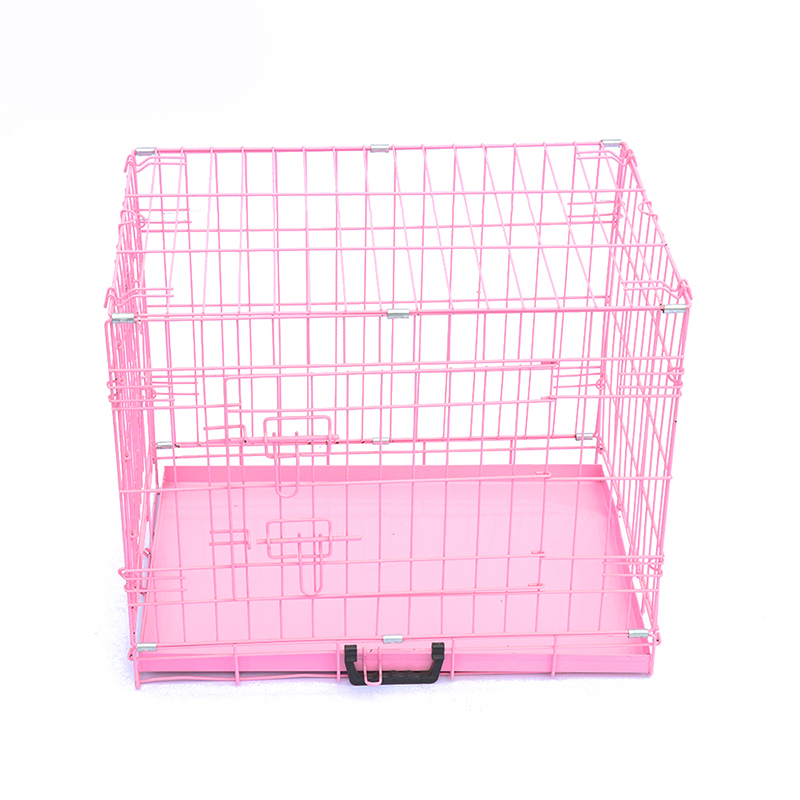
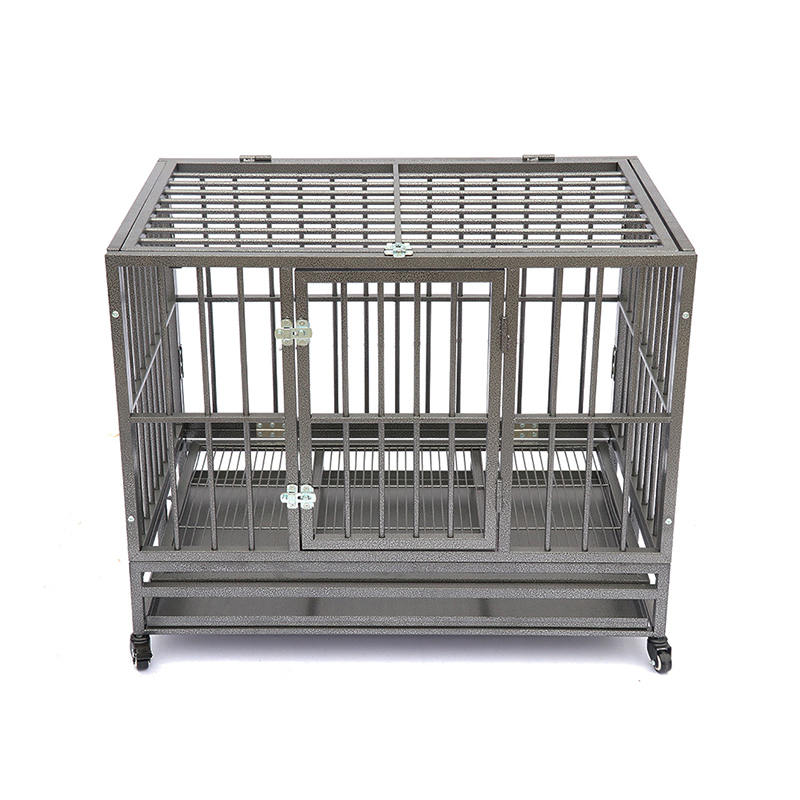
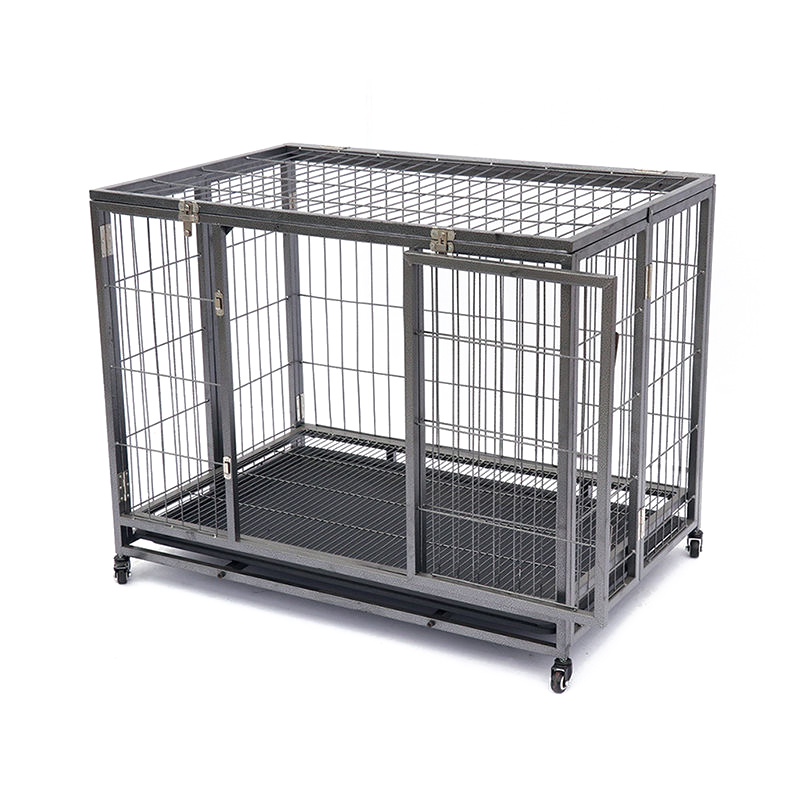
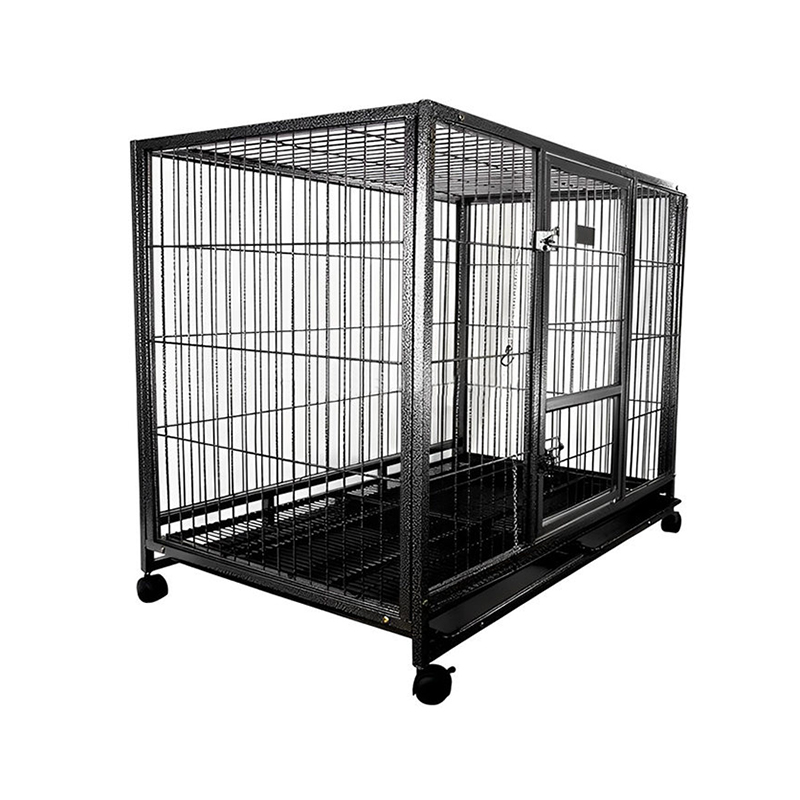
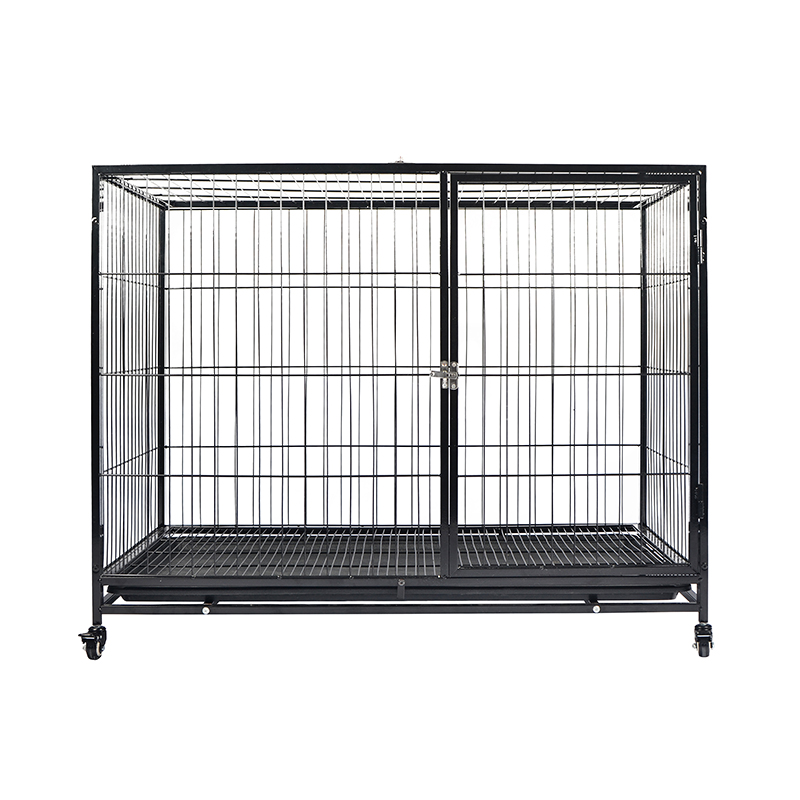
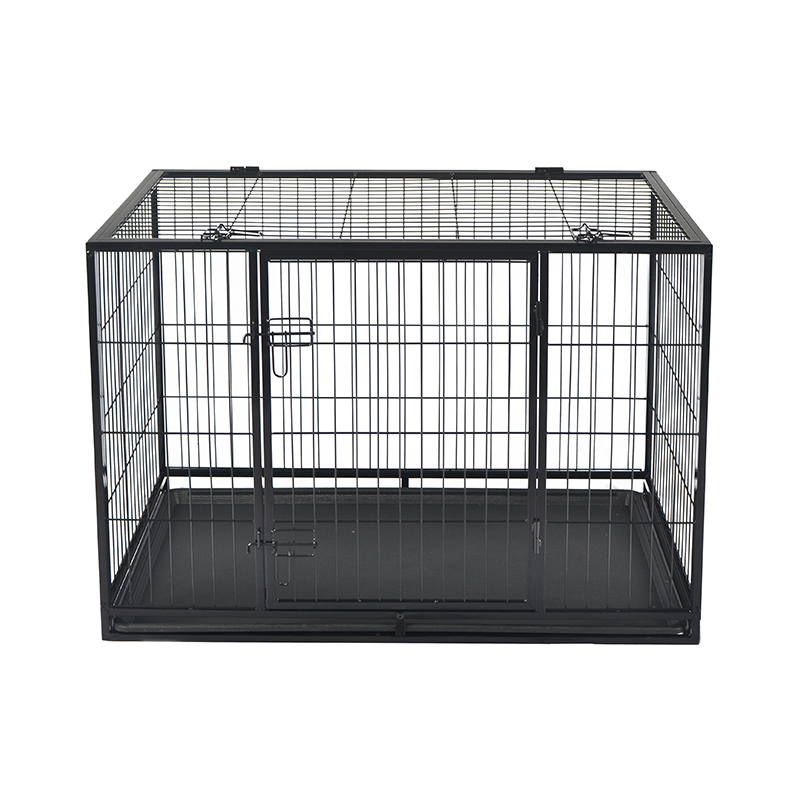
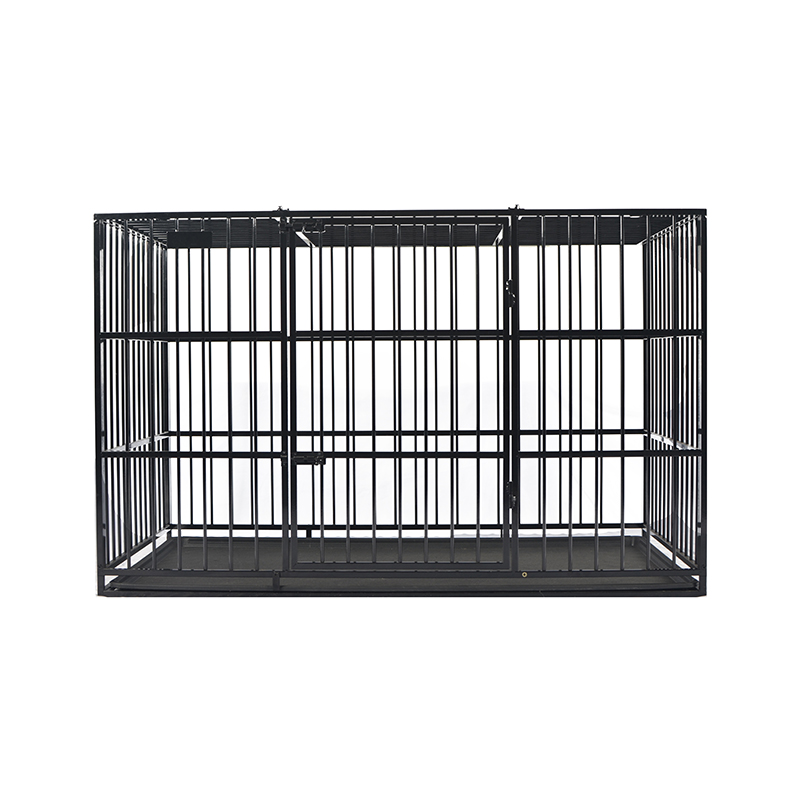
Featuring ventilation, stability and easy cleaning, metal dog cage are the preferred choice of many dog-owning families. Whether as a fixed residence for daily rest, or as a practical tool for training and transportation, metal dog cage provide a safe and comfortable space for dogs while meeting the different needs of their owners.
The metal dog cage is made of mild steel Q195 & Q235, sprayed/galvanized, which is bite and impact resistant and suitable for many types of dogs. The metal mesh structure ensures air circulation and avoids stuffy heat, making the dog more comfortable; removable tray or open design makes it easy to clean up hair and stains and maintain hygiene; reinforced latch + anti-scratch rounded corners design prevents the dog from escaping or accidental injuries; and some of the styles can be collapsed for storage, making it convenient for traveling or temporary use.
The metal dog cage can be used in a variety of scenarios, it can be used in the daily family to provide a fixed rest area for the dog and cultivate the dog's independence and sense of security; when traveling, it is convenient to carry the dog, which not only allows the dog to enjoy the joy of the journey, but also ensures the safety of the journey; the crate can also help puppies adapt to the life in the crate, and assist in potty and command training.
Whether it's a large dog such as a Golden Retriever or Husky, or a small to medium-sized dog such as a Teddy or Corgi, a metal dog crate can provide them with a long and reliable living experience. When choosing a dog kennel, pay attention to the size of the crate (make sure your dog can stand and turn around freely) and the details of the workmanship (strong welds and no sharp edges) to create a safe and comfortable space for your dog!

Pet Home (Haian) Co., Ltd
Fujian Pet Home Co., Ltd. founded in 2009. We are an integrated set of industry and trade company,which have professional design, production for export pet cage. More than 15 years experience in pet cage production and sales . Main products included: Metal pet cage, Dog cage,pet playpen, soft pet crate, furniture style pet crate,cat litter box, wooden dog house, rabbit hutch, chicken coop, cat tree, pet bed and more than 150 products.
As a professional OEM Metal Dog Cage Manufacturers and ODM Metal Dog Cage Factory, Our products mainly exported to United States, Australia, New Zealand, Japan, Germany, Netherlands, France, Switzerland, Norway, Denmark, Poland, Belgium, Philippines, Mexico, Greece, Taiwan, Hong Kong and so on more than 20 countries. Our company have professional design and sales team. Two metal dog cage production line ,one furniture style pet crate production line. More than 50 containers been exported per month. The company provide quality products and service to all domestic and foreign customer
VIEW MORE
Products
Related Products
News
News & Update
-
Oct 05. 2026
Crate Size by Breed: A Practical Sizing Guide for Pet Owners and WholesalersA customer once ordered a 36-inch crate for a Labrador Retriever puppy because an online chart listed “Labrador” under medium. Six weeks later, the puppy could not stand up without pressing his head against the top bars, and the retailer absorbed a return, a replacement shipment, and a frustrated review. That single m...
Read More -
Sep 28. 2026
Cleaning Cages: A Practical Guide from a Pet Cage Manufacturer and SupplierA groomer emails about a rust ring that appears on a dog crate tray three months after delivery. A cat owner says the litter cabinet still smells after a full scrub. A parrot breeder cannot lift dried droppings off a perch without a chisel. Every one of those complaints gets filed under cleaning cages, and every one o...
Read More -
Sep 21. 2026
How to Clean the Cage: Dog, Cat, Bird, and Small Animal Cleaning GuideHow often you clean the cage is just as important as how you clean it. The goal is not to clean the cage over and over; the goal is to clean the cage consistently and correctly so that your pet stays healthy and your enclosure lasts longer. This guide gives you a practical routine for dog crates, cat cages, bird cages...
Read More
Message Feedback
knowledge
Industry knowledge
1. What Defines a Metal Dog Cage
A metal dog cage is a fixed-frame enclosure built from welded or bolted steel wire, designed to give a dog a secure, contained space for rest, containment, and crate training. Unlike soft-sided carriers, a metal dog cage relies on rigid panels and a solid or slide-out tray base, which makes it suitable for dogs that chew, scratch, or apply repeated pressure against enclosure walls. The core function of a metal dog cage centers on three things: containment strength, airflow through open wire panels, and a door mechanism that is both secure for the dog and convenient for daily handling. Within this category, metal dog cage designs vary by panel configuration, wire gauge, folding mechanism, and overall footprint, which together determine whether a specific model suits a small apartment, a multi-dog household, or a working kennel setting. This page walks through the structural principles behind metal dog cage design, common configurations available in this category, and the selection factors that matter most when comparing options for a specific dog size or use case.
2. Matching Cage Size to Dog Weight
Correct sizing is the single most common question buyers face when comparing a metal dog cage, since a cage that is too small restricts natural movement while one that is too large can undermine crate training for puppies. The bubble chart below plots general recommended cage length against dog weight across five common size categories, with bubble size representing typical cage height. This visual gives a fast way to see how space requirements scale non-uniformly as dog weight increases. It also helps explain why a single cage model cannot reasonably serve every dog size within a household.
The bubble chart shows a clear upward pattern across both axes, with cage length and bubble size both expanding as dog weight moves from toy breeds toward giant breeds. Toy breed dogs are generally comfortable in cages around twenty-four inches long, since these dogs need enough room to stand, turn, and lie down without excess empty space around them. Small breed dogs typically move up to around thirty inches, reflecting their slightly larger body length and the need for a bit more turning room inside the enclosure. Medium breed dogs require cages closer to thirty-six inches, and this size range often represents the most commonly sold configuration within a metal dog cage product line. Large breed dogs need cages around forty-two inches, since insufficient length can force the dog into a cramped resting position that affects joint comfort over time. Giant breed dogs require the longest cages on this chart, often reaching forty-eight inches or more, paired with taller panel heights so the dog can stand fully upright without ducking. Selecting a cage based on a dog's adult weight rather than its current puppy size is a common recommendation among trainers, since undersized cages purchased for puppies often need replacing as the dog grows. It is worth noting that crate training guidance sometimes recommends a divider panel for puppies, allowing a larger cage to be sized down temporarily and then expanded as the dog matures. This approach can reduce the need to purchase multiple cages across a dog's early life stages. Buyers managing a product catalog across these five size categories should ensure each size includes appropriate door placement and tray depth for the corresponding dog size. This chart offers a practical starting point for anyone comparing metal dog cage dimensions against a specific dog's current or expected adult weight.
3. Wire Gauge and Structural Load Capacity
Wire gauge is a core engineering factor in metal dog cage construction, since it determines how much pressure the panels can withstand from a dog pushing, scratching, or leaning against the enclosure walls. The stepped line chart below tracks relative load resistance across four common wire gauge classifications used in this category. This comparison helps buyers understand why heavier dogs or more persistent chewers generally require a thicker gauge wire than smaller, calmer dogs. It also supports conversations between buyers and suppliers about which gauge is appropriate for a specific product line or end-use scenario.
This stepped line chart illustrates load resistance as a series of distinct tiers rather than a smooth gradual increase, which reflects how wire gauge classifications work in practice as fixed manufacturing standards. Sixteen gauge wire sits at the lighter end of this comparison, generally suited to smaller dogs that do not apply significant pressure against the cage walls during normal use. Fourteen gauge wire steps up to moderate load resistance, a common choice for medium-sized dogs with typical behavior and moderate activity levels inside the enclosure. Twelve gauge wire provides notably higher resistance, often selected for larger or more active dogs that may lean, paw, or push against panels more frequently throughout the day. Ten gauge wire represents the heavy-duty end of this comparison, typically reserved for large or giant breed dogs, multi-dog households, or working environments where cage panels face repeated stress. Choosing a wire gauge one tier above what seems strictly necessary is a common practice among buyers prioritizing long-term structural reliability, since panels facing daily use benefit from a margin of extra resistance. It is worth noting that wire gauge is only one part of overall cage strength, since weld quality and frame bracing also significantly affect how well a cage holds up under sustained pressure. A thinner gauge combined with strong welds can sometimes outperform a thicker gauge with poor connection points, which is why buyers should ask suppliers about both specifications together. Coating quality also interacts with gauge selection, since a well-coated moderate gauge wire can offer better corrosion resistance than an uncoated heavier gauge exposed to moisture. Buyers building a product line across multiple dog sizes often standardize gauge selection by size tier, matching heavier gauge wire to their larger cage models. This comparison offers a practical framework for aligning wire gauge choice with the intended dog size and expected use pattern.
4. Single-Door Versus Double-Door Configurations
Door configuration is another meaningful design choice within the metal dog cage category, since it affects how the cage can be positioned in a room and how convenient it is for daily handling. The arc-style comparison below scores single-door and double-door configurations across placement flexibility, on a scale reflecting how many practical placement options each configuration supports. This comparison is useful for buyers deciding between these two configurations based on the room layout where the cage will typically sit. It also helps clarify why double-door models, while offering more flexibility, are not automatically the better choice in every household.
These two arc gauges compare single-door and double-door metal dog cage configurations on placement flexibility, showing double-door models covering a wider arc of the scale than single-door models. A single-door cage generally works best against a wall or in a corner, since the door typically opens from one fixed side and does not require clearance on multiple sides of the enclosure. A double-door cage adds a second access point, usually on an adjacent or opposite panel, which allows the cage to sit in the middle of a room or in tighter spaces where only one side is easily reachable. This added flexibility can be particularly useful in smaller apartments or multi-purpose rooms where furniture arrangement changes periodically. However, double-door configurations are not automatically the better option for every household, since a single, well-placed door is often sufficient for buyers with a fixed, dedicated spot for the cage. Placement flexibility matters most when the cage location is likely to change over time, such as in rental housing or homes where room layouts are adjusted seasonally. Double-door models typically involve a slightly more complex frame structure to accommodate the second opening, which is a reasonable trade-off for the added flexibility they provide. Buyers working with limited space should measure the room from multiple angles before deciding, since a double-door cage only delivers its flexibility advantage if the room actually benefits from a second access point. For working kennels or multi-dog households, double-door configurations can also simplify handling during feeding or cleaning by allowing staff to approach from whichever side is most convenient. Single-door models remain a practical, straightforward choice for most household settings where the cage has one consistent location. This comparison is best used alongside the earlier sizing and gauge charts, since door configuration should be considered together with cage size and wire strength rather than in isolation.
5. Common Metal Dog Cage Configurations
With sizing, gauge, and door configuration covered, it is worth reviewing the broader configurations that a metal dog cage typically comes in, since these shape how the cage folds, transports, and integrates into daily routines.
(1) Fold-and-Carry Wire Cages
Fold-and-carry cages collapse flat along hinged panel joints, making them practical for travel, storage, or households that need to set up and break down the cage periodically.
(2) Heavy-Duty Fixed-Frame Cages
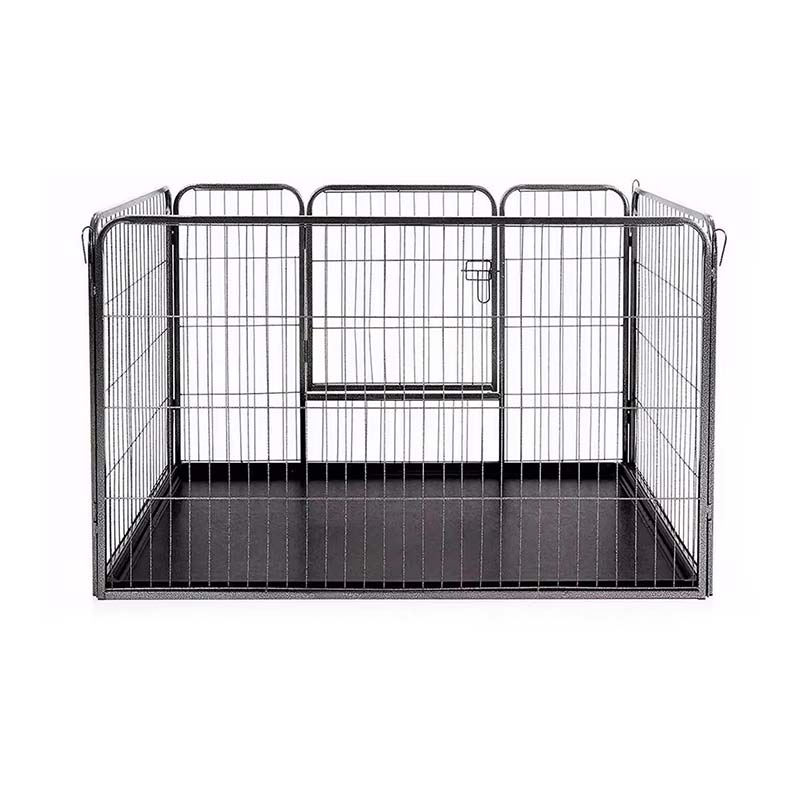
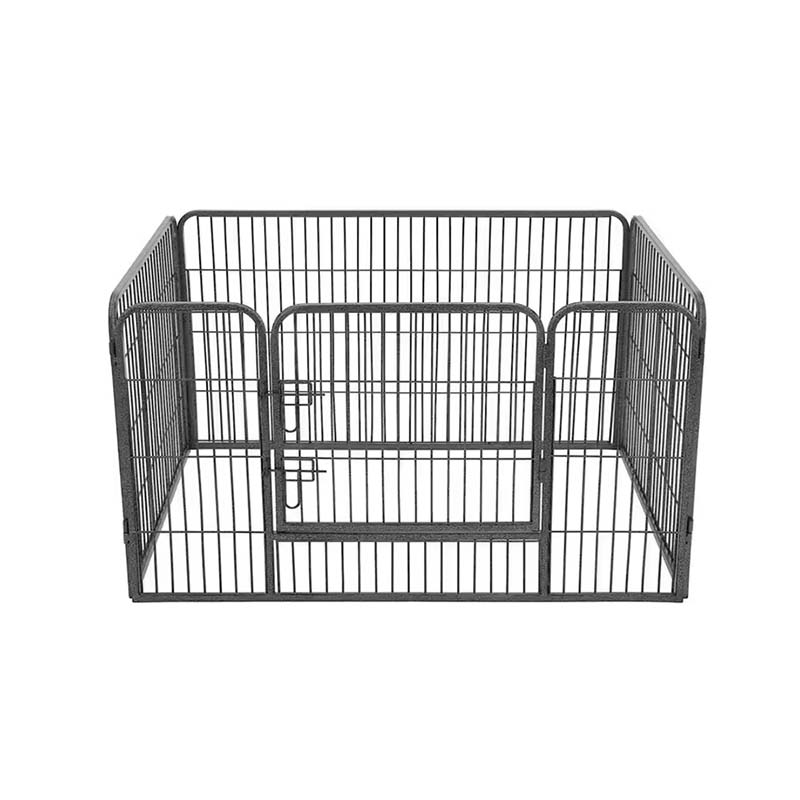
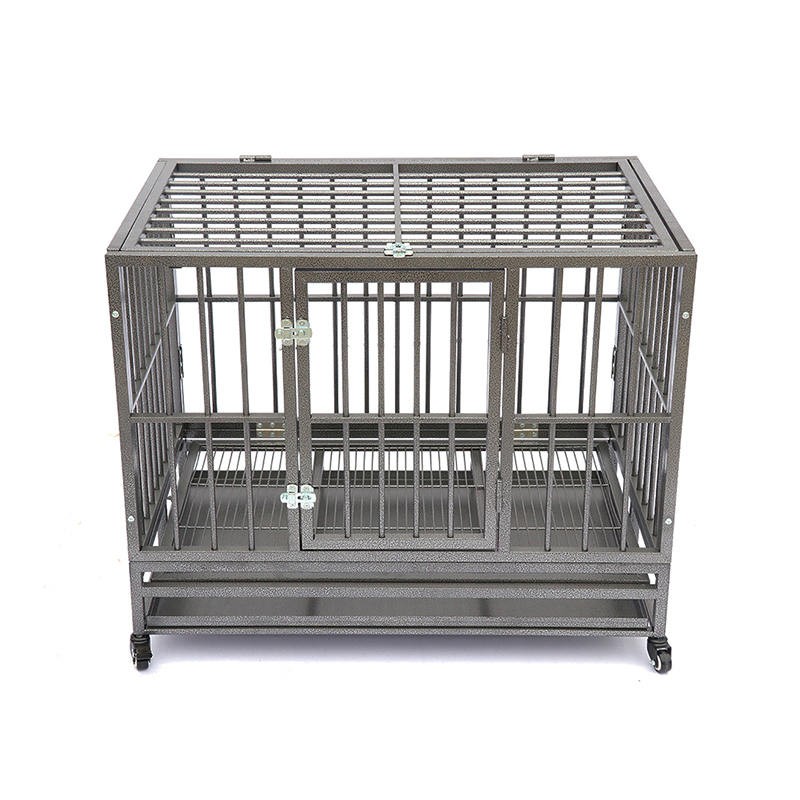
Heavy-duty fixed-frame cages use bolted or welded joints rather than folding hinges, prioritizing structural rigidity for large, strong, or persistent dogs over portability.
(3) Furniture-Style Dog Crates
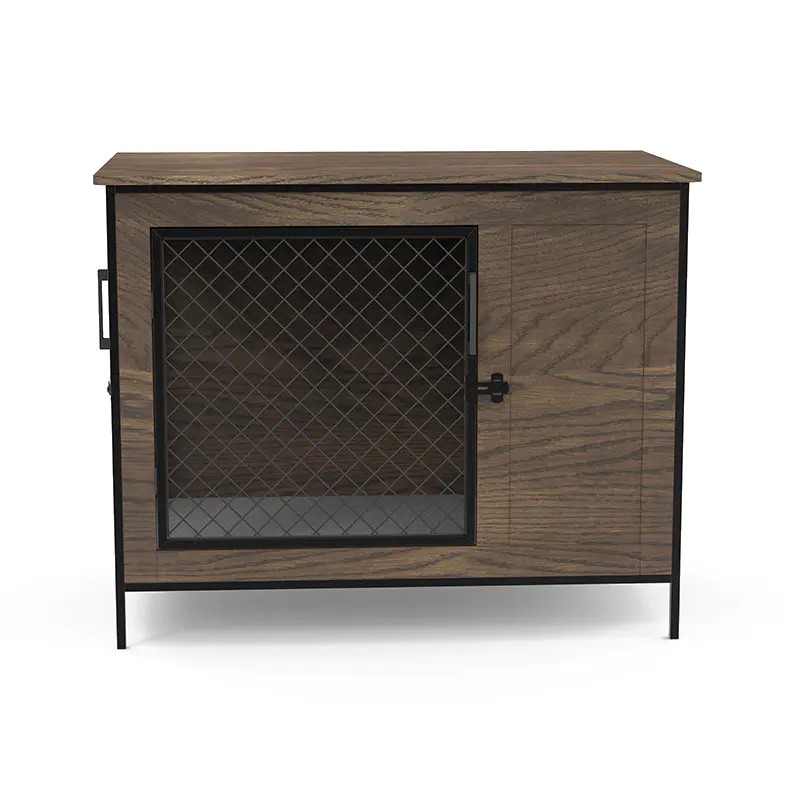
Furniture-style crates pair a wood panel exterior with an internal metal wire frame, allowing the cage to function as a side table or decorative piece within a living space.
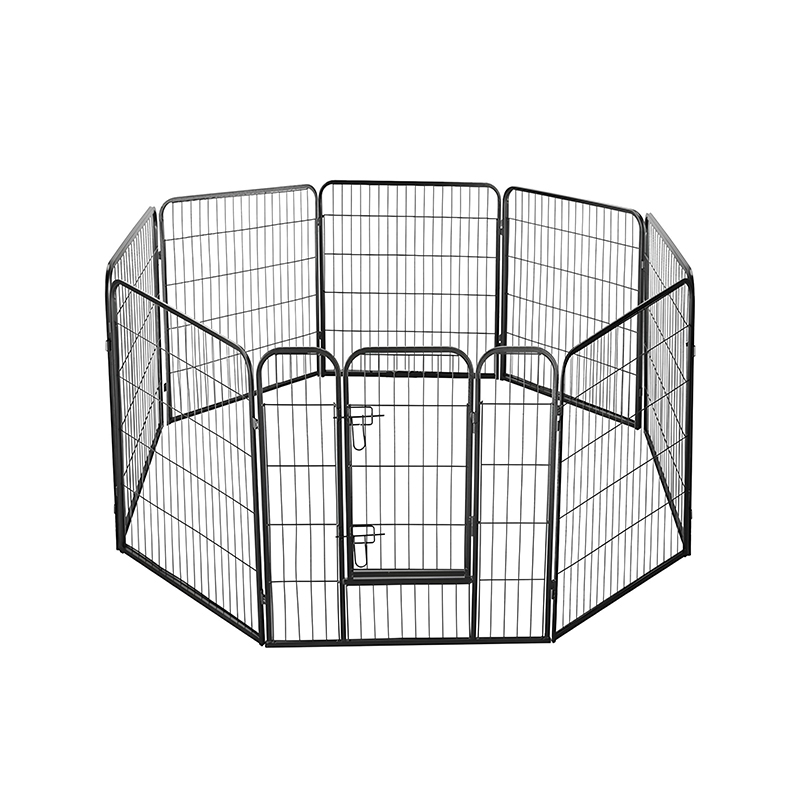
(4) Modular Multi-Panel Playpens
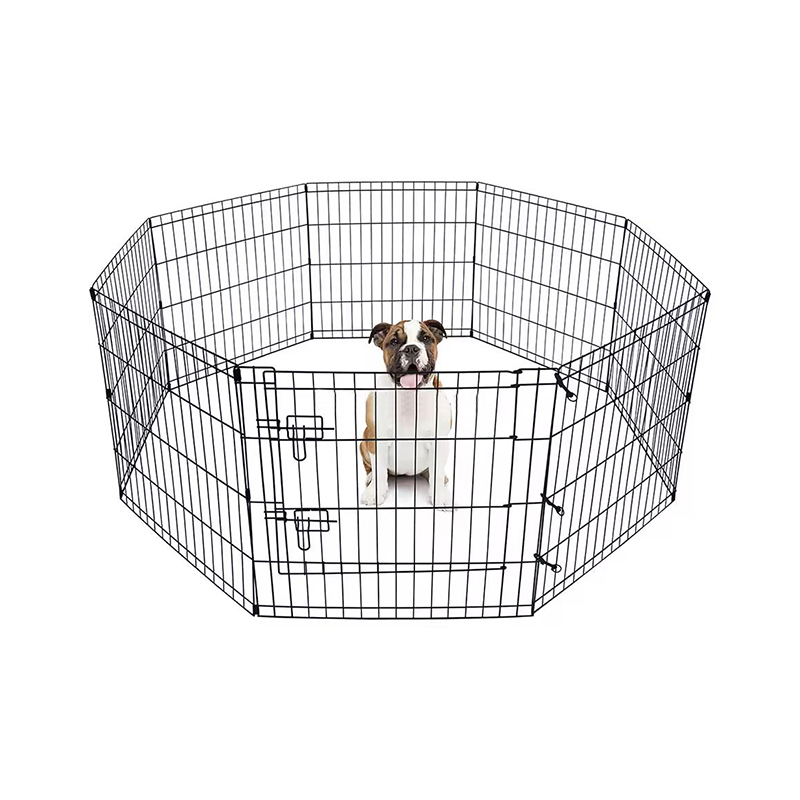
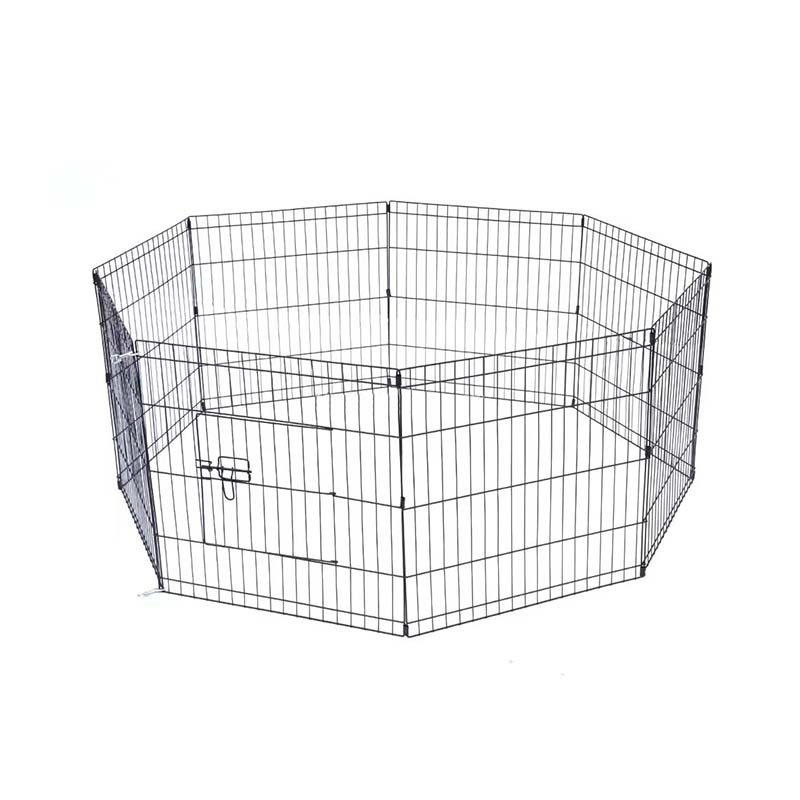
Modular playpens use individual connecting panels rather than a fixed box shape, letting owners configure the enclosure into different shapes and sizes depending on available space.
| Configuration | Portability | Structural Rigidity | Typical Use Case |
|---|---|---|---|
| Fold-and-Carry Wire Cage | High | Moderate | Travel, temporary setup |
| Heavy-Duty Fixed-Frame Cage | Low | High | Large dogs, kennels |
| Furniture-Style Dog Crate | Low | Moderate | Home decor-focused owners |
| Modular Multi-Panel Playpen | Moderate | Moderate | Flexible indoor or outdoor space |
6. Application Scenarios and Selection Guidelines
Selecting the right metal dog cage depends on the dog's size and temperament, the household layout, and how often the cage needs to be moved or reconfigured. The points below summarize the main factors buyers typically weigh when narrowing down a configuration for a specific situation.
- Size the cage to the dog's expected adult weight rather than current puppy size, using a divider panel if needed during growth.
- Match wire gauge to the dog's size and behavior, favoring heavier gauges for larger or more persistent dogs.
- Choose single-door or double-door configurations based on how much the cage's room placement is likely to change.
- Consider fold-and-carry designs for travel or temporary setup, and fixed-frame designs for permanent, high-load use.
- Evaluate tray depth and removability for daily cleaning convenience.
- Account for household layout when choosing between a compact wire cage and a larger furniture-style crate.
7. Maintenance and Care Guidance
Regular maintenance keeps a metal dog cage structurally sound and sanitary over its working life. The slide-out tray should be cleaned on a consistent schedule to prevent buildup of hair, dirt, and moisture that can lead to odor or surface corrosion underneath. Door latches and hinges should be checked periodically for smooth operation, since repeated daily use can gradually loosen fittings or wear down latch mechanisms. Welded joints and frame corners should be inspected occasionally for signs of stress, particularly on cages housing larger or more active dogs that apply frequent pressure against the panels. Coated wire surfaces should be wiped down with a soft cloth and mild cleaning solution rather than abrasive scouring pads, which can strip the coating and expose bare metal to moisture over time.
8. Production Background for This Category
Fujian Pet Home Co., Ltd. has produced metal pet cages and related pet housing products since 2009, with dedicated production lines supporting metal dog cage manufacturing alongside furniture-style pet crate assembly. This manufacturing background covers wire welding, frame coating, and tray molding processes that directly relate to the gauge and structural comparisons discussed on this page. Export experience across more than twenty countries has also shaped how sizing and configuration options are developed across this product line, since different markets often favor different cage styles and dimensions. Buyers evaluating a metal dog cage supplier for retail or wholesale distribution often consider this kind of production consistency when comparing options for larger order volumes.
9. Frequently Asked Questions
What size metal dog cage does my dog need?
Cage size should be matched to the dog's expected adult weight and length, allowing enough room to stand, turn, and lie down comfortably.
Is a thicker wire gauge always better?
A thicker gauge offers more load resistance, but weld quality and coating also significantly affect overall cage durability.
Should I choose a single-door or double-door cage?
Double-door cages offer more placement flexibility, while single-door cages work well when the cage has one fixed, consistent location.
Can a metal dog cage be used for crate training?
Yes, metal dog cages are commonly used for crate training, often with a divider panel to adjust interior space as a puppy grows.
How often should the tray be cleaned?
The slide-out tray is typically cleaned every few days, with more frequent spot cleaning if waste or spills occur.
Are furniture-style crates as durable as wire cages?
Furniture-style crates generally offer moderate durability, since their internal wire frame provides containment while the wood exterior focuses on appearance.
Your pet deserves good, Contact now.
Whether you want to become our partner or need our professional guidance or support in product selections and problem solutions, our experts are always ready to help within 12 hours globally.
 CONTACT US

QUICK LINKS
PRODUCTS
-
Address
- Room 501,Unit 1 ,Buliding 6,Wuyi Guoji Xincheng,No.379,Zhuxi Avenue,Jianyang District,Nanping City, Fujian Province.
- No. 139-6 , Tongyu Middle Road, Nantong, Jiangsu, China
-
Mobile
- +86-13616986006
-
E-mail :

Copyright © 2025 Pet Home (Haian) Co., Ltd All Rights Reserved. Custom Metal Dog Cage Manufacturers Metal Dog Cage Factory

