
 EN
EN
 English
 中文简体
中文简体

What Is the Best Balcony Cat Enclosure for Indoor Cats?
 2026.07.15
 Industry News
Content
- 1 What Is a Balcony Cat Enclosure and Why Do Indoor Cats Need Outdoor Access?
- 2 Types of Animal Cages and Enclosures: A Comprehensive Classification
- 3 Key Selection Criteria for Balcony Cat Enclosures and Animal Cages
- 4 Cages for Small Animals: Species-Specific Requirements and Design Standards
- 5 The Growing Pet Ownership Market: Trends Driving Demand for Animal Cages
- 6 How to Set Up and Enrich a Balcony Cat Enclosure: A Practical Owner's Guide
- 7 About Fujian Pet Home Co., Ltd.
- 8 Frequently Asked Questions
A balcony cat enclosure is the most practical solution for apartment and condo owners who want to give their indoor cats supervised outdoor access without the risks of free roaming. Across the global pet care industry, animal cages and outdoor enclosures have evolved from basic wire containment into sophisticated, enrichment-focused habitats that address both pet welfare and owner peace of mind. Whether you are searching for a balcony cat enclosure to extend your apartment cat's living space, cages for small animals such as rabbits, guinea pigs, or chinchillas, or larger modular outdoor cat runs, the selection criteria involve safety, material durability, ventilation, ease of cleaning, and suitability for the specific animal species. This guide draws on published pet welfare research, industry data, and practical product knowledge to help buyers make informed decisions — and introduces the product range of Fujian Pet Home Co., Ltd., a manufacturer with over 15 years of specialized experience in metal and furniture-style pet enclosures exported to more than 20 countries.
What Is a Balcony Cat Enclosure and Why Do Indoor Cats Need Outdoor Access?
A balcony cat enclosure — also called a "catio" when it occupies a full patio or outdoor space — is a secure, escape-proof structure that attaches to or occupies a residential balcony, allowing a cat to experience outdoor sights, sounds, smells, and fresh air while remaining fully contained and protected from hazards including traffic, predators, disease transmission from feral animals, and fall risk. The structure typically consists of a powder-coated metal wire grid or mesh framework with solid panel accents, integrated perches or shelving, a door for human entry, and a floor panel or attachment point to the balcony railing system.
The welfare case for providing outdoor-enriched environments to indoor cats is well-documented. According to a study published in the Journal of Feline Medicine and Surgery (Rochlitz, I., 2005, "A review of the housing requirements of domestic cats"), indoor cats that lack environmental enrichment — including visual access to outdoor stimuli, vertical climbing structures, and varied olfactory experiences — are significantly more likely to exhibit stereotypic behaviors, stress-related health issues, and obesity. A properly designed balcony cat enclosure directly addresses these welfare deficits by providing outdoor sensory stimulation within a safe boundary.
From the owner's perspective, a balcony cat enclosure eliminates the anxiety associated with allowing cats onto open balconies, where fall incidents — sometimes called "high-rise syndrome" — represent a documented veterinary emergency in urban settings. The American Veterinary Medical Association (AVMA) notes that falls from windows and balconies are among the most common traumatic injuries presented at urban veterinary clinics. Containment through a proper enclosure structure mitigates this risk entirely.
Figure 1: Isometric structural annotation of a typical modular balcony cat enclosure. The heavy-gauge powder-coated steel frame forms the load-bearing skeleton, with wire mesh panels providing ventilation and visibility on all sides. The interior perch shelf provides elevated resting space that satisfies cats' natural preference for high vantage points, as documented in feline behavioral research (Ellis, S.L.H. et al., ISFM Feline Environmental Needs Guidelines, 2013). The hinged access door allows owners to interact with the cat and perform cleaning without disassembling the structure. Railing clamp or floor anchor attachments secure the enclosure to the balcony structure — these must be appropriately rated for the combined weight of the enclosure and the occupant. Understanding these structural components helps buyers evaluate the engineering quality and safety of different balcony cat enclosure products before purchase.
Types of Animal Cages and Enclosures: A Comprehensive Classification
The animal cages market encompasses a wide spectrum of products designed for different species, living environments, and owner preferences. Understanding the major categories allows buyers to match their specific need to the appropriate product type rather than defaulting to a generic selection.
Outdoor Cat Runs and Balcony Enclosures
Designed specifically for cats, these range from compact balcony attachments (typically 0.5 to 1.5 square meters of floor area) to large modular garden runs of 4 to 12 square meters or more. Materials include galvanized or powder-coated steel wire, stainless steel mesh, and aluminum framing. The best designs incorporate UV-stabilized polycarbonate or metal roof panels to provide weather protection, elevated shelves or walkways for enrichment, and secure double-door systems to prevent escape during entry and exit.
Metal Dog Cages and Pet Playpens
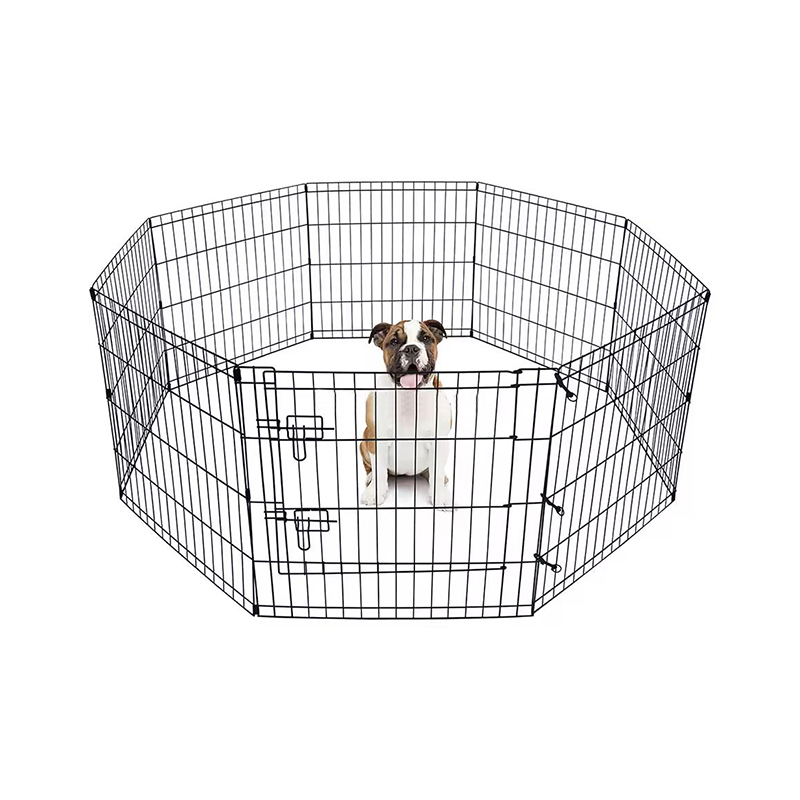
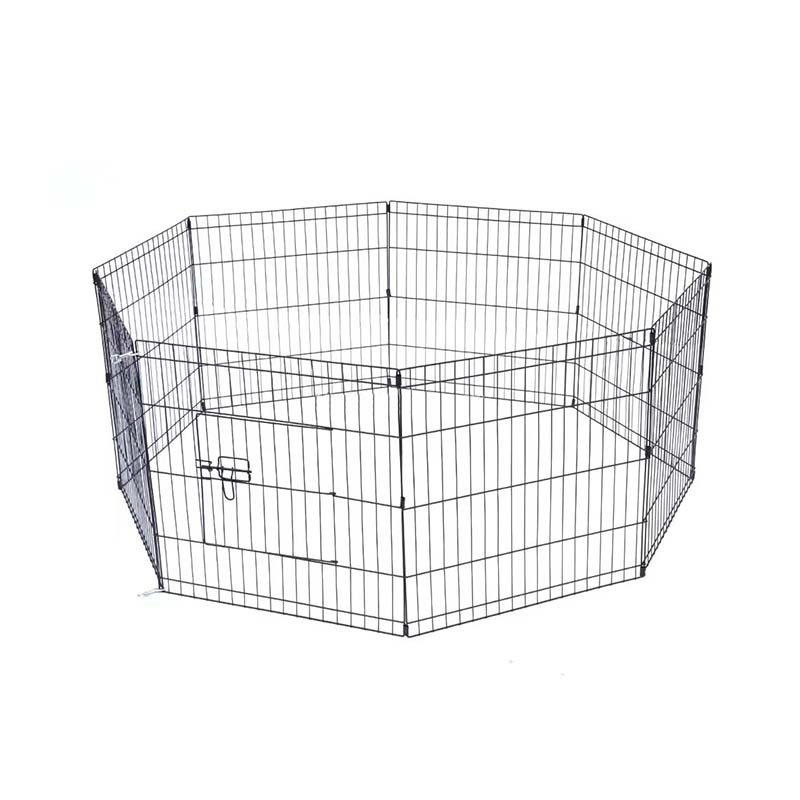
Metal dog cages serve both training (crate training, den behavior) and temporary containment purposes. They range from small portable airline-approved designs to heavy-duty double-door kennels for large breeds. Pet playpens — collapsible eight-panel or six-panel enclosures — are particularly popular for puppies, allowing safe free-movement exercise in a bounded area indoors or outdoors. These are among the core product categories exported by Fujian Pet Home Co., Ltd. through two dedicated metal dog cage production lines.
Cages for Small Animals: Rabbits, Guinea Pigs, and Rodents
Cages for small animals such as rabbits, guinea pigs, chinchillas, hamsters, and ferrets are specified by floor area, bar spacing, and interior enrichment provisions. The Royal Society for the Prevention of Cruelty to Animals (RSPCA) guidelines recommend a minimum floor area of 3 square meters for rabbits, with connected exercise space — a standard that has driven demand for modular multi-level hutch designs with integrated runs. Bar spacing is critical for small animal safety: guinea pig cages should use bars spaced no wider than 25–30 mm to prevent entrapment of small limbs and heads.
Furniture-Style Pet Crates and Wooden Dog Houses
Furniture-style pet crates — enclosures designed to blend with household decor, often incorporating wood veneers, metal accents, and end-table or console-table form factors — have grown from a niche category to a mainstream segment of the pet products market. These address the aesthetic concerns of pet owners who find traditional wire cages visually incongruous with interior design, while still providing the behavioral benefits of a defined den space for the animal. Fujian Pet Home operates a dedicated furniture-style pet crate production line for this segment.
Figure 2: Donut chart illustrating the estimated global pet enclosure market share by product category (2023, based on pet products industry trade data and market segmentation analysis from the American Pet Products Association APPA State of the Industry Report 2023). Dog cages and playpens remain the largest single category at approximately 38% of volume, driven by the global popularity of dog ownership and the mainstream adoption of crate training as a recommended behavior management tool. Cat enclosures — including balcony cat enclosures and outdoor cat runs — have grown to approximately 22% of the market as indoor cat ownership increases in urban areas globally and welfare-conscious owners seek safe outdoor access solutions. Small animal cages account for approximately 20%, reflecting steady demand across the rabbit, guinea pig, and rodent owner segments. The furniture-style pet crate segment at 12% is the fastest-growing category by percentage, as premium interior design-conscious owners seek products that integrate with home decor. This market composition reflects the diversified product range that professional manufacturers like Fujian Pet Home Co., Ltd. maintain to serve the full spectrum of buyer demand.
Key Selection Criteria for Balcony Cat Enclosures and Animal Cages
Selecting a balcony cat enclosure or any category of animal cages requires systematic evaluation across multiple criteria. The following framework covers the parameters that most directly affect animal welfare, product longevity, and owner satisfaction.
| Selection Criterion | Cat Enclosures | Dog Cages | Small Animal Cages |
|---|---|---|---|
| Minimum Floor Area | 1 m² per cat (ISFM guidelines) | Dog length x 1.5 min. | 3 m² (rabbits, RSPCA) |
| Bar/Wire Spacing | Max 50 mm (prevents head entrapment) | Varies by breed; typically 50–100 mm | Max 25–30 mm (critical for small species) |
| Wire Gauge | Min. 16 gauge for outdoor security | 12–16 gauge (breed-dependent) | 16–18 gauge standard |
| Surface Finish | Powder-coated or galvanized for outdoor | Zinc/powder-coat; non-toxic essential | Non-toxic coating; avoid zinc excess |
| Weather Protection | Critical — roof panel required | Important for outdoor kennels | Essential — species susceptible to damp |
| Vertical Height | Min. 1.5 m; 1.8 m preferred | Dog height x 1.5 min. | Multi-level preferred for rabbits |
| Enrichment Provisions | Perches, shelves, climbing structures | Toys, chews (separate from cage) | Tunnels, chew blocks, hides |
Material Safety: What to Check Before Buying Any Animal Cage
For all categories of animal cages, material safety is a non-negotiable foundation. Cats groom wire and bar surfaces; dogs chew; small animals gnaw constantly. Any coating, paint, or surface treatment that is not confirmed non-toxic for the target species poses an ingestion risk. Reputable manufacturers certify their products to relevant safety standards, including California Proposition 65 (USA), EN 71 (EU toy/materials safety), and REACH regulation (EU chemical safety). Buyers should request material safety data sheets (MSDS) or safety certificates when sourcing from manufacturers, particularly when importing from overseas suppliers.
Cages for Small Animals: Species-Specific Requirements and Design Standards
Cages for small animals represent one of the most technically demanding categories in the pet enclosure market because the welfare requirements of small animals are frequently misunderstood or underestimated by first-time owners. The term "small animal" covers a wide range of species with substantially different space, ventilation, bar spacing, and enrichment requirements:
- Rabbits: Among the most space-demanding small animals. The Rabbit Welfare Association (UK) recommends a minimum enclosure of 3 m x 2 m x 1 m for two rabbits — far larger than many retail "rabbit hutches" provide. Well-designed hutches with attached runs, multiple levels, and weatherproof construction are the welfare-appropriate choice.
- Guinea Pigs: Social animals requiring a minimum of 0.7 m x 1.2 m floor area for two individuals (RSPCA guidelines). Bar spacing must not exceed 25–30 mm. Guinea pigs cannot climb, so single-level layouts with solid floors (wire floors can injure feet) are preferred.
- Ferrets: Active, curious climbers requiring tall multi-level enclosures with ramps, hammocks, and sleeping boxes. Minimum dimensions of 90 cm height x 60 cm width are recommended for a single ferret. Ferrets can escape through gaps as small as 2.5 cm (the width of their skull), making bar spacing critical.
- Chinchillas: Highly active with strong jumping ability — cages should be tall (minimum 90 cm) with multiple solid shelves (not wire, which can catch claws). Temperature sensitivity (chinchillas are heat-stressed above 25°C) makes placement and ventilation design especially important.
- Hamsters: Despite being commonly kept in small cages, hamsters have documented high activity levels — studies by the University of Bern (Guenther et al., 2020) found hamsters run distances exceeding 5–10 km per night in the wild. Minimum cage dimensions of 80 cm x 50 cm floor area are recommended by the German Society for Animal Research (GV-SOLAS) for scientific standard housing, a reference point increasingly cited by welfare advocates for pet housing.
Figure 3: 3D-style horizontal bar chart showing the minimum recommended floor area (in square meters) for cages for small animals across seven species, based on published welfare guidelines (RSPCA Housing Guidelines; Rabbit Welfare Association Space Recommendations; GV-SOLAS Laboratory Animal Housing Standards as a welfare reference; European Pet Food Industry Federation FEDIAF guidelines). The rabbit's space requirement of 6.0 m² per pair dwarfs all other small animal species, highlighting why traditional compact hutches are increasingly criticized by animal welfare organizations — and why the modern market favors large multi-level hutch-plus-run systems with modular expansion capability. Ferrets and guinea pigs cluster in the 0.5–0.9 m² range, while smaller rodents need less floor space but still require minimum dimensions well above what many cheap retail cages provide. These data underscore the importance of matching cage product specifications to species welfare standards rather than defaulting to the smallest available option. Buyers selecting cages for small animals should use these minimum values as starting points and err toward larger enclosures wherever space permits, since enriched environments consistently reduce stress behaviors in captive small animals.
The Growing Pet Ownership Market: Trends Driving Demand for Animal Cages
The global pet products market, including all categories of animal cages and enclosures, has demonstrated consistent growth through economic cycles. The American Pet Products Association (APPA) reports that US pet industry expenditure reached USD 147 billion in 2023, up from USD 103.6 billion in 2020 — a 42% increase in three years. This growth is driven by the "humanization" trend in pet ownership (treating pets as family members with corresponding investment in their welfare and housing), the rapid growth of cat and small animal ownership in urban apartment settings, and the increasing availability of premium and design-led pet enclosure products.
Globally, cat ownership has surpassed dog ownership by number of individual animals in several major markets including Japan, France, and Australia. The International Society of Feline Medicine (ISFM) reports that cats are the most numerous pet species in Europe. This demographic shift has directly increased demand for balcony cat enclosures and outdoor cat runs as urban cat owners seek welfare-appropriate solutions for cats kept entirely indoors by necessity of apartment living. The balcony enclosure category specifically has benefited from the growth of apartment living in East Asia, Southeast Asia, Western Europe, and Australia over the past decade.
Figure 4: Area-line chart showing the growth of US pet industry total expenditure from 2019 to 2027 (projected), based on American Pet Products Association (APPA) State of the Industry Annual Reports. The chart reveals a steep acceleration in pet spending from 2020 onward, coinciding with the pandemic-era surge in pet adoption that added an estimated 23 million new pet-owning households in the United States alone between 2020 and 2022 (APPA data). This adoption surge drove demand for all categories of animal cages, containment solutions, and habitat products as new owners set up appropriate living environments for their pets. The projected continuation to approximately $165 billion by 2025 and beyond reflects the permanence of the ownership increase rather than a temporary spike. For manufacturers of animal cages and pet enclosures, this sustained market expansion represents a multi-year growth runway that rewards product quality, welfare-aligned design, and export capability. Fujian Pet Home Co., Ltd. has positioned its product range to serve this demand across more than 20 export markets worldwide.
How to Set Up and Enrich a Balcony Cat Enclosure: A Practical Owner's Guide
Installing and enriching a balcony cat enclosure correctly maximizes the welfare benefit to the cat while ensuring safety and structural integrity. The following practical steps draw on ISFM (International Society of Feline Medicine) environmental enrichment guidelines and general structural installation principles.
- Structural Attachment: Secure the enclosure to the balcony structure using appropriate hardware — railing clamps, floor anchors, or wall brackets depending on the balcony design. All attachment points should be rated to support at least 3x the combined weight of the enclosure and the maximum expected animal occupancy load. Do not rely on cable ties or wire alone for primary structural attachment in elevated locations.
- Gap Inspection: Before first use, inspect all panel junctions, door frames, and connecting hardware for gaps or apertures exceeding 50 mm. Cats can compress their bodies to pass through surprisingly small gaps; a head that can fit through will be followed by the body in a determined cat. Confirm all door latches operate with two-handed release mechanisms that cannot be opened by paw pressure.
- Vertical Enrichment: Install at least two shelving levels at different heights within the enclosure. Research by Ellis et al. (ISFM Guidelines, 2013) confirms that cats preferentially occupy elevated positions for resting and observation, and that providing choice of height significantly reduces stress in captive cats. Carpeted shelves provide grip and comfort; sandpaper-covered surfaces can be used as scratch zones.
- Weather Shelter: Ensure that at least one third of the enclosure floor area is covered by a solid weather-proof roof panel that provides shade from direct sun in summer and shelter from rain. Cats can experience heat stress at ambient temperatures above 38°C (100°F) in enclosed spaces if shade is insufficient. A partially shaded enclosure is safer than a fully exposed one.
- Bedding and Water: Provide a soft bedding area (fleece pad, cat bed, or cardboard box) within or adjacent to the enclosure. Ensure fresh water is always available in the enclosure — outdoor warmth and activity increase hydration needs. Automatic water dispensers or gravity-fed bowls are practical solutions for owners who leave their cats in the enclosure for extended periods.
- Introduction Protocol: Introduce the cat to the enclosure gradually using positive reinforcement (treats, play sessions near and inside the enclosure) over 1–2 weeks rather than placing the cat inside for the first time and leaving immediately. Cats that are positively conditioned to the enclosure use it voluntarily and exhibit lower stress indicators than those for whom the enclosure represents an aversive experience.
About Fujian Pet Home Co., Ltd.
Fujian Pet Home Co., Ltd. was founded in 2009 and has built over 15 years of specialized experience in the design, production, and export of pet enclosures and pet household products. As an integrated industry-and-trade company, Fujian Pet Home manages the complete product journey from design through manufacturing and export logistics.
The product range covers more than 150 individual products across the full spectrum of pet enclosure categories: metal pet cages, dog cages, pet playpens, soft pet crates, furniture-style pet crates, cat litter boxes, wooden dog houses, rabbit hutches, chicken coops, cat trees, and pet beds. Production capacity is supported by two metal dog cage production lines and one furniture-style pet crate production line, with an export volume exceeding 50 containers per month.
Products are exported to the United States, Australia, New Zealand, Japan, Germany, Netherlands, France, Switzerland, Norway, Denmark, Poland, Belgium, Philippines, Mexico, Greece, Taiwan, Hong Kong, and more than 20 countries in total — a distribution that confirms both the scalability of the operation and the broad international acceptance of the product quality. Fujian Pet Home maintains a professional design and sales team dedicated to developing new products that meet evolving market requirements, including the growing demand for welfare-compliant, aesthetically refined balcony cat enclosures and animal cages across global markets.
Frequently Asked Questions
Q1: What size should a balcony cat enclosure be for one cat?
A: ISFM guidelines recommend a minimum of 1 square meter of floor area per cat, with a height of at least 1.5 meters to allow vertical movement. In practice, larger is always better — an enclosure of 1.5 m x 1.0 m x 1.8 m height provides comfortable space for one cat to move, observe, and rest at multiple levels. If two cats will share the enclosure, the floor area should be doubled to avoid territorial tension in the confined space.
Q2: What wire gauge is appropriate for outdoor cat enclosures and cages for small animals?
A: For outdoor cat enclosures, a minimum of 16 gauge (1.6 mm diameter) powder-coated or galvanized steel wire is recommended to resist weathering and physical pressure from a determined cat attempting to push through panels. For cages for small animals such as rabbits and guinea pigs, 16–18 gauge is standard; the critical specification is bar spacing rather than gauge alone. Ferret enclosures should use no wider than 25 mm spacing to prevent escape through gaps that can accommodate their skull width.
Q3: Can a balcony cat enclosure be left outside in all weather conditions?
A: Quality powder-coated metal balcony cat enclosures can be left outdoors year-round in most temperate climates, as the powder coating provides a durable barrier against rain, UV, and temperature cycling. However, direct exposure to salt air in coastal environments accelerates corrosion — rinse the enclosure with fresh water periodically in coastal locations. In regions with prolonged heavy snow, ensure the roof structure is rated for snow load or remove accumulated snow. Any exposed wooden components in hybrid enclosures should be treated with pet-safe wood preservative annually.
Q4: Are furniture-style pet crates suitable as permanent housing for dogs?
A: Furniture-style pet crates are designed as den spaces and night-time or short-term daytime containment rather than as full-time housing replacements. Dogs should not spend more than 4–6 hours continuously in any crate. Furniture crates with wooden veneers and metal grilles are particularly suitable for providing a calm den space in living areas for dogs that are otherwise free in the home. They are not designed for unsupervised outdoor use. For extended daytime confinement in an owner's absence, playpens or dog rooms with appropriate floor area are the preferred welfare-compliant solutions.
Q5: Does Fujian Pet Home supply wholesale and OEM orders for animal cages?
A: Yes. Fujian Pet Home Co., Ltd. is a professional manufacturer with two metal dog cage production lines and one furniture-style pet crate production line, producing more than 50 export containers per month. The company supports wholesale orders, OEM specifications (custom designs, branding, packaging), and private label manufacturing for buyers in the United States, Australia, Europe, Japan, and other major markets. Its professional design team can develop new product specifications to meet regional market requirements and retailer program demands.
Q6: How do I choose between a metal pet cage and a furniture-style crate for my dog?
A: The choice depends primarily on intended use, living space aesthetics, and the dog's behavior profile. Metal cages are more durable, easier to clean, and better suited for puppies in active chewing phases, larger breeds requiring maximum ventilation, and any dog that will spend extended periods in the crate. Furniture-style crates integrate seamlessly with living room and bedroom decor, making them suitable for calm, house-trained dogs in family living areas where visual harmony matters. Many owners use both — a metal crate for the puppy period transitioning to a furniture-style crate for the settled adult dog.
Related Products
Your pet deserves good, Contact now.
Whether you want to become our partner or need our professional guidance or support in product selections and problem solutions, our experts are always ready to help within 12 hours globally.
 CONTACT US

QUICK LINKS
PRODUCTS
-
Address
- Room 501,Unit 1 ,Buliding 6,Wuyi Guoji Xincheng,No.379,Zhuxi Avenue,Jianyang District,Nanping City, Fujian Province.
- No. 139-6 , Tongyu Middle Road, Nantong, Jiangsu, China
-
Mobile
- +86-13616986006
-
E-mail :

Copyright © 2025 Pet Home (Haian) Co., Ltd All Rights Reserved. Custom Pet Cages Manufacturers OEM/ODM Pet Household Products Factory

