
 EN
EN
 English
 中文简体
中文简体
Home / News / Industry News / 50 lb Dog Crate Size Explained: Measuring Your Dog and Picking the Right Crate
News


50 lb Dog Crate Size Explained: Measuring Your Dog and Picking the Right Crate
 2026.09.09
 Industry News
Content
- 1 Why Weight Alone Cannot Determine the Right 50 lb Dog Crate Size
- 2 How to Measure Your Dog Before Choosing a Crate
- 3 50 lb Dog Crate Size Chart: From 30 to 48 Inches
- 4 36-Inch vs 42-Inch Crate for a 50 lb Dog
- 5 Crate Types That Suit a 50 lb Dog
- 6 What Buyers, Wholesalers, and Importers Should Verify
- 7 Frequently Asked Questions About 50 lb Dog Crate Size
- 8 Related Resources
Your dog weighs 50 lb, and the crate you bought when she was a puppy has been too small for months. You have checked dozens of online listings, compared photos of folded wire panels, and the whole decision still comes down to one number: the 50 lb dog crate size. The fastest useful answer is that most 50 lb adult dogs need a 36-inch crate, while longer-bodied or deep-chested breeds perform far better in a 42-inch model. Weight alone, however, is the worst single number to shop by, because a 50 lb Border Collie, a 50 lb Husky, and a 50 lb Pit Bull share almost no body geometry. This guide walks through how to measure, which dimensions actually matter, which crate type suits which lifestyle, and what to verify when you buy from a supplier, wholesaler, or manufacturer.
Before you open any product page, take three measurements of your dog: nose-to-rump body length, floor-to-top-of-head height, and chest width. Add two to four inches to the longest body measurement, and that is the minimum internal crate length you should accept. A 50 lb dog with a 30-inch body usually belongs in a 36-inch crate; a 50 lb dog with a 34-inch body needs a 42-inch crate. The right crate is long enough for the dog to lie flat, tall enough for her to stand without crouching, and compact enough that she feels secure instead of lost. Get these numbers right and the rest of the buying decision becomes simple.
Why Weight Alone Cannot Determine the Right 50 lb Dog Crate Size
A 50 lb dog is not a single shape. A Siberian Husky at 50 lb stands around 21 to 23 inches at the shoulder, with a moderately long torso and a relatively narrow chest. A 50 lb Border Collie is taller and leaner. A 50 lb American Pit Bull Terrier carries the same mass in a deeper chest, thicker neck, and broader shoulders, while an English Bulldog at 50 lb is compact, wide, and lower to the ground. Because crates are rectangular boxes, the dimensions that limit you are the ones your dog cannot compress: body length when lying down, standing height, and shoulder width. A weight-based size chart treats all 50 lb dogs as identical, which is why so many owners end up returning their first crate.
This also explains why online advice can seem contradictory. Some dog owners will tell you a 30-inch crate suits a 45 to 50 lb dog, while crate manufacturers recommend 36 inches for the same weight range. Both statements can be true for different dogs. A 30-inch crate only works if the dog measures under roughly 27 to 28 inches in body length and does not need to stretch out overnight. The 36-inch size gives a 50 lb dog enough room to sleep stretched, turn around, and stand without touching the roof. When you are deciding between 36 and 42 inches, choose based on measured body length, not on the number shown on your bathroom scale.
The chart below shows the typical recommended crate length for breeds that frequently land near the 50 lb mark. These recommendations assume an adult dog in healthy body condition, not a growing puppy. They follow the common industry rule of body length plus two to four inches of clearance. Every dog is an individual, so treat the chart as a starting point rather than a final verdict. A quick visual comparison makes it easier to see why two dogs at the same weight can need different crate sizes.
Recommended Crate Lengths for Common 50 lb Breeds
Siberian Husky
Border Collie
Australian Shepherd
English Bulldog
Dalmatian
American Pit Bull Terrier
Boxer
Scale measured as internal crate length from 0 to 48 inches.
Reading from the chart, the practical pattern is clear. Huskies, Border Collies, Australian Shepherds, and Bulldogs at around 50 lb are generally comfortable in a 36-inch crate. The 36-inch internal length, typically about 35 to 36.5 inches inside, gives a dog with a 31 to 33 inch body enough room to stretch without wasting space. Dalmatians, Pit Bulls, and Boxers at the same weight tend to run longer in the torso or wider in the chest, which pushes them into a 42-inch crate. A 42-inch crate usually provides about 41 to 42.5 inches of usable interior length. That extra six inches changes more than comfort: it also affects how the dog sleeps, how much bedding you need, and whether the crate fits through a standard doorway or inside a car. The takeaway is that weight is an indicator, not a specification. Two dogs at the same weight can be separated by several inches in body length. When the difference is six inches, the recommended crate jumps an entire size. This explains why breed-specific advice is more valuable than a generic weight chart when you search for a 50 lb dog crate size. It also explains why professional breeders and importers usually order crates by internal dimensions rather than by the weight class printed on the box. If you are buying for a rescue dog or a new family member, measure the dog before you order. If you are a wholesaler planning a purchase order, ask your supplier for the internal dimension table of each model, because that is what your retail customers will actually evaluate.
The most reliable way to pick a 50 lb dog crate size is to compare your dog's body length plus 2 to 4 inches against the crate's internal length. Weight alone only tells you whether to look at the 36-inch range or the 42-inch range.
How to Measure Your Dog Before Choosing a Crate
Measuring a dog takes five minutes and requires nothing more than a soft tape measure and a treat to keep her still. Do it while the dog is standing on all four legs with her head in a natural, relaxed position. Do not measure while the dog is sitting or curled up, because both positions distort the numbers. You need three values: body length, standing height, and shoulder width. Write them down and keep them with your phone so you can compare them against product specifications at the store.
| Measurement | How to measure | What it decides | Example for a 50 lb dog |
|---|---|---|---|
| Body length | From the tip of the nose to the base of the tail, keeping the tape level along the spine | Minimum internal crate length | 30 to 34 inches |
| Standing height | From the floor to the top of the head or the base of the ears with the dog standing naturally | Minimum internal crate height | 24 to 27 inches |
| Chest and shoulder width | Widest point across the shoulders or chest | Minimum internal width, especially for broad-chested breeds | 12 to 16 inches |
| Weight | Use a scale, not a guess | Cross-check against breed charts | 50 lb |
Once you have the body length, add two to four inches. That final number is the smallest crate length you should buy. For height, add three to four inches so the dog can stand without her ears touching the top of the crate. Width is rarely a problem in a 36-inch or 42-inch crate for a 50 lb dog, but it becomes important for broad-chested breeds such as Pit Bulls, Boxers, and Bulldogs. If the dog barely fits in width while having plenty of length, you should look for a wider model rather than simply sizing up. A 50 lb dog with a 32-inch body length needs a 36-inch crate because 32 plus 2 equals 34, which fits inside the 35 to 36.5 inch internal length. A 50 lb dog with a 34-inch body length needs a 42-inch crate, because 34 plus 2 equals 36, which is already at the maximum of a 36-inch model. By measuring first, you avoid the two most common purchasing mistakes: buying a crate that looks small in photos, and buying a crate so large that the dog treats one corner as a bathroom.
If you are sizing for a 50 lb puppy that will still gain weight, measure again at every growth stage instead of guessing. Many crates come with divider panels, allowing you to buy the final adult size now and enlarge the interior as the puppy grows. This is a smart approach for a medium-breed puppy expected to stop near 50 lb: you pay once, and the divider protects house-training progress during the first few months. For an adult rescue dog, measure on the first day you bring her home and order the crate based on those numbers rather than on the shelter's weight estimate, which is often inaccurate.
Buy the crate that matches the dog's final adult body length plus 2 to 4 inches. For a 50 lb adult, this usually means a 36-inch or a 42-inch crate, and nothing smaller.
50 lb Dog Crate Size Chart: From 30 to 48 Inches
Crate sizes are named by their approximate length in inches, but the name does not always equal the internal dimension. A 36-inch crate from one manufacturer might measure 35.5 inches inside, while another brand's 36-inch model offers 36.8 inches. This small difference matters when your dog's body length is close to the limit. The chart below gives the practical ranges for common sizes and shows where a typical 50 lb dog lands in each category.
| Crate size | Internal length approx. | Typical dog weight | Best dog body length | Suitable for a 50 lb dog? |
|---|---|---|---|---|
| 30 in | 29 to 30.5 in | 20 to 45 lb | Up to 27 in | Only for unusually compact individuals |
| 36 in | 35 to 36.5 in | 40 to 65 lb | 31 to 33 in | Yes, for most 50 lb dogs |
| 42 in | 41 to 42.5 in | 55 to 85 lb | 37 to 39 in | Yes, for long-bodied or broad-chested dogs |
| 48 in | 47 to 49 in | 75 to 100+ lb | 43 to 45 in | Too large; avoid unless you have a giant-breed puppy |
Note that 30-inch crates regularly appear in searches for a 50 lb dog crate size because older retail weight charts listed 30 inches for dogs up to 50 lb. In practice, a 30-inch crate gives a 50 lb dog almost no margin. The dog can stand and turn, but she cannot stretch out fully, and during a long car ride or a full night's rest, that restriction causes discomfort and restlessness. The 36-inch size is the mainstream choice for a 50 lb dog for a simple reason: it balances space and portability. If your dog measures over 33 inches in body length, the 42-inch model is the correct choice even though it is often marketed for slightly heavier dogs. The same logic applies when you buy from a wholesale supplier: order both 36-inch and 42-inch units in the same series so your product range covers the full body-length spectrum of a 50 lb customer base.
You should also check the crate height and width, not only the length. Most 36-inch and 42-inch crates for medium and large dogs range from 24 to 30 inches in height and 22 to 28 inches in width. A 50 lb dog standing about 24 inches tall at the head needs at least 27 inches of internal height. A crate that is too low forces the dog into a permanent slouch, which can irritate the neck and spine over months of regular use. Width is less often a problem, but a 42-inch crate designed for large breeds may be unnecessarily wide; check the manufacturer's exact internal width and compare it with the shoulder width you measured at home.
Weight charts are a starting point, not a rule. Look at the body length column, not the weight column, when you search for a 50 lb dog crate size.
36-Inch vs 42-Inch Crate for a 50 lb Dog
The 36-inch and 42-inch crates are the two real options for a 50 lb dog, and the decision usually comes down to a single body measurement plus the room where the crate will live. The table below compares the practical differences between the two sizes so you can match the crate to your dog and your home.
| Aspect | 36-inch crate | 42-inch crate |
|---|---|---|
| Internal length | 35 to 36.5 in | 41 to 42.5 in |
| Best dog body length | Up to 32 to 33 in | 34 to 38 in |
| Typical 50 lb breeds | Husky, Border Collie, Australian Shepherd, Bulldog | Pit Bull, Boxer, Dalmatian, long-backed mixed breeds |
| Floor footprint | Medium; fits most cars and hallways | Larger; check doorway and trunk width |
| Empty weight of crate | 18 to 28 lb typical | 25 to 40 lb typical |
| Portability | Easier to carry, fold, and store | Heavier; easier to move with wheels |
| Best use | Indoor, travel, apartments, first-time owners | Daily long confinement, multi-dog homes, larger breeds |
If the crate will stay in one corner of the living room, a 42-inch model does not hurt and gives the dog more comfort. If you plan to move the crate between two cars, carry it up stairs, or store it in a small apartment, the 36-inch is noticeably easier to handle. The 42-inch still fits through a standard 30-inch wide doorframe when folded, but an assembled 42-inch tube crate is typically a two-person lift. Many owners of 50 lb deep-chested dogs choose the 42-inch specifically because the dog can stand fully upright with shoulders and hips clear of the walls. For a slim 50 lb dog, the extra width of a 42-inch model can make the interior feel cavernous, and some dogs prefer a snugger den. The best way to decide is to measure once and then confirm the internal space of the exact model you intend to buy, because the same nominal size can vary between manufacturers.
Choose a 36-inch crate when
|
Choose a 42-inch crate when
|
For most 50 lb dogs, the 36-inch crate is the better first choice because it is cheaper, lighter, and easier to fit into daily life. The 42-inch becomes the right choice when your measurement process says so, not because a bigger crate automatically means a happier dog. If you are buying for a Pit Bull or Boxer mix, measure the chest width as well as body length; a dog whose shoulders press against the sides of a 36-inch crate will be more comfortable in a 42-inch, regardless of what the weight chart suggests.
 42-Inch Open Top Stackable Tube Metal Dog Cage with WheelsThis 42-inch crate suits 50 lb dogs whose chest width calls for extra room. Double doors, a leak-proof tray, and removable wheels make it practical for daily training and moving between indoor and outdoor spots.View Product →
Choose a 36-inch crate for a slim 50 lb dog under 33 inches in body length. Choose a 42-inch for a long-backed or broad-chested 50 lb dog, or whenever you want extra indoor comfort.
Crate Types That Suit a 50 lb Dog
Once the size is settled, the next decision is the style of crate. A 50 lb dog is strong enough to bend cheap wire, so material and construction matter as much as dimensions. The main crate types in the market today are shown below, each with its typical use scenario.
Foldable wire crate
Lightweight, quick to fold, and easy to store. Good for indoor use and travel. The wire gauge must be thick enough to resist pressure from a determined 50 lb dog.
Open-top heavy tube crate
Welded tube frame with a removable top. The open-top design allows you to lower the dog in from above, which reduces stress for anxious, injured, or post-surgery dogs.
Stackable tube crate
Same footprint for multiple levels. Popular in kennels, boarding facilities, and multi-dog homes where floor space is valuable.
Furniture-style crate
Wood or wood-metal cabinet that doubles as an end table, corner table, or TV stand. Best for living rooms where a wire cage would look out of place.
Outdoor heavy-duty crate
Adds a waterproof cover, rust-resistant coating, and stronger anchoring. Designed for yards, patios, and dogs that spend several hours outside.
Foldable wire crates are usually the cheapest and lightest option, but the thin wire bends if a 50 lb dog pushes against the door for a long period. Heavy tube crates use thicker tube frames and are much harder for a determined dog to deform, which makes them the standard choice for chewers, escape artists, and anxious dogs. Open-top designs add another practical advantage: you can lower the dog in from above instead of forcing her through the front door, which reduces stress during veterinary visits or after surgery. Stackable models are a favorite among kennels and multi-dog households because two or three crates share the same floor footprint, and the tube construction supports the weight of crates above. Furniture-style crates hide the crate completely, solving the aesthetic problem for owners who dislike the look of metal wire in their living room; these are usually sized for 36-inch or 42-inch interiors and often include a removable tray and cushion. Outdoor heavy-duty models add waterproof covers and anti-rust coatings for dogs that spend time on patios or in backyards, and their reinforced doors resist scratching and leaning.
Because the list is wide, the final choice should combine the correct length from your earlier measurement with the material strength your dog actually needs. A 50 lb dog with separation anxiety will need a heavy tube crate, while the same dog with calm behavior can live happily in a foldable wire crate. An indoor-only dog may prefer a furniture-style wooden crate that matches your shelves and tables, while an active working dog that sleeps outside during the day will be better served by an outdoor heavy-duty model with a waterproof cover. Think about the crate as a long-term purchase: a 50 lb dog can live 10 to 15 years, so the frame, tray, and latches should survive daily use without rusting or loosening.
 Indoor Wooden Furniture Style Dog Crate End TableFor calm indoor dogs, this crate doubles as an end table with a solid wood frame and wire mesh doors. It blends into home decor while keeping ventilation clear and access easy for the owner.View Product →
 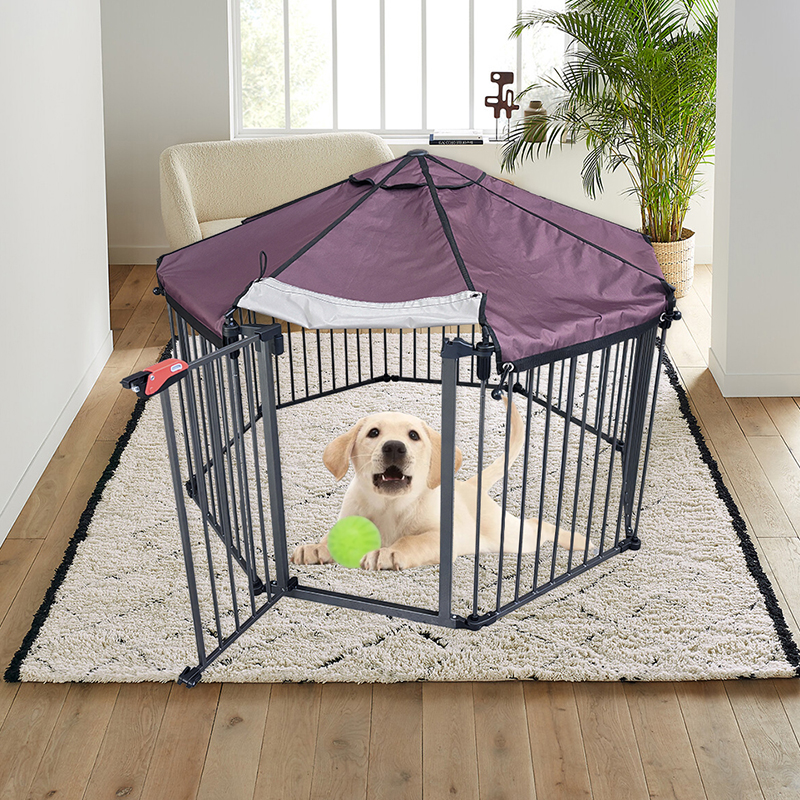 Outdoor Heavy Duty Tube Dog Cage with Waterproof CoverBuilt for active working dogs resting outside, this cage features a rust-resistant powder-coated frame and a UV-resistant waterproof cover. Its spacious interior gives medium to large dogs room to move and relax.View Product →
Match the crate type to the dog's behavior and the room where it will live. Size prevents discomfort; construction prevents escape.
What Buyers, Wholesalers, and Importers Should Verify
For retailers, wholesalers, and importers, the 50 lb dog crate size question is also a product specification question. The end customer will measure their dog, but you need to know exactly what your supplier actually delivers before you place a container order. A reliable manufacturer should provide a full specification sheet for every model in its catalog, including the internal dimensions that determine whether a 36-inch crate fits a 50 lb dog.
| Check item | Why it matters | Typical issue to watch |
|---|---|---|
| Internal vs external dimensions | The sales name may say 36 inches, but the usable interior space is what matters to the dog owner | Models from different factories vary by 1 to 2 inches inside |
| Wire gauge and tube diameter | A 50 lb dog can bend thin wire and damage weak tubes | Ask for the exact millimeter diameter of the wire or tube |
| Tray material and thickness | Plastic trays crack under the weight of a medium or large dog | Confirm reinforced PP or a metal tray option |
| Door size and latch strength | Front-door loading is harder for larger dogs, and weak latches cause escapes | Check whether double doors or top openings are available |
| Folded size and shipping weight | Freight cost is calculated by volume and weight | Heavy tube crates cost more to ship than folding wire models |
| Stacking and accessories | Kennels and multi-dog buyers value stackable models | Confirm whether tray, divider, and cover are included |
| Surface treatment | Rust resistance matters for humid climates and outdoor use | Confirm powder coating or galvanized finish and test reports |
| Custom sizes and branding | Some buyers order an extra-large door or custom packaging | Minimum order quantity and lead time can vary by change |
A professional supplier should be able to answer all of these questions in writing. Ask for photos of the tray, door latch, and folded crate, not just product renderings. If you are importing from overseas, request carton dimensions and a packing count so you can calculate freight and plan warehouse space accurately. Many wholesale buyers order a 36-inch and a 42-inch model from the same series so their catalog covers the full range of 50 lb dog crate size needs with different body shapes. A reliable supplier will also offer modification options such as an extra-large door, a reinforced tray, or a waterproof cover for the same crate frame, which lets you differentiate your product line without adding new tooling. Confirm compliance with the destination country's pet product and import standards before mass production, and request a pre-shipment inspection or sample testing for critical parts. The extra time spent verifying specifications protects your margin and your reputation as a supplier of quality dog crates.
Verify the internal dimensions and material gauge before ordering wholesale. The number on the product name is a marketing figure; the internal dimension is the real specification.
Frequently Asked Questions About 50 lb Dog Crate Size
Below are the questions buyers ask most often when they are selecting a crate for a 50 lb dog. The answers follow the same principle used throughout this guide: always confirm with your dog's body measurements.
What size crate does a 50 lb dog need?
Most 50 lb dogs need a 36-inch crate, measured by internal length. Measure your dog from the nose to the base of the tail, add 2 to 4 inches, and compare the total against the crate's internal length. Dogs with body lengths over 33 inches or very broad chests should use a 42-inch crate. A 30-inch crate is usually too small for a healthy 50 lb adult dog.
Is a 36-inch crate too small for a 50 lb dog?
Not for the average 50 lb dog. A 36-inch crate with roughly 35 to 36.5 inches of internal length fits dogs with body lengths up to 32 to 33 inches. It gives enough room to stand, turn around, and lie flat. If the dog cannot stretch out fully when lying on her side, move up to a 42-inch model.
Does a 50 lb Pit Bull need a 42-inch crate?
Many do. Pit Bulls carry weight in the chest and shoulders, so their front assembly limits how tightly they can curl up. Measure the body length and also the width across the shoulders. If the shoulders touch both sides of the crate, you need a wider or longer model, and a 42-inch crate is the common solution.
How do I know if the crate is too big?
A crate is too big when the dog can use one end as a bathroom and still sleep away from the mess. This is more common in oversized crates, especially for puppies. The ideal range is enough room to lie stretched with some clearance, but not enough space to run around or create a separate sleeping and soiling zone.
Should I size up for a 50 lb puppy?
Buy the estimated adult size and use a divider panel if the crate supports one. Without a divider, the puppy may treat the far end as a bathroom, which slows house-training. Re-measure the puppy every month until she reaches adult weight, and adjust the divider or move to the next crate size when the dog begins to touch both ends while stretched out.
What is the best crate height for a 50 lb dog?
Look for an internal height of at least 25 to 27 inches. A 50 lb dog standing about 22 to 24 inches tall at the top of the head needs 3 to 4 inches of headroom. Most 36-inch and 42-inch crates are between 24 and 30 inches tall, which is sufficient for this weight range. If the dog's ears touch the roof when she stands, the crate is too low.
The golden rule for a 50 lb dog crate size is simple: measure the dog's body length, add 2 to 4 inches, and pick the crate whose internal length matches that number. For most 50 lb dogs that is 36 inches; for long-bodied dogs, 42 inches.
Related Resources
Choosing the right 50 lb dog crate size is easier when you can compare actual products and read about real design decisions. Browse the full [metal dog cage range](/) to check internal dimensions, door options, and folding details on different sizes. You can also read about [why open-top designs can improve safety](/) for anxious, injured, or difficult-to-handle dogs; this is especially useful when you care for a 50 lb dog that needs regular medication or post-surgery rest.
A correct 50 lb dog crate size balances animal comfort, safety, and home practicality. Measure first, verify internal dimensions, and choose a manufacturer that publishes real specification data.
Related Products
Your pet deserves good, Contact now.
Whether you want to become our partner or need our professional guidance or support in product selections and problem solutions, our experts are always ready to help within 12 hours globally.
 CONTACT US

QUICK LINKS
PRODUCTS
-
Address
- Room 501,Unit 1 ,Buliding 6,Wuyi Guoji Xincheng,No.379,Zhuxi Avenue,Jianyang District,Nanping City, Fujian Province.
- No. 139-6 , Tongyu Middle Road, Nantong, Jiangsu, China
-
Mobile
- +86-13616986006
-
E-mail :

Copyright © 2025 Pet Home (Haian) Co., Ltd All Rights Reserved. Custom Pet Cages Manufacturers OEM/ODM Pet Household Products Factory

