
 EN
EN
 English
 中文简体
中文简体
Home / News / Industry News / Cane Corso Crate Size Guide: Choosing the Right Crate for Your Mastiff
News


Cane Corso Crate Size Guide: Choosing the Right Crate for Your Mastiff
 2026.09.15
 Industry News
Content
- 1 Why the Right Crate Size Matters for a Cane Corso
- 2 Cane Corso Growth Patterns and Standard Measurements
- 3 Recommended Cane Corso Crate Sizes at a Glance
- 4 42-Inch vs 48-Inch: Which Crate Should You Pick for a Cane Corso?
- 5 Choosing the Right Crate Type for a Cane Corso
- 6 Indoor and Outdoor Crating Considerations
- 7 Crate Training a Cane Corso: Practical Steps
- 8 Buying Cane Corso Crates from a Manufacturer or Supplier
- 9 Frequently Asked Questions About Cane Corso Crate Size
- 9.1 What size crate does a Cane Corso need?
- 9.2 Is a 42-inch crate too small for a Cane Corso?
- 9.3 Should I buy a large crate for a Cane Corso puppy?
- 9.4 How do I measure my Cane Corso for a crate?
- 9.5 Can a Cane Corso stay in a crate all day?
- 9.6 Are furniture-style crates strong enough for a Cane Corso?
- 9.7 What is the best crate for an anxious Cane Corso?
Your Cane Corso is six months old, and the crate you bought when he was eight weeks is already obsolete. He curls up with his chin resting on the edge of the tray, his back pressed against one wall, and his front paws spilling over the door threshold. Every time you close the latch, he shifts and whines. You check the label on the crate: it says 36 inches. You search for reliable information about the correct cane corso crate size, and the answers seem contradictory. Some owners say a 42-inch crate is plenty. Others insist that a 48-inch or even 54-inch unit is necessary. The truth is that most adult Cane Corsos need a 48-inch crate, while the largest males may require a 54-inch crate for a comfortable and safe fit.
That answer only makes sense when you understand how a Cane Corso is built. This is a mastiff-type dog with heavy bone structure, a deep chest, a broad skull, and a comparatively long back. A Cane Corso is not shaped like a Labrador, a German Shepherd, or a Boxer. The crate must accommodate his body length, shoulder height, and natural movement patterns. He needs to stand up without hitting the ceiling, turn around without scraping his shoulders, and lie flat on his side with his legs extended. A crate that is too small restricts joint movement and causes stiffness. A crate that is too large works against the denning instinct that makes crate training so effective in the first place.
Because this breed grows so quickly and reaches such substantial adult dimensions, the crate decision affects not just comfort but long-term health. A growing Cane Corso puppy that is forced to sleep in a curled position for several months can develop poor postural habits and joint discomfort. The right crate gives the dog space to stretch in a straight line, which supports healthy muscle development. Choosing the correct size early also prevents the common problem of a dog that refuses to enter a crate because it associates the space with being cramped or frustrated.
Key takeaway: The correct cane corso crate size for most adults is 48 inches, but you should confirm it with your dog's own measurements before you buy.
Why the Right Crate Size Matters for a Cane Corso
The Cane Corso is a breed that grows quickly and develops serious joint problems if the environment is wrong during the first two years. A crate that is too small forces the dog into unnatural positions for hours at a time. The elbows press against the floor, the hocks lock at an uncomfortable angle, and the spine is curved even when the dog is resting. Over time, that repeated pressure can contribute to elbow hygroma, stiff muscles, and reluctance to settle in the crate at all. This is particularly important in a breed that is already prone to hip and elbow dysplasia, because proper resting posture supports healthy joint development.
A crate that is too large is a different kind of problem. The Cane Corso is a naturally clean breed that does not want to soil the area where it sleeps. When a crate is oversized, the dog has space to designate one corner as a bathroom area and lie in another corner. That behavior undermines house training, creates extra cleaning work, and introduces bacteria into the sleeping area. The dog also loses the sense of security that a properly sized den provides. A den that feels like a cave is calming for a mastiff; a den that feels like an open room is not.
There is also a safety dimension. During car travel, a Cane Corso in an oversized crate can be thrown against the walls in a sudden stop. In an undersized crate, the dog may panic, try to push the door open, and injure its paws on the metal edges. A properly sized crate allows the dog to brace its body naturally and stay stable during transportation. That is why most responsible manufacturers publish both length and height guidelines for each model, and why you should never rely on a crate labeled simply "large" without checking its interior measurements.
We have seen this issue from the manufacturing side as well. Customers send us photos of their Cane Corso looking cramped in a 42-inch crate, and our design team can immediately see that the body length exceeds the usable interior space of the unit. The fix is almost always the same: move up to a 48-inch crate and gain three to four additional inches of interior height. In several cases, the dog stopped pawing at the door and started lying down calmly within two days of the upgrade. That behavioral change is not magic; it is the result of giving the dog enough physical space to feel secure.
Psychological comfort matters just as much as physical space. A Cane Corso that fits properly in its crate learns to use the crate as a retreat when the household becomes noisy or overwhelming. If the crate is uncomfortable, the dog will instead try to hide under tables or behind furniture, which creates safety risks and makes management more difficult. Owners who invest in the correct size from the beginning report fewer anxiety-related behaviors such as barking, digging, and chewing around the crate area.
Key takeaway: A crate that is too small damages joint health, while a crate that is too large makes house training harder; the right size keeps your Cane Corso physically comfortable and mentally secure.
Cane Corso Growth Patterns and Standard Measurements
Cane Corso puppies grow faster than most owners expect. The breed reaches about 60 percent of its adult weight by six months and continues filling out until eighteen to twenty-four months. That long growth window means the crate size needs to be planned ahead of time, not adjusted month by month. The safest approach is to identify the adult weight range of your dog based on its parents and then select a crate that will fit the fully grown animal. If the sire and dam are both over 100 pounds, the puppy will almost certainly need a 48-inch crate as an adult.
The table below summarizes typical growth milestones for the breed based on data from breeders and veterinary growth charts. These numbers are averages, not guarantees, but they give a reliable basis for choosing the right crate:
| Age | Average Weight | Shoulder Height | Body Length | Suggested Crate |
|---|---|---|---|---|
| 8 weeks | 10-15 lbs | 10-12 in | 12-14 in | 24 in |
| 4 months | 35-50 lbs | 16-18 in | 18-20 in | 30 in |
| 6 months | 60-80 lbs | 20-22 in | 24-28 in | 36 in |
| 12 months | 85-105 lbs | 24-26 in | 30-34 in | 42 in |
| 18-24 months | 90-120 lbs | 24-27.5 in | 34-38 in | 48 in |
Notice that the suggested crate size at twelve months is already 42 inches, and the final recommendation for an adult is 48 inches. This is why we advise buyers to skip the intermediate 42-inch stage if their Cane Corso puppy comes from large parents. Buying a 48-inch crate at the start saves money over the long run and avoids the stress of transitioning a reluctant adolescent dog into a new enclosure. Many owners find that a 48-inch crate with a divider panel is the most economical solution because the divider can be moved back as the puppy grows.
The growth data also reveals why the Cane Corso is different from many other large breeds. Compared with a German Shepherd, which reaches its full height early and then fills out, the Cane Corso continues growing in both height and body length well into the second year. That extended growth period means that a crate which fits at ten months may be too small at sixteen months. If you are buying a crate before your dog reaches full maturity, always choose the size that will fit the projected adult measurements, not the current puppy measurements.
Key takeaway: Plan for the adult size of your Cane Corso, not the puppy size; a 48-inch crate is the most logical long-term investment for most dogs.
Recommended Cane Corso Crate Sizes at a Glance
Before you pull out a tape measure, it helps to see how the Cane Corso compares with other large breeds. The chart below shows the crate lengths that are most commonly recommended by veterinarians, breeders, and crate manufacturers. These numbers represent the interior length of the crate, not the overall footprint of the unit. A bigger body weight does not automatically mean a longer crate, because different breeds have different body proportions. The Cane Corso sits at the upper end of the scale because of its mastiff bone structure and long back.
Recommended Crate Length by Large Dog Breed
Boxer
German Shepherd
Doberman Pinscher
Rottweiler
Cane Corso
Great Dane
The highlighted bar in the chart shows that most adult Cane Corsos need a 48-inch crate. A 42-inch crate is the usual choice for a Boxer or a German Shepherd, but a Cane Corso is typically longer in the back and wider in the chest. A Cane Corso female under 95 pounds with a body length below 30 inches can occasionally manage with a 42-inch crate, especially if the unit has extra interior height. Males over 100 pounds nearly always need the full 48 inches to stretch out naturally.
Only the largest specimens, usually males exceeding 120 pounds with a body length above 36 inches, require a 54-inch crate. That size is rare and often has to be special ordered. It is worth noting that many owners who start with a 42-inch crate end up upgrading within a year. In our production experience as a pet cage manufacturer, the 48-inch size accounts for the majority of Cane Corso orders from both wholesale buyers and individual customers.
Height is just as important as length. A Cane Corso standing 27 inches at the withers needs at least three to four inches of clearance above that point. A 48-inch crate with an interior height of 33 to 36 inches is sufficient for most adults. If the dog has to crouch when standing, the crate is too short even when the length seems right. Always check the interior height specification, not just the overall crate length, before making a purchase.
Use the chart as a starting point, then verify the final choice with the measuring method described in the next section. The dog should be able to lie flat on its side with its legs extended, stand up naturally, and turn around without touching the walls of the crate. A crate that satisfies all three criteria gives your Cane Corso the freedom to rest deeply and the security to feel protected.
| Crate Length | Interior Width | Interior Height | Best Fit |
|---|---|---|---|
| 42 in | 27-28 in | 30-31 in | Smaller females, short-bodied individuals |
| 48 in | 28-30 in | 33-36 in | Most adult Cane Corsos, recommended option |
| 54 in | 32-36 in | 38-42 in | Oversized males, very large mastiffs |
Key takeaway: The 48-inch crate is the right choice for the vast majority of adult Cane Corsos; reserve 54 inches for truly oversized males.
42-Inch vs 48-Inch: Which Crate Should You Pick for a Cane Corso?
The most common question we receive from Cane Corso owners is whether a 42-inch crate will be enough. The answer depends on three measurements: shoulder height, body length from the base of the neck to the base of the tail, and chest width. If your dog is a female that stays under 95 pounds and measures less than 30 inches from the withers to the rump, a 42-inch crate can work. If your Cane Corso is a male, or a larger female, the 42-inch length will usually be too short for comfortable rest. The difference between the two sizes may seem small on paper, but those extra six inches of length and two to three inches of height change the dog's entire experience inside the crate.
| Evaluation Factor | 42-Inch Crate | 48-Inch Crate |
|---|---|---|
| Female under 95 lbs | Can work if body length fits | More comfortable |
| Male over 100 lbs | Too tight | Recommended |
| Shoulder height up to 25 in | Usually acceptable | Better fit |
| Shoulder height 26-28 in | Too tight | Correct height |
| Car travel space needed | Smaller footprint, easier to fit | Requires more cargo room |
| Long-term use | Often outgrown | Usually a permanent solution |
To measure your Cane Corso correctly, start with the body length. Place the dog in a standing position and measure from the top of the shoulder blades to the base of the tail. This is the length that determines the minimum crate length. Add four to six inches so the dog can stretch out when lying down. Next, measure the shoulder height from the floor to the top of the shoulder blades and add three to four inches to establish the minimum interior height. Write both numbers down and compare them with the interior dimensions of the crate, not its external dimensions.
Take the chest width into account as well. A Cane Corso with a broad chest needs a crate wide enough to turn around without rubbing its sides against the metal panels. Most 48-inch crates have interior widths of 28 to 30 inches, which suits the breed. A 42-inch crate in the same series may have a slightly narrower interior width, and that difference becomes important when the dog tries to turn around inside. A dog that cannot turn comfortably will often refuse to enter the crate or will pace restlessly before settling.
The final consideration is where the crate will be used. A 42-inch crate is easier to fit into the back of an SUV, and it can be useful as a travel crate for shorter trips. If you need one enclosure for both home and travel, a 48-inch collapsible crate gives you more flexibility. Many owners use a 48-inch crate as the home base and a separate soft-sided travel crate for short trips, which is a practical combination. The home crate should always be the larger of the two because the dog spends the most time there and needs full range of movement.
There is also an economic argument for choosing the 48-inch version. The price difference between a 42-inch and a 48-inch heavy-duty metal crate is typically small compared with the cost of buying a second crate later. When a 42-inch crate is outgrown, the owner faces the expense of a new crate plus the training effort of convincing an adolescent Cane Corso that the new enclosure is safe. Buying the correct size once saves both money and stress.
Key takeaway: When in doubt, choose the larger size; a 48-inch crate is rarely a mistake for a Cane Corso, while a 42-inch crate often leads to a second purchase.
Choosing the Right Crate Type for a Cane Corso
Once you know the correct cane corso crate size, the next step is to select a crate style that matches your dog's behavior, your home layout, and your planned use cases. Cane Corsos are powerful dogs, and not every crate on the market can withstand their strength and chewing pressure. A crate that bends or breaks under a determined mastiff becomes a safety hazard and a wasted investment. The three most practical options for this breed are heavy-duty metal crates, furniture-style crates, and outdoor heavy-duty crates with waterproof covers.
Heavy-Duty Metal Crates
Heavy-duty metal crates are the default choice for the Cane Corso. They are built with thick steel tubes, strong spot welds, and reinforced doors that resist bending and rattling. A Cane Corso can easily break a flimsy wire crate, so the bar diameter and gauge of the steel matter more here than in smaller breeds. An open-top design adds convenience for owners who need to lower the dog in and out during training or after surgery. The removable tray underneath simplifies cleaning, and the foldable frame allows the crate to be stored flat when not in use. For a breed that measures 34 to 38 inches from nose to tail base, the 48-inch heavy-duty crate provides the interior length the dog needs without wasting floor space.
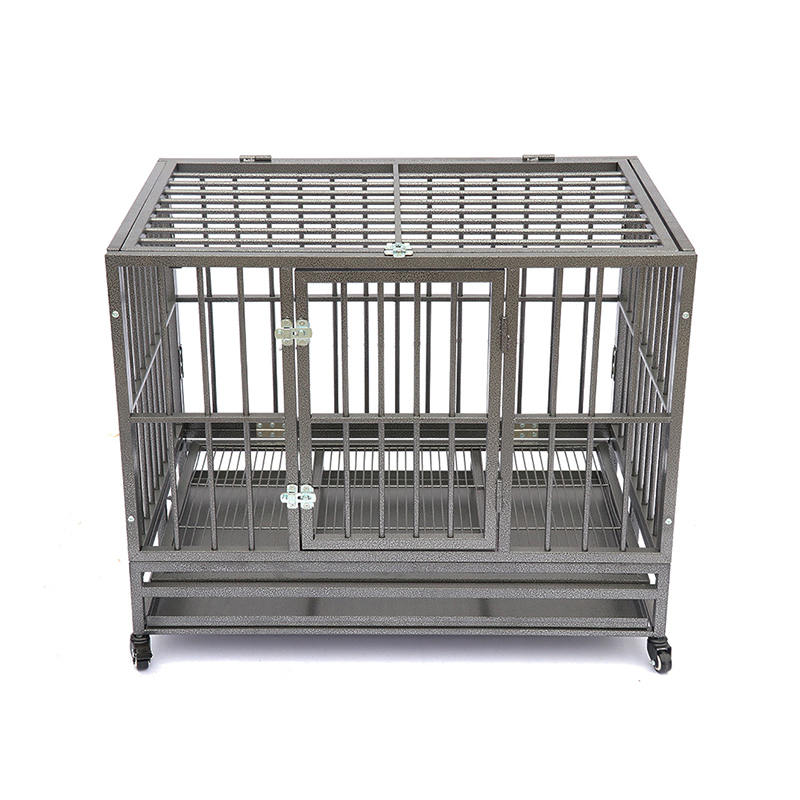
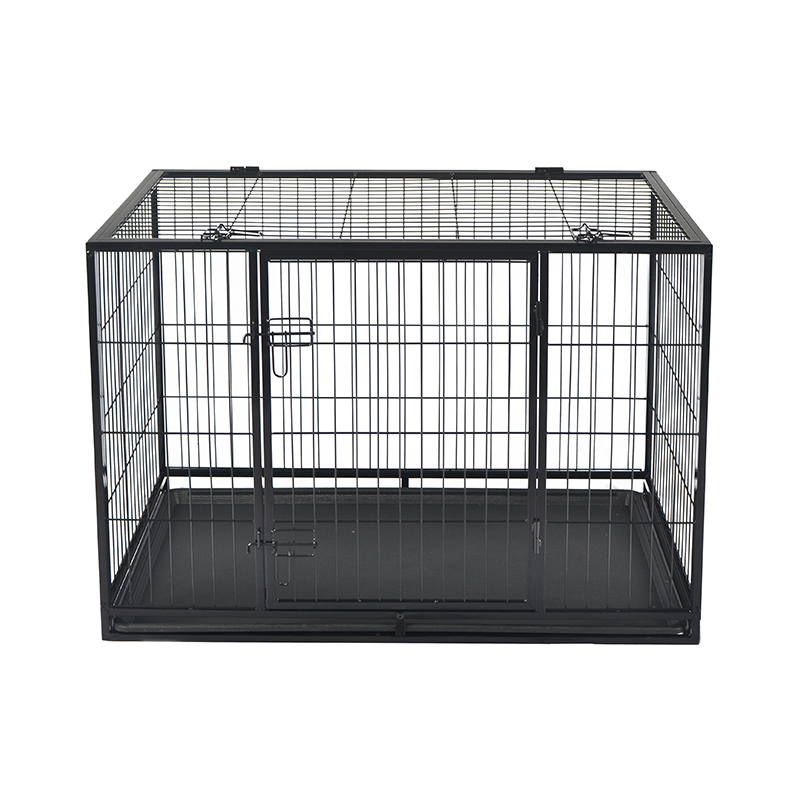
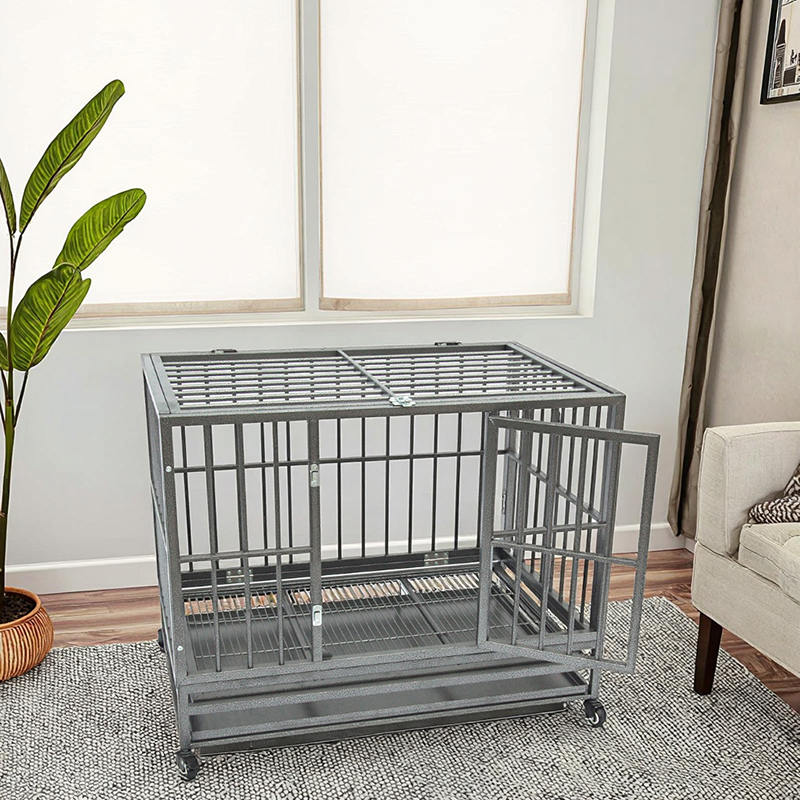 48-Inch Open Top Heavy Tube Metal Dog Crate with Double LocksThis heavy-duty steel crate features an open top and double locking doors, making it suitable for strong breeds like the Cane Corso. Its removable tray and wheels add convenience for daily use.View Product →
When evaluating a heavy-duty metal crate for a Cane Corso, inspect the door locking mechanism carefully. A single sliding bolt is not enough for an intelligent mastiff that has learned to lift latches. Look for double locks or a locking mechanism that requires two steps to open. The door should also hinge outward with a secure top and bottom pin so that the dog cannot pop it loose. The open-top heavy tube configuration is particularly useful for large breeds because it allows the owner to reach in without bending low and gives the dog a clearer view of its surroundings, which reduces the feeling of being trapped.
Furniture-Style Crates
Furniture-style crates have become popular among Cane Corso owners who want a crate that looks like a piece of home furniture rather than kennel equipment. These crates use a combination of wood panels and metal framework, and they resemble end tables, corner tables, or cabinets. A furniture-style crate works best when the dog is already calm in the crate and does not chew on the wooden edges. The interior space is similar to a metal crate, so a 48-inch furniture-style crate is recommended for the same reasons described earlier. If the crate has a solid wood top, it can double as a side table for a lamp or a small plant, which makes the crate easier to accept in a living room setting.
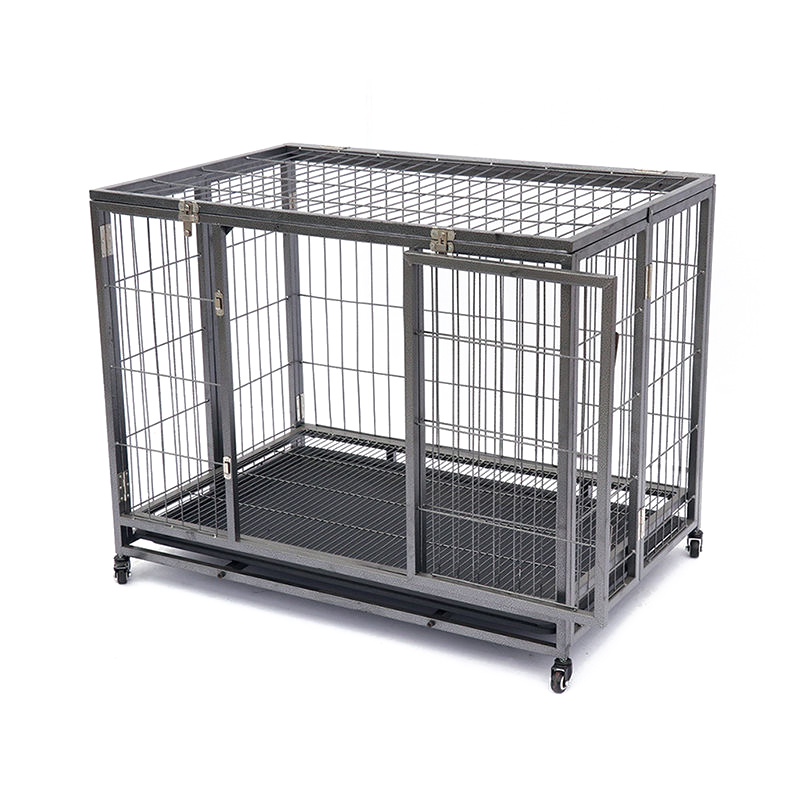
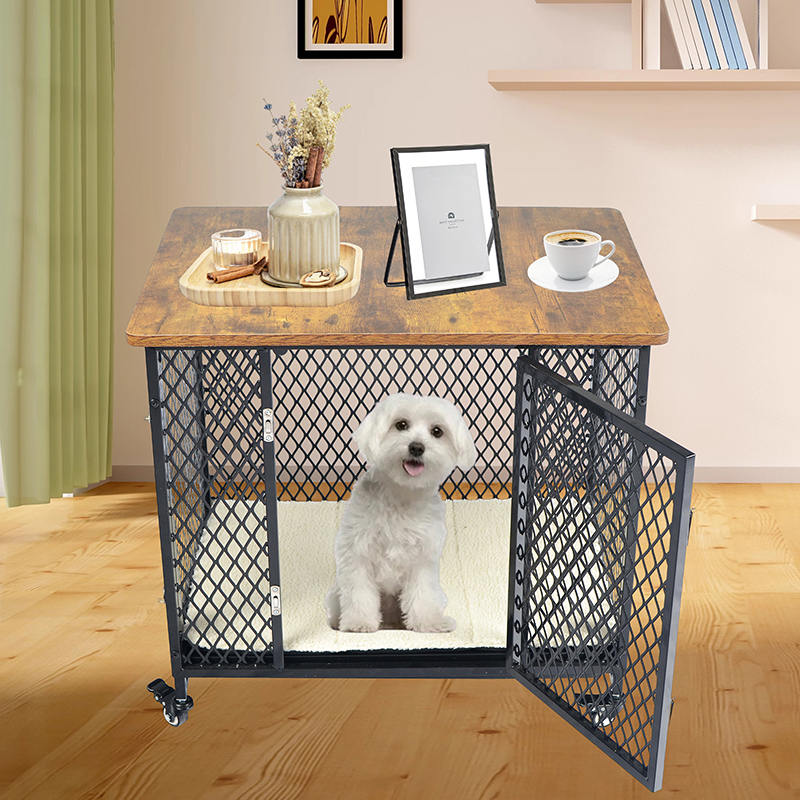 Furniture Style Wooden Dog Crate with Wheels and Washable CushionCombining a wooden exterior with metal mesh, this crate doubles as home furniture. It includes a removable cushion and wheels, suited for calm adult dogs that no longer chew on wood.View Product →
Furniture-style crates often come with wheels, which is a meaningful advantage for a heavy crate that holds a 100-pound dog. The wheels allow one person to move the crate from one room to another without lifting. A cushion pad inside the wooden frame gives the Cane Corso a soft resting surface and can be removed and washed separately. The main caution is that a powerful chewer may damage the wooden frame over time, so this style is best for mature dogs that do not suffer from separation anxiety. Puppies that are still in the chewing stage should start with a metal crate and transition to a furniture-style model after their adult teeth fully develop.
Outdoor Heavy-Duty Crates
For owners who need to keep a Cane Corso in a yard, a garage, or a patio for part of the day, an outdoor heavy-duty crate is the safer option. Outdoor crates are manufactured with corrosion-resistant coatings and waterproof covers that shield the interior from rain and direct sunlight. The cover also provides shade and a sense of protection for the dog. A large outdoor crate must be anchored securely to the ground, because a 120-pound Cane Corso can push a lightweight enclosure across a concrete surface. Wire floor reinforcements or a solid base tray also protect the dog's paws from uneven ground.
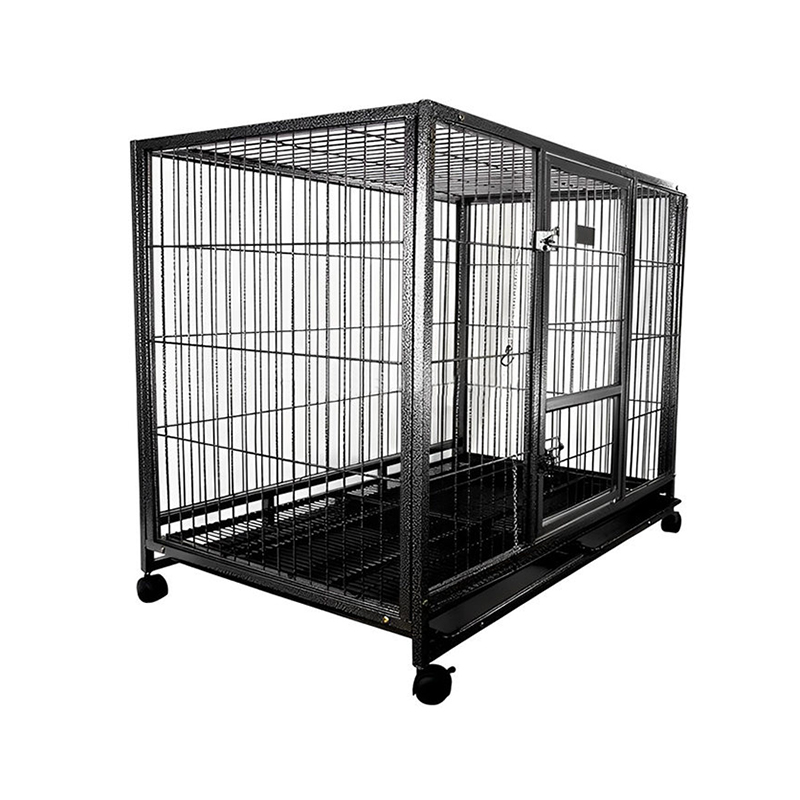
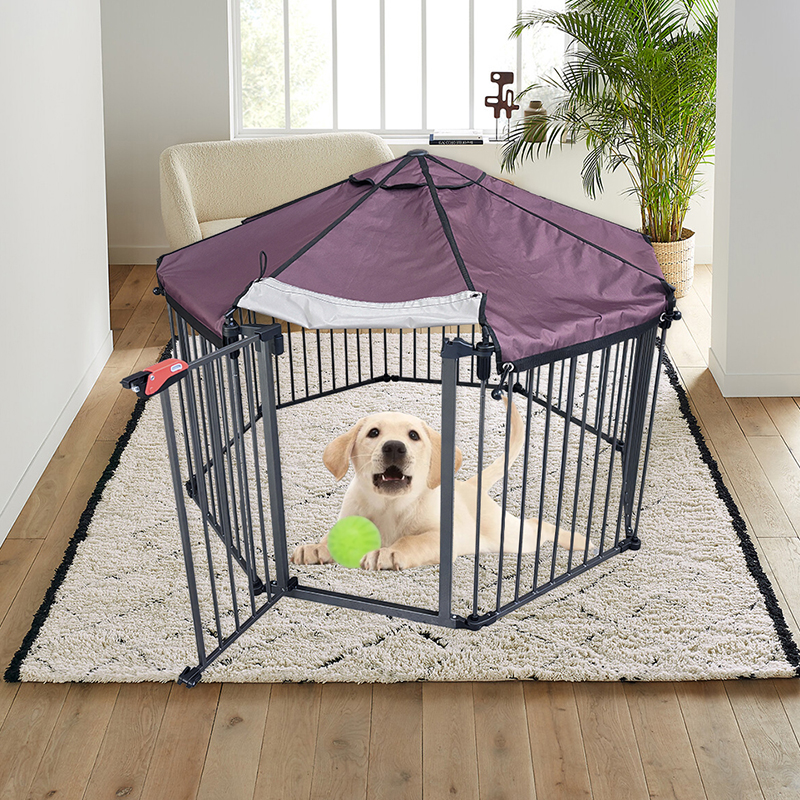 Outdoor Heavy Duty Tube Dog Cage with Waterproof UV CoverBuilt with a rust-resistant powder-coated frame and a waterproof, UV-resistant Oxford cover, this spacious cage provides shelter for large dogs in yards or patios. The elastic rope fixing keeps the cover secure.View Product →
Outdoor crates are not meant to replace indoor living, but they are excellent for supervised time in the yard, during travel, or at outdoor events. If you plan to use a crate both indoors and outdoors, choose a model with a reinforced base tray and a waterproof cover attachment point so that the cover stays in place even in windy conditions. The cover should also be removable for washing, since a Cane Corso that spends time outdoors will track dirt and moisture into the crate.
Key takeaway: Match the crate style to your Cane Corso's temperament and your lifestyle: heavy-duty metal for maximum strength, furniture-style for indoor aesthetics, and outdoor heavy-duty models for protected yard use.
Indoor and Outdoor Crating Considerations
The environment where the crate is placed affects the dimensions and material you should select. Inside the home, the crate is often a permanent fixture in a living room or bedroom. It should blend with the decor and not obstruct daily activities. A 48-inch furniture-style crate is roughly the same footprint as a large end table, which makes it a sensible choice for indoor placement. The dog is close to the family, which reduces anxiety and strengthens the crate as a positive resting place. A metal crate in the same size works just as well functionally, but it presents a more utilitarian appearance that some owners prefer for a mudroom or utility area.
If the crate is used outdoors, the priorities shift toward weather resistance and ventilation. The interior temperature of a metal crate can rise quickly in direct sunlight, which is why a waterproof cover with a reflective upper surface is critical. The cover should be removable for washing, and the base tray should have drainage or a sealed lip to keep water from pooling after rain. A Cane Corso that spends time outdoors also needs constant access to fresh water, so the crate must accommodate a tip-resistant bowl. The bowl should be positioned in a corner where the dog cannot flip it while turning around.
Another consideration is airflow. With the crate placed against a wall or in a corner, the airflow through the side panels is reduced. Open-top designs improve internal ventilation, which is an advantage in warm climates. For indoor use, the open-top structure also makes it easier to lift the dog out during crate training or when the dog is injured and should not climb over the threshold. When the crate is outdoors, however, an open top needs to be paired with a secure cover to protect against rain and direct sun.
Finally, consider the size of the space where the crate will sit. Measure the available floor area in the room before ordering a 48-inch crate. A 48-inch crate with a 30-inch depth needs roughly 1,440 square inches of floor space, plus clearance for the door to swing open fully. If the space is tight, a foldable model can be collapsed when not in use, freeing up the floor during the day. For apartments or rooms with narrow doorways, check the crate's folded dimensions as well, because some heavy-duty models are surprisingly compact when folded and others are not.
- Indoor crates: prioritize aesthetics, easy cleaning, and a comfortable interior pad.
- Outdoor crates: prioritize corrosion resistance, waterproof covers, and secure anchoring.
- Travel crates: prioritize foldability, handle placement, and airline or vehicle size constraints.
- Multi-purpose crates: choose a durable metal model with a removable cover that can serve both indoor and outdoor roles.
The same 48-inch crate can serve all of these purposes if you choose the right accessories. A waterproof cover can be added to any crate for outdoor use, and a cushioned pad can make the same crate comfortable indoors. The key is to buy a crate whose frame is strong enough for the dog's weight and activity level, because add-on accessories do not fix an undersized or under-built enclosure.
Key takeaway: Place the crate in a spot that supports the style you choose, and use a waterproof cover for outdoor setups to control temperature and moisture.
Crate Training a Cane Corso: Practical Steps
Crate training a Cane Corso is easier when the crate is correctly sized from day one. The dog should see the crate as its own den, not a trap or a punishment area. Because the breed forms strong bonds with its family, the crate should be placed in a room where the dog can still see and hear household activity. The following sequence has worked consistently for owners who raise mastiff puppies, and it works just as well for adult rescue dogs that need to learn calm confinement:
- Place the crate in a busy area of the home, such as the edge of the living room, where the dog can watch family activities without being underfoot.
- Leave the door open for the first few days and toss treats inside so the dog makes a positive association with entering the space.
- Feed every meal near the entrance of the crate, then move the bowl gradually toward the back so the dog is fully inside while eating.
- Introduce a cue word such as "crate" while the dog follows a treat into the interior, and repeat it every time you use the crate.
- Begin closing the door for short intervals of five to ten minutes while you stay in the room. Extend the interval only when the dog remains calm.
- Practice departures by closing the door, stepping out of the room, and returning after a few minutes, gradually increasing your absence time.
- Never open the door while the dog is whining or scratching; wait for a quiet moment so the dog learns that calm behavior is what makes the door open.
- Use the crate for sleep at night, but move it to a separate room during the day so the crate remains a rest zone and does not become a daytime holding cell.
A properly sized crate shortens each of these steps. When a Cane Corso has enough space to stretch out and enough height to stand, it settles faster. When the crate is too small, the dog becomes restless, which looks like a personality problem but is actually an environmental problem. Similarly, when the crate is too large, the dog may not feel the enclosed security that makes the den concept work, and it may pace or vocalize instead of settling down.
Owners should also avoid confining a Cane Corso for more than four to five hours during the day. The breed is social and needs regular exercise, mental stimulation, and human interaction. A crate is a management tool for periods of rest and safety, not a substitute for walks, play, and training. If your work schedule requires longer confinement, arrange for a dog walker or use a larger exercise pen that gives the dog more room to move while still protecting your home.
Consistency is the single most important factor in crate training. If the dog is allowed on the bed one night and then confined to the crate the next night with no clear routine, the training process becomes confusing. Set a fixed schedule for meals, walks, and crate time, and stick to it as closely as possible. Most Cane Corsos adapt to a new routine within two weeks when the crate is the right size and the training approach is consistent.
Key takeaway: A correctly sized crate accelerates every stage of crate training, and no crate should ever replace daily exercise and social time.
Buying Cane Corso Crates from a Manufacturer or Supplier
Wholesale buyers, importers, and retail brands that serve Cane Corso owners need crates that match the breed's size and strength requirements. Working directly with an experienced manufacturer is the most reliable way to get correct dimensions, consistent quality, and competitive pricing. Pet Home (Haian) Co., Ltd. is one such manufacturer, with more than fifteen years of experience in the pet cage industry. The company operates two metal dog cage production lines and one furniture-style pet cage production line, with a monthly export volume exceeding fifty containers to markets such as the United States, Australia, Germany, France, Japan, and the Netherlands.
When you evaluate a crate manufacturer or supplier for Cane Corso products, check the following points:
- Breed-specific size guidance: confirm that the manufacturer lists the interior dimensions and recommended breed ranges for each crate size, not just the overall external dimensions.
- Material specifications: ask about the tube diameter, steel wall thickness, wire gauge, and surface coating. A heavy Cane Corso requires a thicker tube and a corrosion-resistant finish.
- Weld quality and door hardware: the door frame and locking mechanism take the most stress; inspect the welds at the hinge points and the latch design.
- Customization and OEM support: if you sell under your own brand, the manufacturer should support custom sizes, colors, logo printing, and packaging design.
- Compliance and testing: confirm that the crates meet the safety standards of your target market, including load tests for large breeds.
- Production capacity and lead time: a supplier with dedicated production lines and stable monthly export volume is less likely to delay your order.
Many retail buyers make the mistake of ordering generic 42-inch crates labeled as large when the interior height is only 29 inches. A Cane Corso cannot stand comfortably in that enclosure. When purchasing for this breed, always compare the interior height of the crate, not the marketing name. A 48-inch crate with a 33-inch interior height and a solid locking door is a much better investment than a cheaper 42-inch unit that the customer will eventually return or abandon.
For private-label buyers, the ability to customize crate dimensions is particularly valuable. Some Cane Corso lines produce dogs above 130 pounds, and those dogs need a 54-inch crate that is not a standard stock item. A manufacturer that can adjust the tube gauge, add an extra door, or reinforce the tray for heavier dogs gives you a product advantage in the niche mastiff market. Custom branding on the tray and packaging also helps build a cohesive retail brand around Cane Corso supplies.
Quality control matters even more when the product is sold into a market with strict liability rules. A crate that fails when a large dog throws its weight against the door can cause injury to the dog and legal exposure to the seller. Look for a supplier that performs welds verification and load testing on every production batch. This is the level of assurance that separates a genuine heavy-duty Cane Corso crate from a regular dog crate with an oversized label.
Key takeaway: Work with a manufacturer that can document interior dimensions, material grade, and weld quality, and support custom sizing for the largest Cane Corso dogs.
Frequently Asked Questions About Cane Corso Crate Size
What size crate does a Cane Corso need?Most adult Cane Corsos need a 48-inch crate. Smaller females under 95 pounds can occasionally use a 42-inch crate if their body length is below 30 inches. Exceptionally large males over 120 pounds may need a 54-inch crate. The cane corso crate size should be confirmed by measuring the dog's body length and shoulder height before purchase. |
Is a 42-inch crate too small for a Cane Corso?For the majority of adult Cane Corsos, yes. A 42-inch crate suits a dog with a body length under 30 inches and a shoulder height below 25 inches. Many adult males exceed those numbers, which is why the 48-inch crate is the standard recommendation for the breed. If your dog is still growing, a 42-inch crate will likely become too small within months. |
Should I buy a large crate for a Cane Corso puppy?It is better to buy a crate sized for the adult dog than to buy one that fits the puppy comfortably at eight weeks. A 48-inch crate with a divider panel lets you expand the usable space as the puppy grows. If you buy a small crate first, you will need to replace it within six months, which costs more money and adds training stress. |
How do I measure my Cane Corso for a crate?Measure from the top of the shoulder blades to the base of the tail to get body length, then add four to six inches. Measure from the floor to the top of the shoulder blades to get height, then add three to four inches. The interior length and height of the crate must be equal to or greater than both results. |
Can a Cane Corso stay in a crate all day?No. Adult Cane Corsos should not be confined for more than four to five hours at a time during the day. Puppies need even shorter intervals. The crate is for rest, travel, and safety, and it does not replace daily exercise, mental stimulation, and human interaction. |
Are furniture-style crates strong enough for a Cane Corso?Furniture-style crates that combine wood panels with a metal frame are strong enough for adult Cane Corsos that are calm in the crate. They are not ideal for heavy chewers or dogs with separation anxiety. If the dog has a history of escaping, a heavy-duty all-metal crate is the safer choice. |
What is the best crate for an anxious Cane Corso?An open-top heavy-duty metal crate with a cover over three sides provides the most secure environment for an anxious Cane Corso. The open top gives the dog visibility while the covered sides block visual triggers. A properly sized 48-inch crate with a washable pad and a consistent training routine will reduce anxiety faster than a larger, less structured space. |
Key takeaway: The 48-inch crate is the standard answer for most Cane Corsos, but always verify your dog's body length and shoulder height before purchasing.
Choosing the right cane corso crate size is not complicated once you understand the breed's body structure and growth pattern. The starting point is the adult size of the dog, not the puppy size. Use the measuring method described in this article, compare the interior length and height of candidate crates, and select a style that matches your home environment and your dog's temperament. A Cane Corso that fits comfortably in its crate settles faster, trains easier, and stays healthier over its lifetime.
As a pet cage manufacturer with more than fifteen years of experience producing heavy-duty metal crates, furniture-style dog cages, and outdoor enclosures, we recommend the 48-inch size for nearly every Cane Corso we see in customer orders. It gives the dog enough space to stretch, stand, and turn around, and it gives the owner a crate that will last for the dog's entire adult life. Whether you need a heavy-duty metal crate, a furniture-style model, or an outdoor waterproof enclosure, the priority should always be interior dimensions and material quality over brand names and price alone.
For wholesalers, importers, and retail brands, the practical takeaway is equally clear. Stock 48-inch crates as the core SKU for large-breed buyers, keep a smaller quantity of 42-inch units for shorter-bodied females, and offer custom 54-inch crates for exceptional mastiffs. Work with a supplier that can provide transparent interior dimension charts, material specifications, and consistent production quality so that your customers can trust the product as much as we trust our own production line.
Related Resources
Key takeaway: A 48-inch crate with a 33-to-36-inch interior height covers the needs of almost every Cane Corso; measure your dog, verify interior dimensions, and buy from a supplier that can guarantee build quality.
Related Products
Your pet deserves good, Contact now.
Whether you want to become our partner or need our professional guidance or support in product selections and problem solutions, our experts are always ready to help within 12 hours globally.
 CONTACT US

QUICK LINKS
PRODUCTS
-
Address
- Room 501,Unit 1 ,Buliding 6,Wuyi Guoji Xincheng,No.379,Zhuxi Avenue,Jianyang District,Nanping City, Fujian Province.
- No. 139-6 , Tongyu Middle Road, Nantong, Jiangsu, China
-
Mobile
- +86-13616986006
-
E-mail :

Copyright © 2025 Pet Home (Haian) Co., Ltd All Rights Reserved. Custom Pet Cages Manufacturers OEM/ODM Pet Household Products Factory

