
 EN
 English
 中文简体
Home / News / Industry News / Dog Crate for Boxer: Sizing, Strength, Ventilation, and Room Layout Guide
News


Dog Crate for Boxer: Sizing, Strength, Ventilation, and Room Layout Guide
 2026.11.23
 Industry News
Content
- 1 Dog Crate for Boxer Sizing: Start With the Adult Dog
- 2 Why a Boxer's Build Changes the Crate Choice
- 3 Boxer Crate Size Chart: Length, Width, Height, and Weight
- 4 How Much Crate Space a Boxer Actually Uses
- 5 Metal Dog Crate vs Furniture-Style Dog Crate
- 6 Ventilation, Visibility, and the Open-Top Detail
- 7 Puppy Setup: Use a Divider, Not a Smaller Forever Crate
- 8 Placement, Routine, and the Mistakes That Cause Resistance
- 9 Buying Checklist for Retailers and Wholesale Buyers
- 10 Explore Crate Styles That Fit a Boxer
- 11 Dog Crate for Boxer: Frequently Asked Questions
- 11.1 What size dog crate for a Boxer is usually right?
- 11.2 Do Boxers need a 42-inch or 48-inch dog crate?
- 11.3 Is a metal or furniture-style dog crate better for a Boxer?
- 11.4 How do I crate train a Boxer puppy without using too small a crate?
- 11.5 Can a Boxer chew through a wire crate?
- 11.6 How much ventilation does a Boxer crate need?
- 11.7 Where should I place a Boxer crate at home?
- 11.8 What should a wholesale buyer check before ordering Boxer crates?
For most adult Boxers, the right starting point is a 42-inch dog crate for a Boxer with at least 30 inches of interior height and about 24 inches of width. If the dog is at the top of the breed range, long-legged, or a determined chewer, move up to 48 inches. That is the short answer. The rest is about making that size work in a real room, with a real dog, without buying twice.
A Boxer is not a small dog with a big label. Adult males commonly run 65 to 80 pounds and stand around 22 to 25 inches at the shoulder. Females are often lighter, but many still fill a 42-inch crate. The breed's deep chest, long legs, and active turning behavior matter more than weight alone. A crate that fits the number on the scale but leaves no room to stand upright or turn around will be resisted, and resistance leads to chewing, clawing, and a crate that looks worn out long before it should.
This guide is written for pet owners, retail buyers, and wholesale buyers who need a clear specification. It covers sizing, metal versus furniture-style construction, ventilation, puppy setup, placement, and the details that separate a crate that lasts from one that only looks sturdy in a photo.
Buy for the adult Boxer, then use a divider for the puppy. A 42-inch crate suits many adults, while 48 inches gives larger or longer-bodied Boxers more usable standing and turning space.
Dog Crate for Boxer Sizing: Start With the Adult Dog
Puppies grow fast, and Boxer puppies can look small for only a few weeks. Buying a crate that fits the eight-week-old dog usually means replacing it before the first birthday. A better method is to choose the adult size first and control the interior space with a divider panel. The dog gets one crate for years, and the owner avoids a stack of unused cages in the garage.
Measure the inside of the crate, not the outside. Interior length is the distance from the inside of the front door to the inside of the back panel. Interior height is measured from the floor tray to the top panel, and interior width is the space between the side bars or panels. Manufacturers often round these figures, so a 42-inch label can mean slightly different usable space from one model to another. Ask for the actual interior dimensions when comparing a heavy-duty metal dog crate with a furniture-style model.
For a Boxer, the dog should be able to stand without lowering its head, turn around without touching both ends at once, and lie flat on its side with legs extended. A 42-inch crate often meets that standard for adults in the 50 to 70 pound range. A 48-inch crate is the safer choice for a tall male, a dog that is still filling out, or an owner who wants more room for a bed and water bowl. The 42-inch open-top stackable tube crate is a practical reference point for buyers who need a repeatable size for retail or kennel use.
Do not choose a crate by weight alone. Two Boxers at 70 pounds can have different leg length and chest depth. A dog with a longer back may need the 48-inch model even if its weight looks average. A dog that panics in tight spaces may also do better with more width, not just more length. The goal is calm standing and easy turning, not a crate that looks like a bedroom.
Treat 42 inches as the common adult Boxer size and 48 inches as the safer choice for large, tall, or energetic dogs. Confirm interior dimensions before you compare prices.
Why a Boxer's Build Changes the Crate Choice
Boxers are muscular, deep-chested, and busy. They do not simply walk into a crate and settle. Many turn, brace, push, and test the door before they relax. That behavior puts stress on welds, hinges, and latches. A light display crate may look fine in a showroom, but a Boxer can expose weak spots quickly. This is why many experienced owners look for a heavy-duty metal dog crate with thicker tube framing, secure door bolts, and a tray that does not slide when the dog shifts weight.
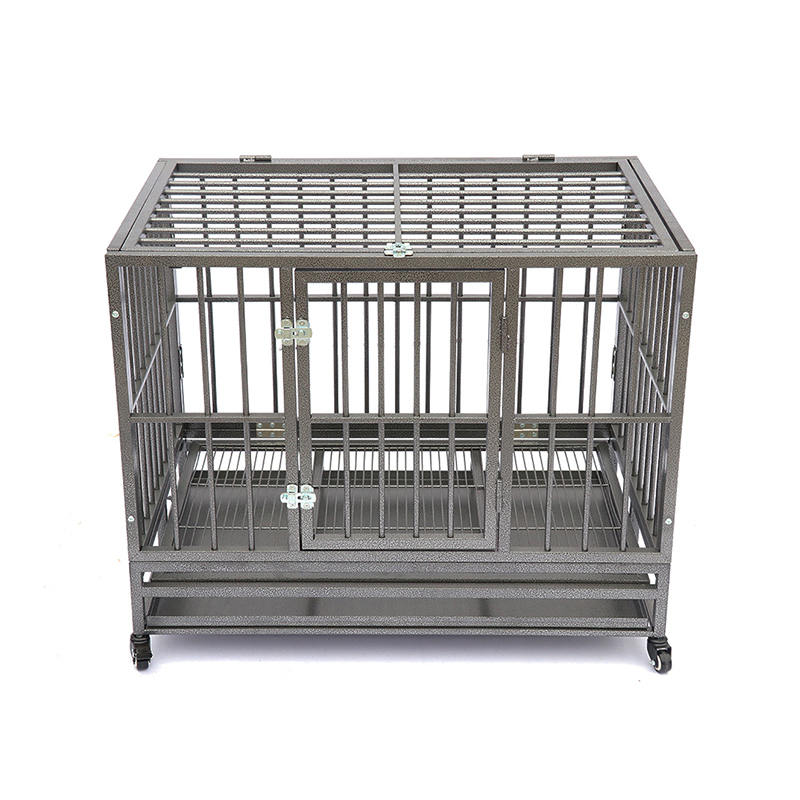
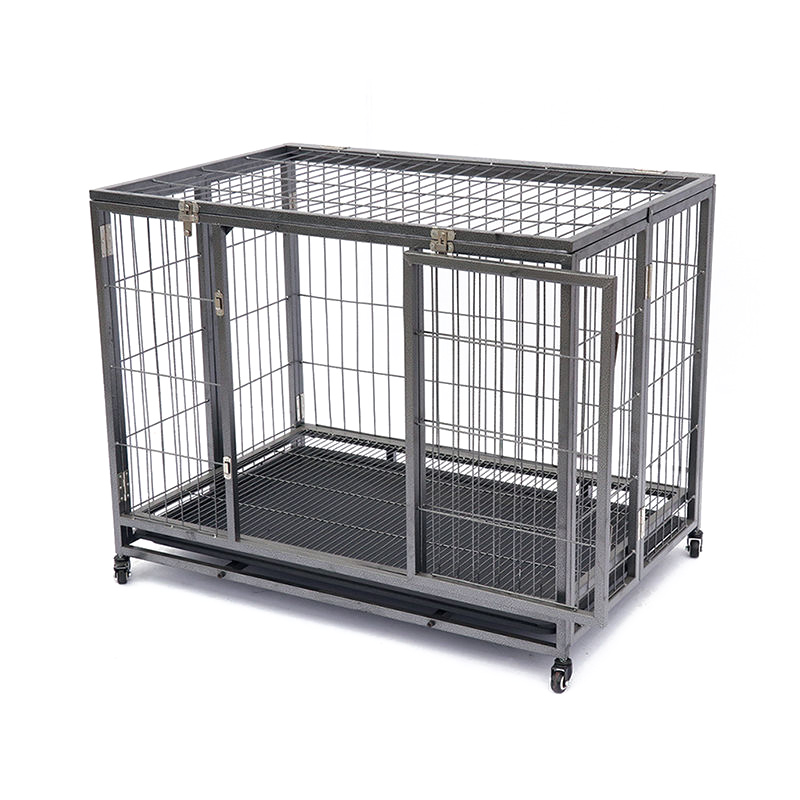
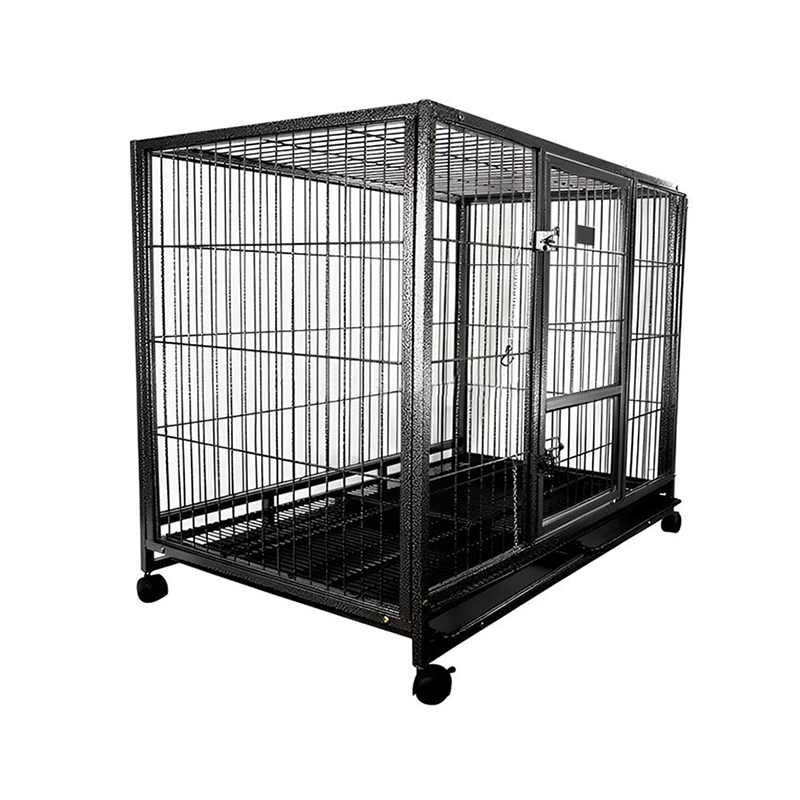
Chewing is another factor. Not every Boxer is a serious chewer, but boredom, separation anxiety, and insufficient exercise can lead to bar biting and door pushing. A crate with exposed sharp edges, thin wire, or a flimsy latch gives a determined dog more to work on. Reinforced corners and a door that sits squarely in its frame matter more than decorative curves. The open-top anti-chew tube metal dog crate is built around that kind of real-use pressure, with a frame style that is easier to inspect and clean than a folded decorative panel.
Ventilation is part of build quality too. A Boxer can heat up quickly after play or in a warm room. Wire mesh or tube spacing should allow steady airflow without creating gaps that a paw or muzzle can work into. Solid furniture panels can be attractive, but they need deliberate vents or open sections. A closed box with a small door may look like furniture, yet it can become stuffy and stressful for a dog that is already panting.
A Boxer crate needs structural rigidity and airflow, not just a size label. Check the door, latch, frame joints, and ventilation path before judging the finish.
Boxer Crate Size Chart: Length, Width, Height, and Weight
The chart below is a practical starting point, not a substitute for measuring the individual dog. Weight ranges overlap because Boxers vary in height and body length. When a dog sits between two sizes, choose the larger interior and use a divider or a snug bed to reduce empty space. Also allow for a water bowl, a thin mat, and the slight movement a dog needs when lying down.
| Dog Stage or Build | Typical Weight | Interior Length | Interior Width | Interior Height | Practical Note |
|---|---|---|---|---|---|
| Boxer puppy, 8 to 16 weeks | 10 to 25 lb | 30 to 36 in | 18 to 20 in | 21 to 24 in | Use a divider in a larger crate so the puppy has a snug sleeping area. |
| Young Boxer, 4 to 7 months | 25 to 50 lb | 36 to 42 in | 20 to 24 in | 24 to 30 in | Move the divider as the dog grows; avoid a permanent small crate. |
| Adult female or lean male | 50 to 65 lb | 42 in | 24 in | 30 in | Check standing height with the dog's head naturally raised. |
| Adult male or large build | 65 to 80 lb | 42 to 48 in | 24 to 28 in | 30 to 32 in | Choose 48 in if the dog cannot turn without crouching. |
| Very tall or 80 lb plus | 80 lb plus | 48 in | 28 to 30 in | 32 in | Measure shoulder height and prefer more length over a tight fit. |
Small differences matter. A half inch of lost height can force a dog to crouch, and a narrow door can make entry awkward for a broad-chested Boxer. If the crate will be used for travel or kennel rotation, confirm that the assembled dimensions still fit the vehicle or room. For retail displays, keep the size chart beside the crate so buyers can compare interior figures rather than guessing from the product name.
Use the chart to narrow the choice, then verify interior height and door clearance with the actual dog. A 42-inch crate is common, but 48 inches is often the calmer fit for a large Boxer.
How Much Crate Space a Boxer Actually Uses
The bar chart below compares typical crate length guidance with the growing Boxer. It is not a growth curve. It is a buying map for owners and buyers who need to match a crate size to a life stage without choosing a cage that is too small for an adult. The values are practical ranges, not fixed rules, because body length and leg length vary.
The chart shows why a puppy crate should not become the forever crate. A 30-inch puppy crate can be useful for the first weeks, but it will not support a Boxer through adolescence without a divider in a larger frame. A 42-inch crate covers many adults, but the 48-inch range gives more tolerance for long legs, thick bedding, and a dog that paces before settling. For a manufacturer, this is why stackable and open-top metal styles are useful: they can serve multiple life stages when paired with a divider and clear sizing labels.
For a wholesale buyer, the chart also helps with inventory mix. A store that stocks only small and medium crates will lose Boxer owners who need 42-inch and 48-inch options. A mix that includes a heavy-duty 42-inch model, a 48-inch model, and one furniture-style option covers the common indoor and utility uses. The exact mix should follow local demand, but the size gap is predictable enough to plan around.
Plan the crate for the adult size and use a divider for growth. The 42-inch and 48-inch range is the practical core for Boxer owners.
Metal Dog Crate vs Furniture-Style Dog Crate
A metal crate is usually the easier choice for a Boxer that chews, digs at the tray, or needs strong airflow. Coated wire or tube frames are simple to wipe down, and the open structure lets the dog see the room. A furniture-style crate is better for a dog that settles reliably and for an owner who wants the crate to serve as a side table or room feature. The trade-off is simple: metal wins on ventilation and cleaning, while furniture style wins on visual integration.
When metal makes more sense
Choose metal when the dog is young, powerful, or still learning to settle. A heavy-duty frame, secure latch, and removable tray reduce daily friction. Metal also makes it easier to see whether the dog has chewed bedding, spilled water, or scratched the tray. For a Boxer that jumps in and out, a lower entry threshold and a door that opens fully can matter more than decorative panels. The open-top heavy tube metal dog cage is one example of a design that prioritizes frame strength and access over closed-in furniture looks.
When furniture style makes more sense
Choose furniture style when the crate sits in a living area and the dog is already comfortable in a crate. A wooden frame with a cushion and wheels can double as a bedside table or a quiet corner. The important checks are ventilation, interior height, and door swing. A furniture-style crate that is too low or too enclosed may work as a cabinet but not as a daily crate for a tall Boxer. The furniture-style large wooden dog cage with wheels and cushion is a sensible reference for indoor placement where the crate needs to blend with the room.
Neither style replaces training. A furniture-style crate does not stop chewing, and a metal crate does not create calm. The dog needs a routine, a comfortable bed, and a door that is closed for rest rather than punishment. Owners who expect the crate to solve behavior problems usually buy twice, first for looks and then for function.
Pick metal for ventilation and durability, and furniture style for indoor integration only when the interior dimensions and airflow are still suitable for a Boxer.
Ventilation, Visibility, and the Open-Top Detail
Boxers are active breathers. After a walk or a play session, they can take a while to cool down. A crate with restricted airflow will feel warmer and may increase panting, scratching, and resistance. Wire or tube spacing should allow cross-flow without letting a paw or muzzle become trapped. The crate should also give the dog a clear view of the room, because many Boxers settle faster when they can see their people. Total privacy is not always a favor.
Open-top designs are popular for a reason. They give the handler easier access for cleaning, bedding changes, and lifting a puppy in and out. They can also improve air movement and make the crate feel less like a closed box. However, an open top is not a substitute for a secure door or a proper latch. A Boxer can stand and push upward, so the top edge should be smooth and strong. If the crate is used outdoors, an open top needs a cover or a sheltered position to manage rain and direct sun.
Visibility has a practical side for retailers too. Shoppers want to see the door mechanism, the tray, and the frame joints. A crate that looks open and easy to inspect is easier to sell than a closed cabinet with hidden fittings. For online listings, add clear photos of the latch, the tray, the interior height, and the door opening. Those details reduce returns from buyers who expected a different scale.
Good airflow and a clear view help a Boxer settle, but the door and frame still have to resist pushing and chewing. Ventilation should never come at the cost of security.
Puppy Setup: Use a Divider, Not a Smaller Forever Crate
A Boxer puppy can start in a 42-inch crate with a divider panel that reduces the sleeping area. The divider should create a snug space for rest, but not so snug that the puppy cannot stand or turn. Leave room for a water bowl if the puppy will be inside for a longer period, and remove loose bedding that can be chewed and swallowed. The divider moves back as the puppy grows, so the crate grows with the dog without a second purchase.
Set the first crate up before the puppy arrives. Place it where the family spends time, not in a remote laundry room. Feed meals near the crate, toss a treat inside, and leave the door open during short supervised sessions. Close the door for brief periods after exercise and before the puppy is overly tired. A Boxer puppy that is already overstimulated will fight the crate, and a crate that is too large without a divider gives the puppy room to pace and soil one corner.
Nighttime setup needs a simple routine. Keep the crate near the bedroom for the first weeks, take the puppy out before bedtime, and return it calmly after a toilet break. Do not use the crate only when you leave the house, or the dog will link it to isolation. Short, positive sessions build more value than a long first night. If the puppy chews the divider or tries to climb the door, check the latch and the frame before assuming the crate is too small.
A divider turns an adult-size crate into a puppy crate. Use it to control space, not to force a growing Boxer into a cage that is already too small.
Placement, Routine, and the Mistakes That Cause Resistance
The crate should sit on a level floor, away from direct heat and drafts. In a busy room, place it where the dog can see a doorway but not be in the middle of foot traffic. A corner reduces visual stimulation and gives the dog a sense of backing. If the floor is hard, use a thin mat under the crate to prevent sliding, but avoid thick rugs that bunch under the frame. The crate should not wobble when the dog enters.
Routine matters more than decoration. Feed at consistent times, exercise before long crate periods, and give the dog a chance to toilet before the door closes. A Boxer that has been alone all day and then placed in a crate for the evening will not settle just because the crate is expensive. Use the crate for rest after activity, not as a place to store the dog when life gets inconvenient. The difference shows in how quickly the dog enters and lies down.
Common mistakes are easy to correct. Buying a crate that is too small is the most expensive one. Placing the crate in a hot garage or a damp basement is another. Using the crate only for punishment creates distrust. Leaving a collar or loose harness on inside the crate can catch on bars. Overfilling the crate with bedding leaves less room for the dog to turn. A simple setup with a secure tray, a thin bed, and a clear routine works better than a crowded crate.
A stable crate in the right room and a predictable routine reduce resistance more than extra padding or a fancier frame. Keep the setup simple and consistent.
Buying Checklist for Retailers and Wholesale Buyers
When sourcing a dog crate for Boxer owners, start with the size mix. A supplier that offers 42-inch and 48-inch metal crates, plus an indoor furniture-style option, can cover most of the category. Confirm interior dimensions in writing, not just the product label. Ask for the door opening width, tray clearance, frame gauge, latch type, and packaging dimensions. Those figures matter to retail buyers because a crate that looks right on a web page can arrive with a door that is too narrow for a broad-chested dog.
A dog crate manufacturer with both metal and furniture-style production lines can often support a more consistent size range and finish. It is still worth checking the details: spot-weld quality, coating thickness, edge smoothing, tray fit, and hinge alignment. Ask how the factory handles sample checks and whether the design can be adjusted for different markets. For a wholesaler, a stable carton size and clear assembly instructions reduce damage claims and returns. These are not glamorous details, but they decide whether a container arrives sellable.
Shipping and display also belong in the buying plan. Crates are bulky, so carton stacking strength and assembly time affect landed cost. If the crate is stackable or foldable, confirm that the feature works with the final latch and tray design. For furniture-style units, check corner protection and hardware packing. A supplier that exports to multiple countries should be able to discuss standard requirements without turning every order into a custom project.
For wholesale sourcing, lock the interior dimensions, latch type, frame strength, carton size, and finish standard before comparing unit price. Those details protect margin after delivery.
Explore Crate Styles That Fit a Boxer
Owners and buyers often need to move from a size guide to a specific crate family. The two links below lead to the main metal and furniture-style dog crate ranges on this site. Use them to compare frame styles, door layouts, and indoor options, then match the interior dimensions to the adult Boxer rather than the puppy.
A metal crate is usually the first stop for a young, strong, or messy dog. A furniture-style crate is better once the dog is settled and the crate needs to live in a shared room. In both cases, the same rules apply: measure the interior, check the door swing, and confirm that the dog can stand and turn without crouching.
Use the size guide first, then choose the crate family. The right frame style cannot fix a crate that is too short or too narrow for an adult Boxer.
Dog Crate for Boxer: Frequently Asked Questions
What size dog crate for a Boxer is usually right?
Most adult Boxers do well in a 42-inch crate with about 30 inches of interior height. Large males, very tall dogs, and owners who use thick bedding may need a 48-inch crate. Always measure interior length, width, and height rather than relying on the exterior label.
Do Boxers need a 42-inch or 48-inch dog crate?
Start with 42 inches if the adult dog is in the 50 to 70 pound range and can stand upright with clearance. Move to 48 inches if the dog is 70 pounds or more, has a long body, or cannot turn easily. A 48-inch crate also gives more room for a bed and bowl.
Is a metal or furniture-style dog crate better for a Boxer?
Metal is usually better for ventilation, cleaning, and chew resistance. Furniture style is better for indoor integration when the dog is already crate trained. Do not choose furniture style if the interior height is too low or the airflow is poor.
How do I crate train a Boxer puppy without using too small a crate?
Use an adult-size crate with a divider panel. Make the sleeping area snug at first, then move the divider back as the puppy grows. Feed near the crate, use short supervised sessions, and avoid using the crate only when the puppy is left alone.
Can a Boxer chew through a wire crate?
A determined dog can damage weak wire, thin latches, or poorly aligned doors. Choose a heavy-duty frame with secure bolts and smooth edges. Exercise, mental stimulation, and a consistent routine reduce the risk, but no crate should be treated as a substitute for supervision with a dog that panics or chews aggressively.
How much ventilation does a Boxer crate need?
The crate should allow cross-flow on at least two sides and give the dog a clear view of the room. Avoid closed furniture panels with small vents in warm rooms. If the crate is outdoors, provide shade and rain protection while keeping air moving.
Where should I place a Boxer crate at home?
Place it in a level, draft-free room where the dog can see the family but is not in the middle of foot traffic. Keep it away from direct heat and damp floors. A corner position often helps the dog settle because it feels protected on two sides.
What should a wholesale buyer check before ordering Boxer crates?
Confirm interior dimensions, door opening, latch type, frame gauge, tray fit, coating quality, carton size, and assembly time. Ask for sample checks and packaging details. A supplier with both metal and furniture-style lines can help build a balanced size mix for retail and online sales.
The best dog crate for a Boxer is the one that fits the adult dog's standing height, turning space, and chewing habits. Size comes first, then frame style and routine.
Related Products
Your pet deserves good, Contact now.
Whether you want to become our partner or need our professional guidance or support in product selections and problem solutions, our experts are always ready to help within 12 hours globally.
 CONTACT US

QUICK LINKS
PRODUCTS
-
Address
- Room 501,Unit 1 ,Buliding 6,Wuyi Guoji Xincheng,No.379,Zhuxi Avenue,Jianyang District,Nanping City, Fujian Province.
- No. 139-6 , Tongyu Middle Road, Nantong, Jiangsu, China
-
Mobile
- +86-13616986006
-
E-mail :

Copyright © 2025 Pet Home (Haian) Co., Ltd All Rights Reserved. Custom Pet Cages Manufacturers OEM/ODM Pet Household Products Factory

