
 EN
 English
 中文简体
Home / News / Industry News / Dog Crate Height Guide: Measuring Interior Headroom for Better Fit and Safer Sizing
News


Dog Crate Height Guide: Measuring Interior Headroom for Better Fit and Safer Sizing
 2026.11.17
 Industry News
Content
- 1 What Dog Crate Height Actually Means on a Specification Sheet
- 2 How to Measure a Dog for Crate Height Without Guessing
- 3 Why Interior Height Matters More Than the Label on the Box
- 4 Dog Crate Height by Size Band: A Practical Buyer's Starting Point
- 5 Open-Top, Furniture-Style, and Stackable Designs: How Construction Changes Usable Height
- 6 Height, Ventilation, and Safety: What a Taller Crate Does and Does Not Solve
- 7 Sourcing Checklist for Wholesalers and Private-Label Buyers
- 8 FAQ About Dog Crate Height
- 8.1 What is the ideal dog crate height?
- 8.2 Is dog crate height the same as the crate size label?
- 8.3 How much headroom should I add above my dog's head?
- 8.4 Does an open-top crate give more usable height?
- 8.5 How do I check height on a furniture-style dog crate?
- 8.6 What should a wholesaler request from a dog crate manufacturer?
- 8.7 Can a taller crate replace proper length and width?
- 9 A Final Dog Crate Height Check Before You Order
A 30-inch-tall metal dog crate can leave only about 25 to 26 inches of usable headroom once the roof frame, floor tray, and bedding are counted. That difference matters when a buyer is matching a crate to a 23-inch dog, building a retail size run, or checking a private-label sample before production. The practical rule is simple: plan around usable interior height, not the outside measurement printed on a carton. Dog crate height should start with the dog standing naturally, add clearance for movement and bedding, and then be checked against the factory drawing.
This guide is written for importers, wholesalers, retail buyers, and brand owners who need a repeatable way to compare metal crates, furniture-style crates, open-top models, and outdoor cages. It covers measurement, construction losses, size bands, safety checks, and sourcing questions. Where product examples help explain the trade-offs, they come from our own dog crate lines rather than from unrelated brands.
What Dog Crate Height Actually Means on a Specification Sheet
In everyday use, people say “crate height” to mean the outside height of the product. In purchasing and production, that is only one number. A crate specification should separate exterior height, interior height, door opening height, tray-to-roof clearance, and usable height after bedding. Those figures do not always move together. A taller roof line may look more generous, but a deep tray or a thick top frame can reduce the space where the dog actually stands.
For a manufacturer, the most useful reference is the internal dimension from the floor surface to the lowest point of the roof or top frame. If the crate has a removable tray, measure both with and without the tray. If it has a cushion or mat, measure with the bedding in place. This prevents a common B2B problem: the sample looks correct on a table, but the retail buyer measures the interior with a tape and finds that a large dog cannot stand without lowering its head.
| Measurement term | What it measures | Why buyers should check it |
|---|---|---|
| Exterior height | Floor or base to the highest point of the roof, frame, or furniture top | Useful for packaging, container planning, and retail shelf display, but not enough for dog fit |
| Interior height | Inside floor to the lowest roof bar, top panel, or frame intrusion | The main fit dimension for a standing dog |
| Door opening height | Clearance through the front or side door | Affects entry, cleaning, and how easily a dog can step in and out |
| Tray-to-roof height | Height above the tray or floor pan, not above the outside base | Shows the real standing space after the tray is fitted |
| Bedding clearance | Height left after a mat, cushion, or pad is added | Prevents a crate that fits on paper from becoming too low in use |
A crate supplier should be able to provide these figures on a measured drawing, not only in a catalogue photo. For wholesale programs, ask for the measurement point to be marked. “Height” without a reference point creates room for disagreement later, especially when a buyer compares a metal crate with a furniture-style crate that has a thicker top panel and a removable cushion.
Use interior height as the approval dimension; an exterior-height match alone is not a fit confirmation.
How to Measure a Dog for Crate Height Without Guessing
The dog should stand on a flat floor in a natural position, not sit, crouch, or lean against a wall. Measure from the floor to the top of the head or the tips of the ears, whichever is higher. For a dog with a heavy coat, do not press the tape down through the fur. For a young dog that is still growing, measure again before ordering a second size run, and avoid treating a puppy measurement as an adult measurement.
- Place the dog on a firm, level surface and let it stand squarely.
- Measure from the floor to the highest point of the head or ears.
- Add 2 to 4 inches of headroom as a starting clearance, then adjust for coat, activity, and bedding.
- Add the thickness of the intended mat, cushion, or tray if it is not already included in the interior measurement.
- Check the door opening and the turning space, not only the standing height.
- Compare the final figure with the internal drawing, not the outside carton size.
- For a size range, repeat the check with the smallest and largest dogs the SKU is meant to serve.
A 22-inch dog does not automatically need the same crate height as another 22-inch dog. A short-backed dog with a deep chest may stand differently from a tall, narrow dog. A young active dog may need more clearance than an older dog that rests more often. The 2-to-4-inch allowance is a practical starting point, not a universal law. The important point is to write the assumption into the specification so a factory sample, a retail listing, and a customer service answer all use the same logic.
For furniture-style dog crates, measure the interior with the cushion removed and with the cushion fitted. Some models are designed as end tables or corner tables, so the top panel and side panels may be thicker than a wire crate frame. That construction is useful in a living room, but it can change usable height. A buyer who only checks the outside cabinet height may approve a crate that is too low once the cushion is inside.
Measure the standing dog first, then subtract construction and bedding losses; never start with the outside crate height.
Why Interior Height Matters More Than the Label on the Box
A “42-inch” dog crate usually refers to length, not height. Buyers who treat that number as a height guide can end up with a crate that is long enough but not tall enough. The same confusion appears in marketplace listings that show a single size label without a dimension drawing. For a wholesaler building a size run, the safer approach is to list length, width, exterior height, interior height, and door opening height as separate fields.
The chart below shows a simple planning example for a nominal 30-inch metal crate. It is not a rule for every model, but it illustrates why the outside number should be treated as a starting point rather than a fit answer.
How a nominal 30-inch crate loses usable height
In this example, the dog gains or loses headroom through construction details rather than through the headline size. A metal dog crate with a shallow tray and a slim top frame may keep more of its listed height than a model with a deep pan and thick roof bars. A furniture-style crate may lose height through the cabinet top and cushion, but it may gain value in a room where the crate also works as a side table. An open-top crate may remove the roof-frame loss, but the door height and latch position still need checking.
For our own production planning, the internal drawing is the control document. The carton height, the assembled exterior height, and the usable interior height are related but not interchangeable. That distinction helps a private-label buyer compare quotations from different factories without being misled by a single “tall” or “large” label.
Retail and e-commerce teams also benefit from this discipline. A listing that states “interior height: 25.5 inches with tray fitted” gives customer service a clear answer. A listing that only says “30-inch crate” leaves room for returns when the buyer measures the inside and gets a smaller number.
A size label can describe length, exterior height, or a model name; only a measured interior height confirms standing room.
Dog Crate Height by Size Band: A Practical Buyer's Starting Point
Size bands are useful for planning a range, but they should not replace measuring the actual dog. The table below is a starting point for buyers who need to brief a supplier or compare samples. It assumes a standing measurement and a 2-to-4-inch headroom allowance, with extra space for bedding where relevant. Breed names alone are not reliable because body height varies within the same breed.
| Size band | Example standing height | Suggested interior height | Typical exterior height target | Buyer note |
|---|---|---|---|---|
| Small | Up to about 14 inches | 16 to 18 inches | About 18 to 20 inches | Check door height and cushion thickness |
| Medium | About 14 to 20 inches | 18 to 24 inches | About 20 to 26 inches | Allow more room for active dogs and thick bedding |
| Large | About 20 to 26 inches | 24 to 30 inches | About 26 to 32 inches | Confirm roof-frame intrusion and tray depth |
| Extra-large | About 26 inches and above | 30 inches and above | About 32 inches and above | Check structural strength, door width, and packaging height |
These bands help a wholesaler avoid an obviously undersized sample, but they do not remove the need for a real measurement. A 24-inch interior height may be generous for one 20-inch dog and tight for another if the dog has a tall head carriage or the crate has a thick mat. The same logic applies to furniture-style dog crates, where the internal cabinet height may be reduced by a top panel, a drawer, or a cushion.
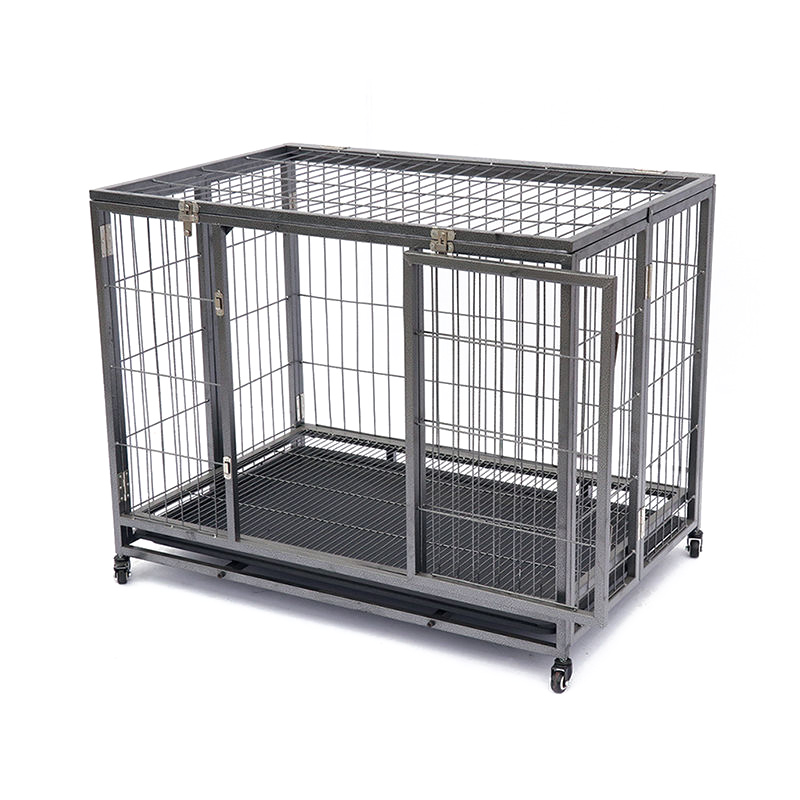
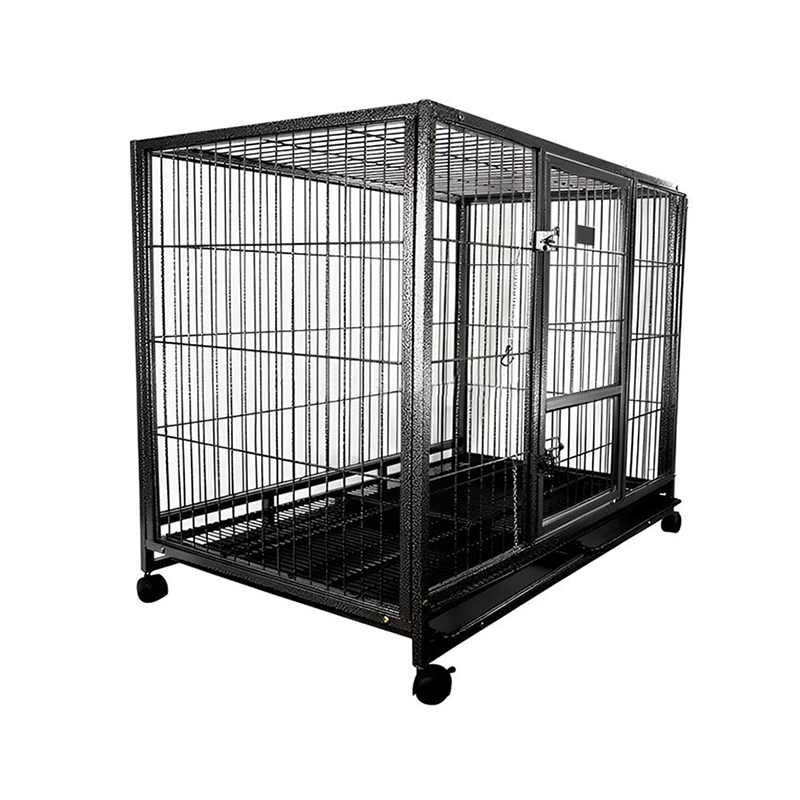
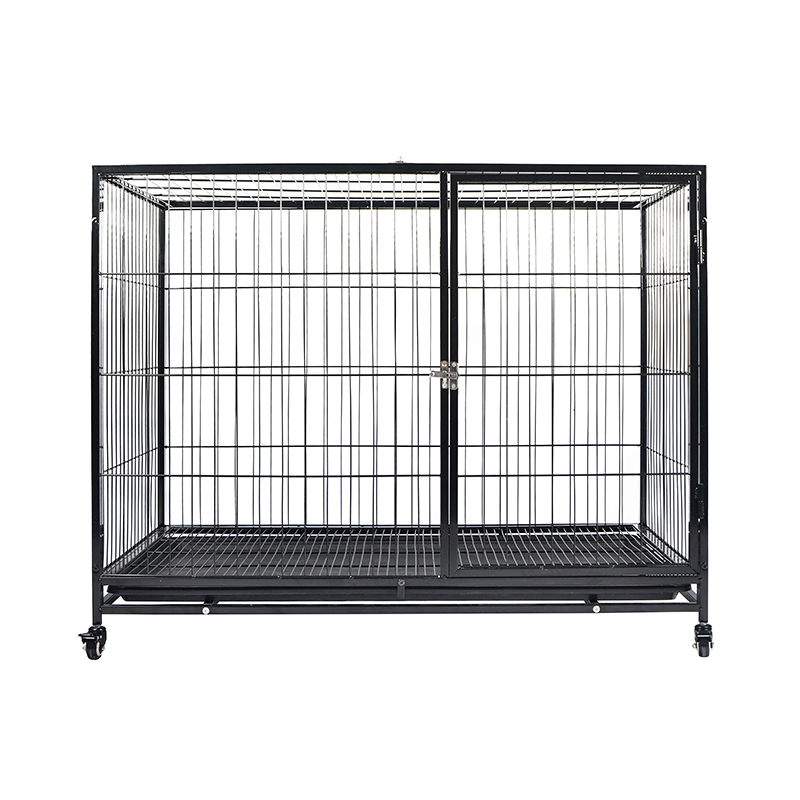
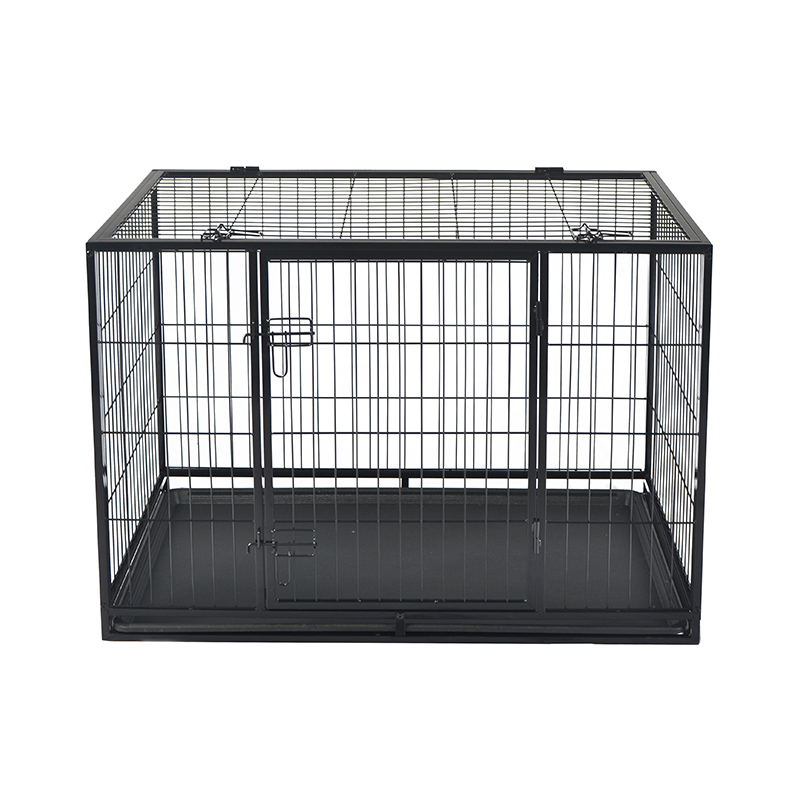
For buyers developing a heavy-duty range, open-top construction is worth discussing early. Removing the top frame can preserve more usable height without making the outside footprint larger. It also changes cleaning access and the way the crate looks in a retail photo. The point is not that one construction is always better; it is that the height budget should be agreed before tooling and packaging are finalised.
 Heavy Duty Open Top Metal Dog CageOpen-top metal cage with front and top doors, folding storage, braked wheels, and a pull-out ABS tray; useful when comparing usable height and cleaning access.View Product →
Size bands speed up range planning, but the approval sample should be checked against the measured dog and the internal height drawing.
Open-Top, Furniture-Style, and Stackable Designs: How Construction Changes Usable Height
Two crates can have the same exterior height and still give different standing room. The difference usually comes from the roof structure, the floor tray, the door frame, and the intended bedding. A buyer who compares products only by a catalogue headline will miss these details, and the gap often appears at the sample stage when the dog is placed inside.
Open-top crates
An open-top metal crate removes the full roof panel or top bars, so the usable height is often closer to the exterior height than it is on a closed crate. That can be useful for tall dogs, for easier cleaning, and for handlers who want to reach in from above. The trade-off is that the top opening, door latch, and side-frame height still define safety. A dog that can climb or jump should not be left unattended simply because the top is open. For a supplier, the measurement drawing should show the clear opening and the highest point the dog can reach when standing.
Furniture-style dog crates
A furniture-style dog crate adds a tabletop, cabinet panels, or a cushion, so the interior height can be lower than the outside cabinet height suggests. This is not a defect; it is a design choice. In a living room, the crate may need to work as an end table or corner table, and the visual proportions matter. The buyer's job is to state the dog's standing height and the intended cushion thickness, then ask for the interior measurement with the cushion fitted.
For larger indoor models, wheels and a removable tray can improve cleaning and movement, but they also add parts that need to be checked in the sample. A crate on wheels should be measured at the height the dog actually uses, not only at the cabinet body. If the wheel base raises the whole unit, the exterior height will change while the interior height may stay the same.
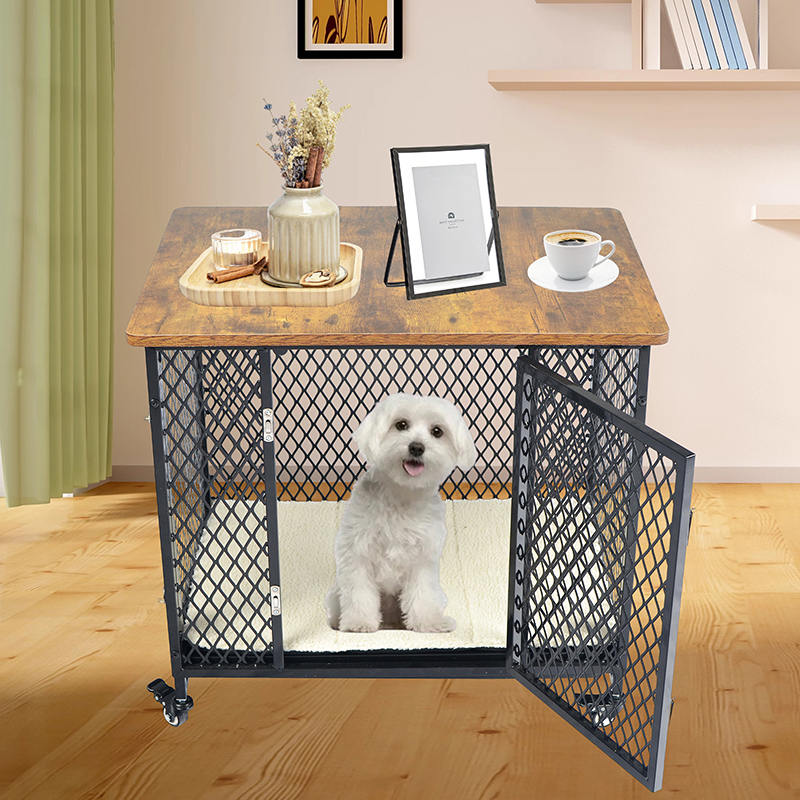 Furniture Style Large Wooden Dog Cage with WheelsLarge wooden indoor crate with wheels, removable cushion, diamond mesh, and a top platform; suitable for checking furniture-style use, cleaning, and wheel-related height.View Product →
Stackable and folding metal crates
Stackable crates need a stronger frame, and that frame can reduce internal height if it is placed inside the usable space. Folding crates introduce hinges and locking points that may sit inside the door opening or near the roof line. These are normal engineering details, but they should be visible on the drawing. For a wholesale order, ask whether the stated height is measured to the frame, the roof bars, or the highest point of the folded joint. The answer should be consistent across the size run.
Construction style also affects how a buyer describes the product online. “Furniture-style large wooden dog cage with wheels and cushion” is more useful than “large dog crate” because it tells the customer what is included and why the interior height may differ from a wire crate. The same principle applies to open-top and stackable models: name the feature, then show the measurement that the feature changes.
Construction style changes usable height; approve the internal drawing for the exact configuration, including cushion, tray, and top frame.
Height, Ventilation, and Safety: What a Taller Crate Does and Does Not Solve
A taller crate can give a dog more standing room, but it does not automatically make the crate safer or more comfortable. Length, width, door security, bar spacing, ventilation, and the dog's behaviour all matter. A dog that can stand comfortably but cannot turn around will still be uncomfortable. A crate with generous height but a weak latch is not a better product. Buyers should treat height as one dimension in a set, not as a single performance claim.
For outdoor models, height interacts with cover design. A waterproof cover may add protection from rain and sun, but it can also reduce airflow if the sides are closed too tightly. The usable height under the cover should be checked with the cover fitted, not only with the bare frame. A dog that can stand inside the crate may still need room to move without pressing against the cover. For a manufacturer, this is a design question: how much clearance should the cover leave above the crate, and how should the sides be opened for ventilation?
For indoor models, height should be matched with a sensible resting area. A dog that is crated for rest may settle with a cushion, while a dog that is crated for travel or temporary containment may need a flatter surface. The cushion height should be part of the measurement, not an afterthought. A 2-inch mat can turn a borderline fit into a tight fit, especially in a furniture-style crate with a fixed top panel.
Wholesalers and retailers should also consider the customer's measuring ability. A shopper may measure the dog standing on carpet, then compare that figure with an exterior crate height online. The result can be a return if the interior height is not clearly stated. A simple size graphic that separates exterior height, interior height, and cushion height can reduce confusion before the sale rather than after it.
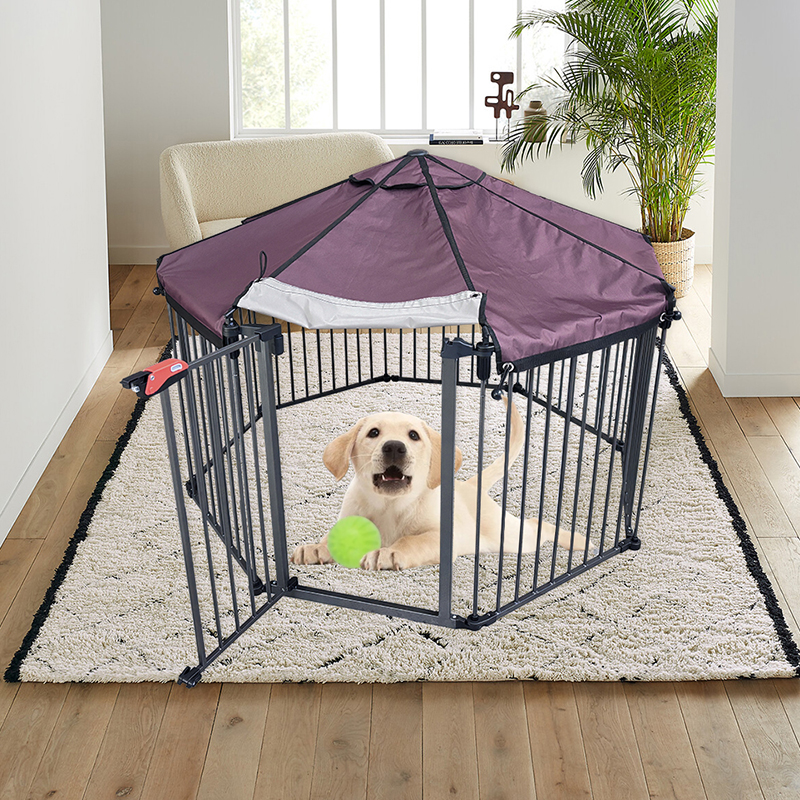 Outdoor Heavy Duty Tube Big Dog Cage with CoverSpacious outdoor cage for medium and large dogs with UV-resistant waterproof cover and double-layer powder-coated square tube frame; relevant to height specification and weather protection.View Product →
A taller crate is only helpful when it is paired with adequate length, secure doors, sensible ventilation, and a measured bedding allowance.
Sourcing Checklist for Wholesalers and Private-Label Buyers
When a dog crate height specification is being prepared for production, the conversation should move from “what size is popular?” to “what internal height must this SKU deliver?” That shift protects the buyer, the factory, and the end customer. It also makes quotations easier to compare because each supplier is responding to the same internal dimension rather than to a loose product description.
- Ask for a dimension drawing that marks exterior height, interior height, door opening height, and tray position.
- State the intended dog standing height and the headroom allowance in the request for quotation.
- Confirm whether the interior height is measured with or without the tray and cushion.
- Agree on a measurement tolerance and write it into the purchase order.
- Check how the roof frame, hinges, and locking points affect the clear opening.
- Review packaging height and container loading before approving an unusually tall carton.
- Ask for replacement parts and assembly instructions so the retail customer can keep the crate in use.
- For furniture-style ranges, confirm the cushion thickness, top panel thickness, and wheel height.
- Request a pre-production sample measured by the same method that will be used for inspection.
- Keep the approved measurement sheet with the product record, not only in an email thread.
As a dog crate manufacturer and supplier working with wholesale and private-label programs, we prefer to settle these figures before the sample is built. It is easier to adjust a drawing than to rebuild a production run. For buyers comparing an open-top metal crate with a furniture-style model, the discussion should include how the product will be displayed, packed, and explained to the end customer. A crate that measures well but is hard to describe will create friction in the sales channel.
Useful next references for range planning: the metal dog crate range and the open-top heavy tube metal dog cage design.
Put the interior height, measurement method, and tolerance on the approved drawing before the order moves to production.
FAQ About Dog Crate Height
What is the ideal dog crate height?
There is no single ideal number because it depends on the dog's standing height, coat, activity, and bedding. A practical starting point is the standing height plus 2 to 4 inches of usable interior clearance. The figure should be checked against the internal crate measurement, not the outside carton height.
Is dog crate height the same as the crate size label?
Not always. A “42-inch” crate usually refers to length, while height is a separate dimension. A product may be called large or extra-large without giving a clear internal height. Buyers should ask for a dimension drawing that lists length, width, exterior height, and interior height separately.
How much headroom should I add above my dog's head?
Two to four inches is a reasonable starting allowance for many dogs. A giant breed, a thick-coated dog, or a very active dog may need more. A cushion or mat can remove an inch or more of usable space, so measure with the bedding in place if that is how the crate will be used.
Does an open-top crate give more usable height?
It often reduces the roof-frame intrusion, so the interior height may be closer to the exterior height. However, the door height, side frame, latch position, and the dog's ability to climb still matter. Open-top designs should be measured and used with the same care as closed crates.
How do I check height on a furniture-style dog crate?
Measure the interior with the cushion removed and with the intended cushion fitted. Check the top panel, drawer, and wheel base if they affect the internal space. A furniture-style crate can be a good indoor fit, but the cabinet structure may reduce usable height compared with a simple wire crate.
What should a wholesaler request from a dog crate manufacturer?
Ask for a measured drawing, the measurement definition, the internal height with tray and bedding, the door opening height, and the agreed tolerance. Also confirm carton dimensions and container loading if the height change affects packaging. These details make quotations easier to compare and reduce sample disputes.
Can a taller crate replace proper length and width?
No. Height is only one part of fit. A dog also needs enough length to lie down and enough width to turn. A tall but narrow crate can still be uncomfortable. The buying decision should combine height, floor area, door access, ventilation, and the dog's behaviour.
Use dog crate height as a measured interior clearance, then confirm length, width, door access, and bedding before approving the product.
A Final Dog Crate Height Check Before You Order
Before a sample is approved, take one more measurement pass with the actual dog or with the agreed size range. Check the interior height with the tray fitted, then with the cushion or mat in place. Look at the door opening, the roof frame, and the highest point inside the crate. If the product is furniture-style, check the cabinet opening and the top panel. If it is an outdoor model, check the clearance under the cover.
The goal is not to make every crate as tall as possible. The goal is to make the height claim accurate and useful for the buyer. A well-documented crate helps a wholesaler plan a size run, helps a retailer answer customer questions, and helps the end user choose a product that the dog can stand in comfortably. For a manufacturer and supplier, that accuracy is part of the product quality, not a separate paperwork task.
Approve dog crate height only after checking the usable interior space with tray, bedding, door, and top structure in the final configuration.
Related Products
Your pet deserves good, Contact now.
Whether you want to become our partner or need our professional guidance or support in product selections and problem solutions, our experts are always ready to help within 12 hours globally.
 CONTACT US

QUICK LINKS
PRODUCTS
-
Address
- Room 501,Unit 1 ,Buliding 6,Wuyi Guoji Xincheng,No.379,Zhuxi Avenue,Jianyang District,Nanping City, Fujian Province.
- No. 139-6 , Tongyu Middle Road, Nantong, Jiangsu, China
-
Mobile
- +86-13616986006
-
E-mail :

Copyright © 2025 Pet Home (Haian) Co., Ltd All Rights Reserved. Custom Pet Cages Manufacturers OEM/ODM Pet Household Products Factory

