
 EN
 English
 中文简体
Home / News / Industry News / Dog Crate for a Medium Dog: Interior Sizing, Bar Spacing and Sourcing Checks
News


Dog Crate for a Medium Dog: Interior Sizing, Bar Spacing and Sourcing Checks
 2026.11.17
 Industry News
Content
- 1 What "Medium" Really Means When Choosing a Dog Crate for a Medium Dog
- 2 The Four Interior Measurements to Take Before You Buy
- 3 Crate Length by Adult Weight Band
- 4 Metal, Furniture-Style or Playpen: Matching the Crate to the Home
- 5 Bar Spacing, Door Style and Chew Resistance
- 6 Crate or Playpen? Space and Exercise for a Medium Dog
- 7 Puppy to Adult: Sizing a Medium Dog Without Buying Twice
- 8 Placement, Airflow and Living With a Medium Dog Crate
- 9 Introducing the Crate Without a Fight
- 10 What Wholesalers, Retailers and Private-Label Buyers Should Check
- 11 Six Sizing Mistakes That Send a Medium Dog Crate Back
- 12 Sizing Help and Product Lines to Explore Next
- 13 FAQ: Dog Crate for Medium Dog Sizing and Buying Questions
- 13.1 What size dog crate does a medium dog need?
- 13.2 Is a 36 inch crate big enough for a medium dog?
- 13.3 How much extra space should a dog crate have?
- 13.4 Does a medium dog need a crate with a divider?
- 13.5 Is bar spacing more important than crate size for a medium dog?
- 13.6 Can a furniture-style crate be used for a medium dog?
- 13.7 What should a wholesaler check with a medium dog crate supplier?
- 13.8 Should a medium dog crate be bigger if the dog is left alone?
A 21 kg cattle dog cross measures roughly 68 cm from nose to the base of the tail and stands about 50 cm at the shoulder. Put that dog in a crate sold as "medium" and you will often find 76 cm of interior length, 48 cm of width and a roof that sits barely a hand's width above the ears. The dog can lie down, but it cannot stand without crouching, and it cannot turn without bracing against the bars. That is not a sizing preference; it is a welfare problem that shows up later as reluctance to enter the crate, chewing at the door, or a dog that sleeps standing up.
The conclusion first: buy a medium dog crate by interior dimensions and bar spacing, not by the word printed on the carton. A well-matched crate for a medium dog gives the adult animal enough space to stand upright, turn around and stretch out flat, with about 5 to 8 cm of headroom and 8 to 12 cm of extra length beyond the body. Anything tighter and the crate becomes a storage box rather than a resting place.
Why this matters commercially as well as practically: "medium" is a marketing band, not a standard. Two factories can ship a crate labelled 36 inch and produce interiors that differ by 3 cm in length and 2 cm in usable width, because one measures to the outer frame and the other measures the internal floor. For a retail buyer or a wholesale account, that difference becomes returns, negative reviews and support tickets. For a dog owner, it becomes a second purchase six months later.
What "Medium" Really Means When Choosing a Dog Crate for a Medium Dog
Weight charts place medium dogs between roughly 10 kg and 25 kg, but that band hides enormous shape variation. A whippet at 15 kg is long, deep-chested and short on body fat. A bulldog at 22 kg is low, wide and thick through the shoulders. A shiba at 11 kg is compact and upright. Sizing all three with one 36-inch crate will satisfy two and shortchange the third.
Breed shape changes three numbers more than weight does:
- Body length decides interior length. Measure from the tip of the nose to the base of the tail with the dog standing square, not curled.
- Shoulder width decides interior width. A dog needs enough floor to turn in one movement; if it has to shuffle, the crate is narrow.
- Standing height decides interior height. Measure at the top of the head or the tips of the ears, whichever is taller, with the neck in a normal position.
A rough working rule for medium adults: interior length equals body length plus 8 to 12 cm, interior height equals standing height plus 5 to 8 cm, and interior width equals shoulder width multiplied by 1.2. For a 60 cm body, 50 cm standing height and 20 cm shoulder width, that points to an interior near 70 cm by 45 cm by 56 cm, which is often sold as a 36-inch crate but is not always built to those internal figures.
Two more variables quietly consume space: the floor tray and the cushion. A raised tray lip can lift the floor 3 cm and reduce usable height, and a thick pad removes another 4 cm. Measure with the tray in place and the bedding you actually intend to use, or you will size against numbers that never exist in the room.
"Medium" describes a weight band, not a fit; the crate that suits a medium dog is the one whose interior length, width and height match that individual dog.
The Four Interior Measurements to Take Before You Buy
Take a tape measure into the room where the crate will sit, and measure the dog, not the product photo. The five checks below cover everything that decides whether a medium dog crate is comfortable, and they are the same checks a factory uses when a client asks for a custom size.
| Measurement | What to check | Target for a medium dog (15–25 kg) | Tolerance worth planning for |
|---|---|---|---|
| Interior length | Front bars to the back panel, measured along the floor | Body length plus 8–12 cm | 2 cm variation between factories measuring inside and outside frames |
| Interior width | Side to side at floor level, between the tray rails | 1.2 times shoulder width, minimum 43 cm | Door locks and hinges can remove 2–4 cm of usable width |
| Interior height | Floor to the lowest roof bar or top panel | Standing height plus 5–8 cm | Sloped or open-top designs change usable height at the front edge |
| Bar spacing | Gap between adjacent vertical wires | 2.5–4 cm for most medium adults | Adolescents under 8 months need the tighter end of that range |
| Door opening | Clear width with the door fully open | At least 60 percent of interior width | Wide doors matter in tight hallways and beside furniture |
Note the last column. Most sizing disputes are not about the dog at all; they are about how a supplier quotes dimensions. A crate listed as 91 cm long may have 86 cm of internal floor once the frame, the latch housing and the rear panel are counted. When a buyer compares quotes from three suppliers, the comparison is only fair if all three quote internal figures with the tray fitted.
There is a second reason to measure inside: doors. A medium dog entering a crate with a 30 cm clear opening has to angle its shoulders, and dogs that have to squeeze tend to refuse the crate after a few weeks. A front door plus a side door, or a full-width front door, removes that friction. It sounds like a small detail. In practice it is the difference between a crate the dog uses and a crate the dog avoids.
Quote and compare internal dimensions with the tray fitted, because external length and real usable floor space are rarely the same number.
Crate Length by Adult Weight Band
Owners and buyers both ask for a shortcut, so here is a working starting point. The chart below converts adult weight bands into a recommended interior length, based on the body proportions most medium breeds share; adjust upward for long-backed dogs and downward for compact, square builds.
The bars are a starting point, not a verdict. A 17 kg greyhound-type dog is longer in the back than a 22 kg staffordshire-type dog, and will need the 81 cm interior even though it weighs less. Conversely, a compact 24 kg dog with a short back can be comfortable in a 76 cm crate if the width and height are generous, which is why width and height belong in the same conversation. Weight alone never settles the question.
This is also where a factory's ability to adjust tooling matters. A production line set up for 36-inch and 42-inch shells cannot easily deliver a 79 cm interior, but a manufacturer that runs its own tube and panel cutting can offer intermediate sizes without rebuilding the whole frame. For wholesale accounts selling into markets where 36-inch crates dominate, a 2 to 3 cm internal tweak is often enough to fit a broader range of medium breeds without adding a new SKU category.
Finally, treat the chart as a purchase filter rather than a target. If a listing gives you weight bands but no internal length, ask for the internal length before ordering, whether you are buying one crate for a household or a container for a retail chain.
Use the weight band to narrow the search, then confirm the fit with three numbers: internal length, internal width and standing height.
Metal, Furniture-Style or Playpen: Matching the Crate to the Home
Once the size is settled, the structure decides whether the crate survives daily use. Three formats dominate the medium-dog market, and each answers a different question about the room it stands in.
Wire and tube metal crates
A traditional wire crate wins on airflow, visibility and price. A tube-frame crate with a heavier gauge and an open-top door wins on durability and handling. For a medium dog that chews, scratches at the latch or leans on the front panel, tube construction with reinforced corners holds its shape far longer than thin folded wire. Open-top access also helps with dogs that resist a swinging front door, because the handler can lift the dog in from above rather than pushing it through a narrow opening.
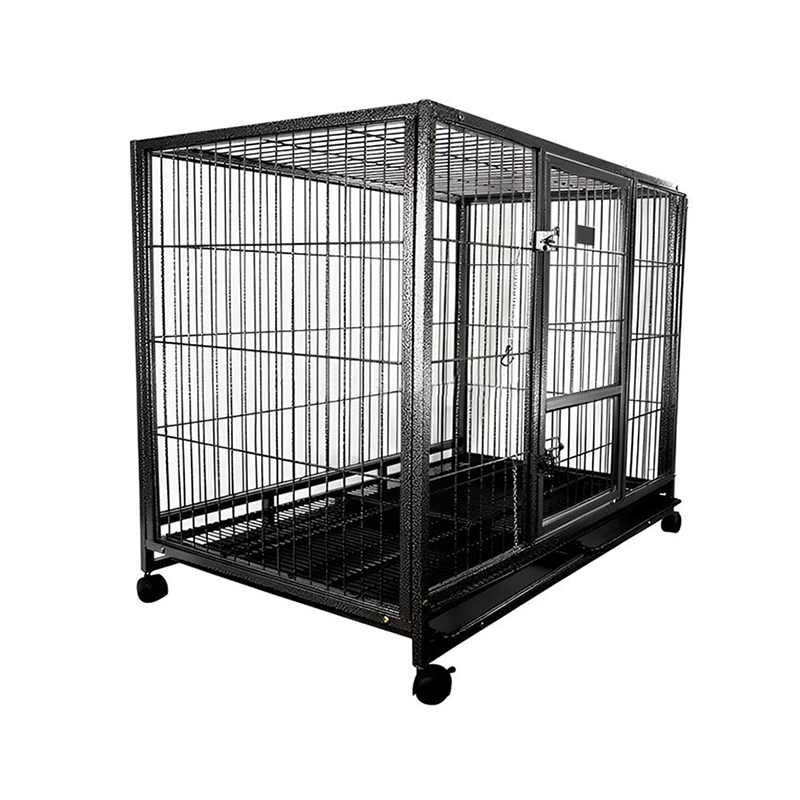
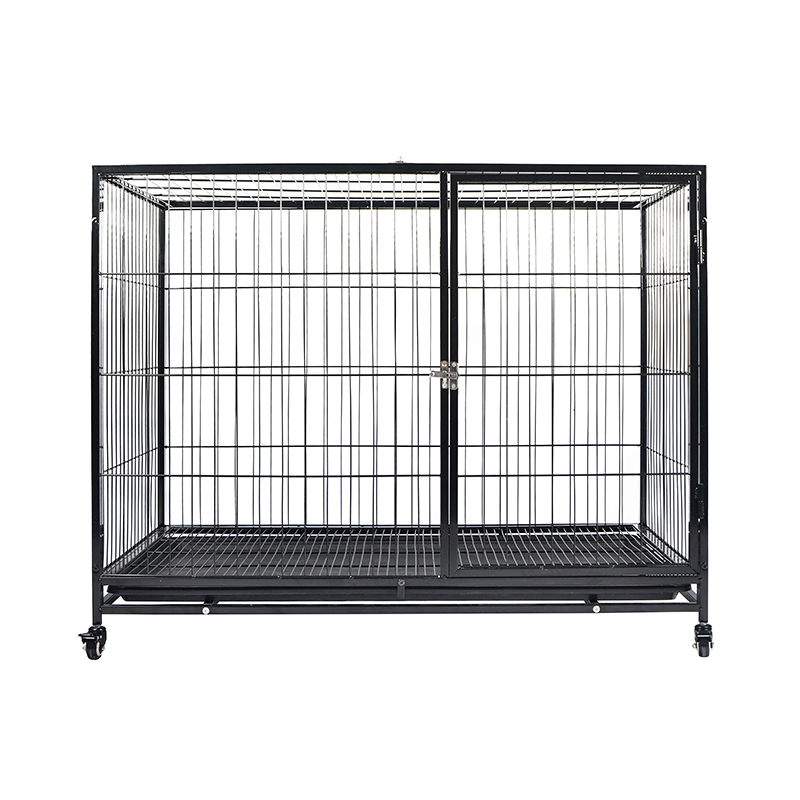
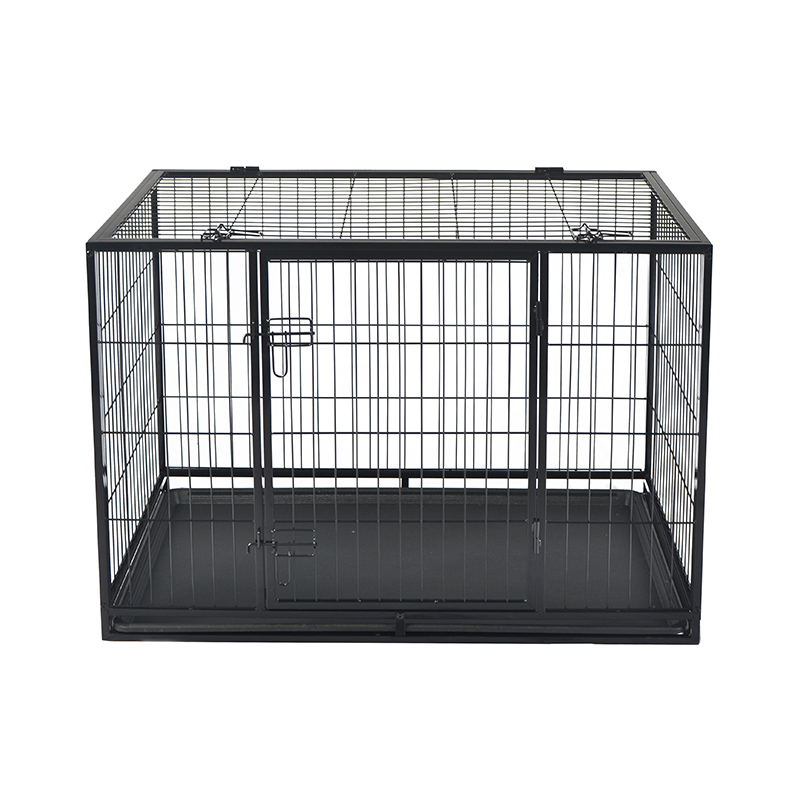
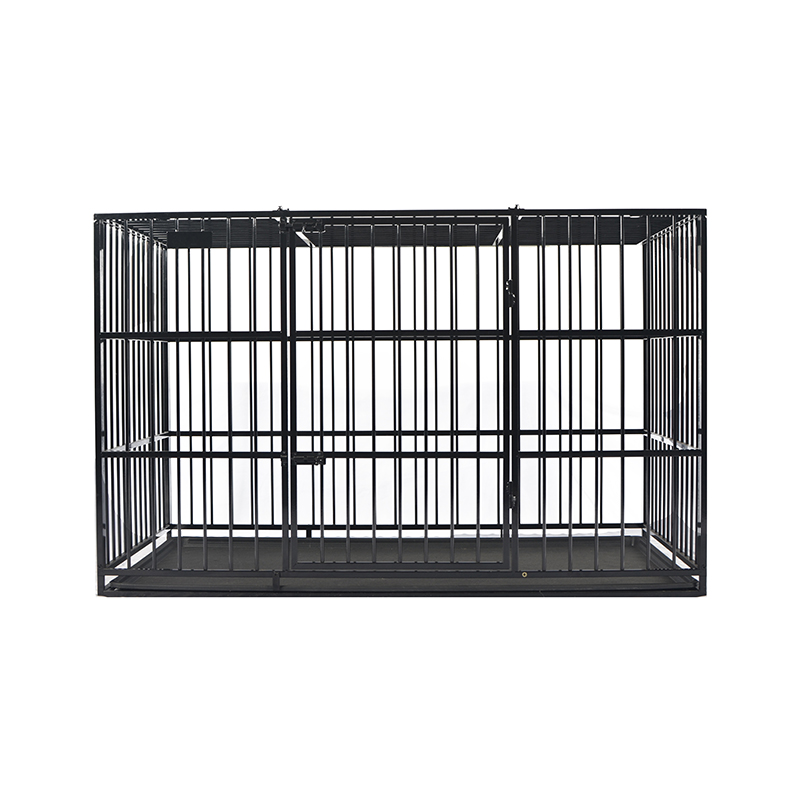
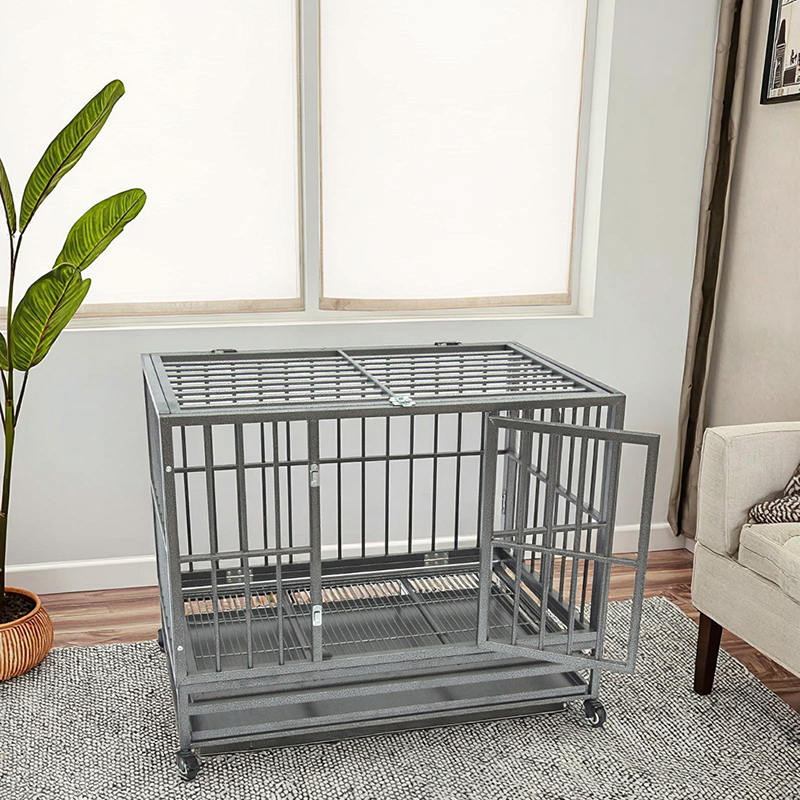 Open Top Heavy Tube Metal Dog CrateA reinforced tube-frame crate with top and front doors, pull-out tray and swivel wheels, suited to dogs that need sturdier construction.View Product →
Furniture-style and wooden crates
Furniture-style crates solve a layout problem rather than a training problem. A medium dog crate roughly 80 cm long, 55 cm wide and 60 cm high can sit at the end of a sofa as a side table, provided the top panel is thick enough to carry a lamp and the ventilation is on three sides, not one. Buyers should check that the interior height survives the wooden top frame and that the floor tray slides out without moving the whole cabinet. Wheels and a cushion are useful additions for a crate that moves between rooms.
 Wooden Furniture-Style Indoor Dog Crate End TableA metal-wire and solid-wood crate that doubles as an indoor end table, with a mesh door, secure latch and wipe-clean surface.View Product →
Wood-and-metal combinations usually look better than they perform in humid climates unless the panels are properly sealed, so ask what finish is used if the crate will sit near a doorway or on a covered patio. For indoor use in a climate-controlled room, a sealed MDF or solid wood panel with powder-coated steel bars is a sensible balance between appearance and durability.
The choice between the two formats comes down to a single question: is the crate a piece of equipment or a piece of furniture? Equipment wins when the dog is young, energetic or a heavy chewer. Furniture wins when the crate must live in a living room where a wire box would be an eyesore. Many households end up with one of each, which is a perfectly rational outcome rather than an indulgence.
Choose the format by the room and the dog's chewing habits, then apply the same interior measurements to both.
Bar Spacing, Door Style and Chew Resistance
Bar spacing is the specification most often skipped and most often regretted. For medium adults, a gap of 2.5 to 4 cm between vertical wires keeps the muzzle from passing through while still allowing a clear view. A dog that can push its jaw between bars will work at the gap, and a dog that cannot will settle faster. Puppies and adolescents under eight months sit at the tight end of that range, which is one reason a divider panel plus tight spacing is a safer combination than a spacious crate with wide bars.
Door design follows the same logic. A single front door saves cost but forces the dog to enter through one line. A front door plus a side door lets the handler open the crate from whichever side faces the room. An open-top door removes the entry problem entirely and makes cleaning easier, since the tray and bedding can be lifted straight out. For medium dogs that are fully grown and simply need a rest area, open-top access is often the most practical of the three.
Chew resistance depends on three details that are hard to see in a product photo but easy to check in a sample:
- Wire gauge and tube wall thickness: heavier wire resists bending at the corners, where dogs push hardest.
- Weld quality at lattice joints: a smooth, fully fused weld will not catch a tooth or a claw; a rough spot invites chewing.
- Latch geometry: a two-point latch on the door and a lock that sits flush reduce rattling, and rattling is what many dogs react to.
Coating matters as well. Powder coating applied over properly pretreated steel holds up to saliva, cleaning sprays and general wear, while thin paint on bare steel starts flaking at the joints within a season. If a crate will be used outdoors under a cover, or in a humid room, ask for the coating process rather than the colour name.
One further point for anyone comparing a folding crate with a fixed one: folding models are convenient for travel but introduce more moving joints, and every joint is a potential rattle or a potential chew point. For a medium dog that lives mostly at home, a fixed or semi-folding frame with fewer hinges will usually outlast a heavily articulated one.
Bar spacing of 2.5 to 4 cm, a flush two-point latch and fully fused welds do more for safety than any extra centimetre of length.
Crate or Playpen? Space and Exercise for a Medium Dog
A crate is a resting place, and a playpen is an activity area. Medium dogs often need both, because a crate that is correctly sized for sleeping is too small for a dog to move around in for two hours. A playpen offers a middle option between free run of the house and full confinement, and it is especially useful during recovery from injury or in the weeks after adoption.
For a medium dog, look for a pen with panels at least 60 cm high and a footprint of roughly 1.5 square metres for short sessions, more if the dog will spend longer periods inside. A foldable wire pen with a top cover and a floor pad handles both indoor and outdoor use, and the top cover matters more than people expect: a determined medium dog can clear a 60 cm panel from a standing start.
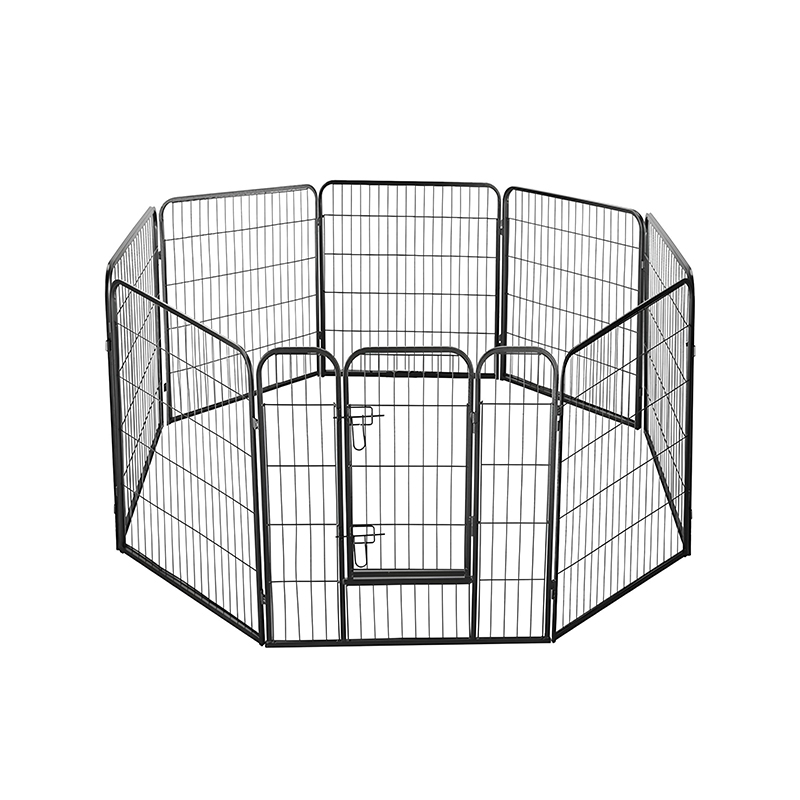
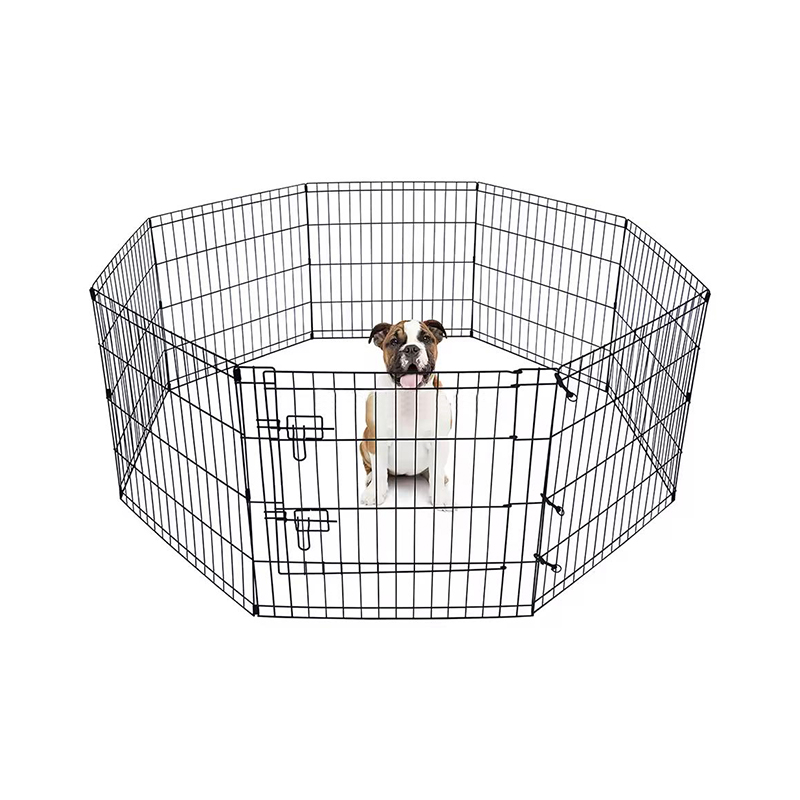
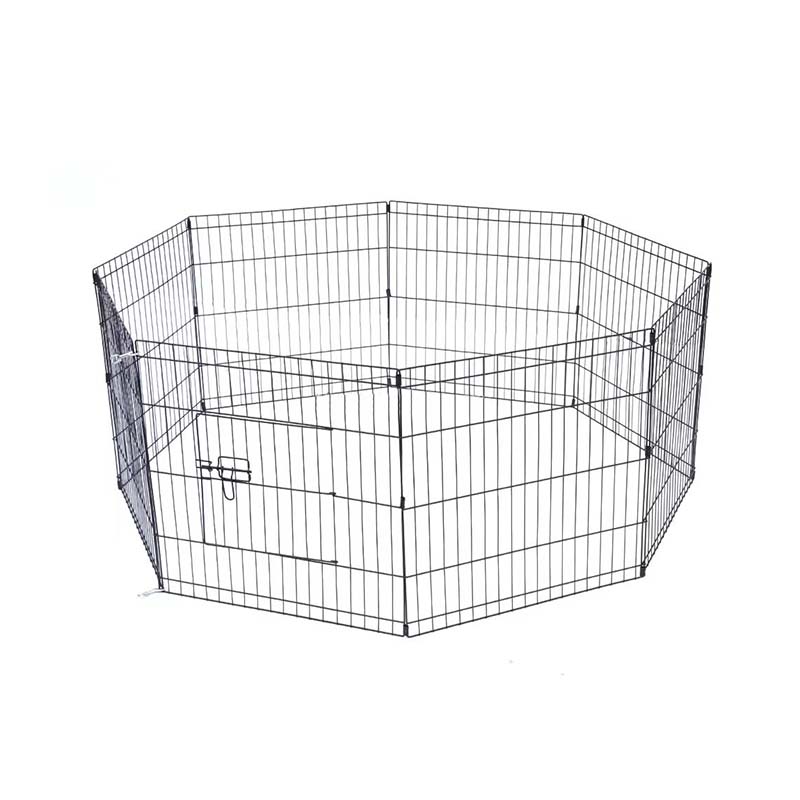
 Foldable Wire Metal Dog Playpen for Small PetsA tool-free, foldable wire playpen with anti-rust coating and flexible shapes, useful for creating a separate exercise space for small pets.View Product →
Use the pen for exercise and the crate for rest, and keep the two roles distinct. A dog that learns the crate is for sleeping and the pen is for movement settles faster than a dog whose crate is used as a timeout zone. Pens also solve the placement problem in open-plan homes, where a crate in the corner of a living room is fine but a crate in the middle of a hallway is not.
If the dog will be outdoors, check the cover material and the base fittings before buying. A waterproof top and ground stakes turn a light indoor pen into a usable patio enclosure; without them, a medium dog will work the panel joints loose over a few weeks.
Use a crate for sleeping and a pen for movement; sizing one product to do both jobs usually means the dog gets too little of each.
Puppy to Adult: Sizing a Medium Dog Without Buying Twice
Most medium breeds reach roughly 60 to 70 percent of adult weight by four to five months and close to full height by nine to twelve months. Buying adult size at eight weeks means the puppy rattles around in a crate built for a 22 kg dog; buying puppy size means replacing the crate within a year. The practical answer is one adult-sized crate with a divider panel.
The divider shrinks the usable floor to puppy proportions while the shell stays at adult dimensions. Adjust it every two to three weeks and watch for two signals: the puppy can no longer stretch out flat, or it can no longer stand without ducking under the top bars. Both mean the divider should move back. A medium breed usually needs the full interior length by eight to ten months.
Two details make this work. First, the divider must be a rigid panel with its own fixing points, not a flimsy grille that bends when a puppy leans on it. Second, the door opening should stay wide; a smaller dog in a large shell needs a clear entry, not a narrow gap between the divider and the front panel.
For buyers at wholesale level, this is a merchandising point rather than a training one. Crates sold with a divider can be positioned as a single purchase that covers the whole growth curve, which reduces the "I will buy the bigger one later" objection and cuts return rates driven by size complaints. Suppliers that offer dividers as standard on medium and large shells tend to see fewer support requests than those that treat them as an accessory.
Buy adult interior dimensions once and control the space with a rigid divider, so the same crate fits the dog at four months and at four years.
Placement, Airflow and Living With a Medium Dog Crate
A correctly sized crate in the wrong place still fails. Medium dogs tend to settle fastest where they can see one entrance to the room and have a wall or a solid panel at their back. Corners beat open floor space, and a spot away from a radiator, a sunny window and a busy walkway reduces both overheating and traffic stress.
Airflow is the second consideration. Wire and tube crates breathe well from all sides. Furniture-style crates need ventilation on at least two sides, and preferably three, or the interior becomes warm and stale within an hour. If the crate doubles as an end table, leave 5 to 10 cm of clearance behind it so air can move, and avoid stacking cushions against the vented panels.
Floor protection is worth planning for. A medium dog crate with bedding typically spreads weight across four small feet, and on timber or vinyl flooring that means marks. Felt pads under the frame, or a low-profile mat, solve it without lifting the crate so high that the dog has to jump in. For a dog recovering from a joint issue, a crate with a level floor and a shallow threshold is easier to enter than one with a raised tray lip.
Finally, treat the crate as a fixed piece of furniture rather than a portable box. Dogs build confidence through routine, and a crate that moves every few days never becomes a known place. Set it up once, with bedding and a water source nearby, and leave it there.
Place the crate against a wall, away from heat and foot traffic, and leave it in one spot so the dog can treat it as a known, safe place.
Introducing the Crate Without a Fight
A medium dog that has been shut in a crate that was too small will resist the next one, even if it fits. The reintroduction usually takes a week of short, uneventful sessions rather than a single evening. Feed meals next to the crate, then inside it with the door open, then inside with the door closed for the length of the meal. Add a chew item that lasts longer than the meal, and only then extend the closed-door time.
Two rules keep the process calm. Never use the crate as punishment, and never open the door while the dog is barking or scratching at it, because that teaches the dog that noise works. Wait for a pause of a few seconds, then open. Most medium dogs accept a well-sized crate within seven to ten days when the sessions are short and end before the dog becomes anxious.
Night-time is where sizing shows up most clearly. A dog that fits properly will sleep through the night in a crate within a week or so of settling in. A dog that does not fit will shift, pant, dig at the tray or wake at two in the morning. If that pattern continues past the adjustment period, measure again before assuming the problem is behavioural.
Short, food-led sessions with the door open first will do more for crate acceptance than any size upgrade, but a crate that is too small will undo both.
What Wholesalers, Retailers and Private-Label Buyers Should Check
For anyone sourcing medium dog crates at volume, the sizing conversation becomes a specification conversation. A manufacturer that builds its own tube frames and panels can hold a stated internal dimension within a couple of millimetres across a production run; a trading intermediary passing orders to a third-party line usually cannot, because the tooling is not theirs to adjust.
Five points are worth putting in writing before a purchase order is raised:
- Internal dimensions and tolerances. State interior length, width and height with the tray fitted, plus an allowed tolerance, so a reorder matches the first shipment.
- Wire gauge and bar spacing. Nominal figures plus a measurement method, since a 3.8 cm spacing measured centre to centre is not the same as clear gap.
- Coating and finish. Powder coating thickness, pretreatment steps and colour matching across batches, especially for furniture-style crates where colour is part of the sell.
- Compliance evidence. Ask which national standards the factory already tests to for the destination market, and request the test reports for the specific shell being ordered.
- Loading and packing. Carton dimensions, stacking strength and container utilisation for knock-down versus assembled crates, because shipping air is expensive on a 50-container-per-month programme.
Samples matter here more than catalogues. A physical sample lets a buyer check how the latch feels, whether the tray slides cleanly, whether the top panel carries weight and whether a 22 kg test load leaves the frame square. A factory that offers fitted samples and adjusts a design after feedback is easier to work with than one that only ships from stock specifications.
Buyers also increasingly ask for a mixed programme: metal crates for volume and entry price points, furniture-style crates for higher-margin retail, and playpens as an add-on. A supplier with separate lines for metal and furniture-style construction can support that mix from one relationship rather than three, which shortens lead times and simplifies quality follow-up.
Put internal dimensions, wire gauge, coating and compliance evidence in writing before ordering, and confirm them on a physical sample rather than a catalogue page.
Six Sizing Mistakes That Send a Medium Dog Crate Back
Most returns and most unhappy dogs trace back to the same handful of errors, and all of them are avoidable with a tape measure.
- Buying by label. A 30-inch crate from one supplier may hold more usable floor than a 36-inch crate from another.
- Measuring the dog curled up. A sleeping dog is always shorter than a standing dog; measure standing and square.
- Forgetting the tray. Raised tray lips and thick bedding remove real height from the interior.
- Ignoring width. Length gets all the attention, but a crate that is too narrow stops the dog turning, which is the first thing a dog tries to do.
- Oversizing "to grow into". A medium puppy in a 42-inch shell without a divider loses the sense of enclosure that makes a crate restful.
- Skipping the door opening. A wide dog and a narrow door is a combination that never improves with training.
Each of these is quick to check and cheap to correct before delivery. None of them requires expert knowledge, only the willingness to measure a dog and a crate in the same units, in the same room, on the same day.
Every one of these mistakes disappears with two minutes of measuring: dog standing, crate interior, tray in place, door fully open.
Sizing Help and Product Lines to Explore Next
If the measurements point to a crate between standard sizes, the useful next step is to look at the construction options side by side and compare internal figures, bar spacing and door layouts rather than external dimensions. The two links below are a sensible starting point.
Technical reading: why the open-top design on a heavy tube metal dog cage improves daily life and safety
Product range: furniture-style dog cages for indoor living spaces
Both are worth reading with a tape measure nearby. The sizes that matter are the ones printed on the specification sheet as internal, and the fit that matters is the one your dog demonstrates when it stands up without ducking.
FAQ: Dog Crate for Medium Dog Sizing and Buying Questions
What size dog crate does a medium dog need?
For most dogs between 15 kg and 25 kg, plan for an interior length of 76 to 81 cm, an interior width of at least 45 cm and an interior height 5 to 8 cm above standing height. Confirm with three measurements on the dog itself: nose to tail base, shoulder width, and standing height.
Is a 36 inch crate big enough for a medium dog?
Often yes for a 15 to 20 kg dog with a body length under 60 cm, but only if the interior length really is close to 76 cm. Ask for the internal figure with the tray fitted, because some 36-inch shells measure 71 cm inside after the frame and rear panel are counted.
How much extra space should a dog crate have?
Roughly 8 to 12 cm of extra interior length beyond the body, 5 to 8 cm of headroom, and enough width for the dog to turn in one movement. More than that, without a divider, turns the crate into a space the dog may treat as a corridor rather than a den.
Does a medium dog need a crate with a divider?
A divider is essential when you buy adult size for a puppy, and useful whenever the dog is between sizes. It should be a rigid panel with its own fixings, so the usable floor can be reduced and expanded as the dog grows without the panel bending.
Is bar spacing more important than crate size for a medium dog?
Both matter, but bar spacing is the specification people overlook. A gap of 2.5 to 4 cm stops a muzzle passing through while keeping visibility clear. Above 4 cm, a slender medium dog may work at the bars, which leads to chewing and scraping.
Can a furniture-style crate be used for a medium dog?
Yes, provided ventilation exists on at least two sides and the interior height survives the wooden top frame. Furniture-style crates suit indoor living rooms and double as side tables, but they should not be used in a hot room without airflow.
What should a wholesaler check with a medium dog crate supplier?
Internal dimensions and tolerances, wire gauge and clear bar spacing, coating process, compliance reports for the destination market, and carton or container loading for knock-down versions. A physical sample plus a written specification sheet avoids most reorder mismatch problems.
Should a medium dog crate be bigger if the dog is left alone?
Not for long stretches. A crate is a rest area, so lengthening the time inside calls for a playpen or a safely enclosed room rather than an oversized crate. Size the crate for comfortable rest and give the dog movement elsewhere.
Related Products
Your pet deserves good, Contact now.
Whether you want to become our partner or need our professional guidance or support in product selections and problem solutions, our experts are always ready to help within 12 hours globally.
 CONTACT US

QUICK LINKS
PRODUCTS
-
Address
- Room 501,Unit 1 ,Buliding 6,Wuyi Guoji Xincheng,No.379,Zhuxi Avenue,Jianyang District,Nanping City, Fujian Province.
- No. 139-6 , Tongyu Middle Road, Nantong, Jiangsu, China
-
Mobile
- +86-13616986006
-
E-mail :

Copyright © 2025 Pet Home (Haian) Co., Ltd All Rights Reserved. Custom Pet Cages Manufacturers OEM/ODM Pet Household Products Factory

