
 EN
EN
 English
 中文简体
中文简体
Home / News / Industry News / Cleaning Cages: A Practical Guide from a Pet Cage Manufacturer and Supplier
News


Cleaning Cages: A Practical Guide from a Pet Cage Manufacturer and Supplier
 2026.09.28
 Industry News
Content
- 1 Why Cleaning Cages Is a Design Problem, Not a Scrubbing Problem
- 2 Where Cleaning Cages Actually Gets Difficult
- 3 Materials and Surface Finishes That Change Cleaning Time
- 4 Cleaning Cages by Product Type
- 5 How Much Time Cleaning Cages Really Takes
- 6 A Practical Cleaning Cages Routine: Daily, Weekly, Monthly
- 7 Disinfectants, Water and Safety When Cleaning Cages
- 8 What Wholesale Buyers Should Ask a Cage Manufacturer
- 9 Common Mistakes When Cleaning Cages and How to Avoid Them
- 10 FAQ: Cleaning Cages
- 10.1 How often should cleaning cages be done?
- 10.2 What is the safest disinfectant for cleaning cages around pets?
- 10.3 Can I use vinegar for cleaning cages?
- 10.4 How do I remove dried droppings from a bird cage?
- 10.5 Why does my cat litter cabinet still smell after cleaning?
- 10.6 Is it safe to clean a cage while the pet is inside?
- 10.7 How do I prevent rust on a metal cage?
- 10.8 Do cages with more removable parts really make cleaning easier?
- 11 Related Resources and Product Lines
A groomer emails about a rust ring that appears on a dog crate tray three months after delivery. A cat owner says the litter cabinet still smells after a full scrub. A parrot breeder cannot lift dried droppings off a perch without a chisel. Every one of those complaints gets filed under cleaning cages, and every one of them actually starts inside the product itself: tray depth, door geometry, weld finish, coating thickness, and how many parts one hand can pull out. Cleaning cages is roughly twenty percent technique and eighty percent design, and that is the conclusion this guide starts from.
Fujian Pet Home has been manufacturing pet cages since 2009, running two metal dog cage production lines and one furniture-style cage line, and shipping more than fifty containers a month to over twenty countries across North America, Europe, Oceania and Asia. That production background is why this article treats cleaning cages as a specification topic rather than a chore list. It is written for the people who live with cages every day, and for the importers, wholesalers and brand owners who have to answer complaints about them two years after the container leaves the port.
What follows covers why design decides cleaning effort, where the real difficulty hides, how material and finish change the work, what cleaning cages looks like for each product family, a realistic time comparison, daily and weekly routines, disinfectant safety, procurement questions for wholesale buyers, and the mistakes that quietly shorten a cage's service life.
Why Cleaning Cages Is a Design Problem, Not a Scrubbing Problem
Start with the conclusion: if a cage takes more than fifteen minutes to bring back to a hygienic state, the problem is almost never the brush. It is one or more of five structural variables that were fixed at the drawing stage and cannot be corrected later by the pet owner.
- Tray depth and slide clearance. A tray that sits at least 25 mm deep with a clearance of 3 to 5 mm on the runners slides out with one hand and empties without scraping. A tray that sits flush or has an 8 mm gap collects urine underneath, where no cloth reaches.
- Door opening size and direction. A front door smaller than roughly two thirds of the cage frontage forces the hand into an awkward angle. Open-top or dual-access designs let a person reach the far corners without dismantling anything.
- Weld smoothness. Unpolished weld spatter behaves like velcro. Bedding, dried droppings and hair lock into it, and scrubbing damages the coating around it.
- Coating thickness and adhesion. Powder coating below about 60 microns scratches through to bare steel within months in a high-ammonia environment. Once the steel is exposed, staining becomes permanent and cleaning time climbs.
- Number of removable parts. Every part that lifts out without tools cuts cleaning time. Every part that needs a screwdriver adds it back.
These five variables explain why two cages of the same nominal size, sold at similar prices, produce completely different owner experiences. They also explain why returns and one-star reviews cluster around a small number of models rather than spreading evenly across a catalogue.
For a manufacturer, the design conversation is about tolerances and process control. For a wholesale buyer, it is about asking the right questions before the purchase order is signed. For the pet owner, it is about knowing which features to look for and which ones sound impressive but do nothing for hygiene.
Tray clearance, door geometry, weld finish, coating thickness and part count determine cleaning time more than any cleaning product on the market.
Where Cleaning Cages Actually Gets Difficult
Most cleaning advice assumes the mess is fresh. In practice, cleaning cages becomes difficult only after residue has had time to set, and the chemistry differs by species and by cage material.
Dried bird droppings
Parrot and pigeon droppings dry into a cement-like crust within a day. On smooth powder coating, a ten-minute soak with warm water and a mild dish soap lifts them. On rough welds, rust spots or bare galvanised mesh, the crust bonds into the surface texture and has to be scraped, which damages the finish and starts a cycle of corrosion.
Cat urine in enclosed furniture cages
Cat urine contains urea and uric acid. On sealed surfaces it wipes away. On unsealed particle board, engineered wood edges or the interior of a litter cabinet without a liner, it wicks in and continues to release ammonia for weeks. This is the single most common reason furniture-style cages fail in the field, and it is entirely preventable at the design stage with sealed panels and a removable inner tray.
Small animal bedding and dust
Wood shavings, paper pellets and hay leave a fine dust that clings to wire mesh through static. It is harmless but visually unattractive, and it builds up fastest in cages where the mesh openings are small and the panels cannot be removed for rinsing.
Oily hair film and plastic trays
Dog hair carries skin oils. Over a week, a thin film forms on plastic trays and cannot be rinsed off with water alone, because water beads on the oil rather than dissolving it. A surfactant-based cleaner is required, and it works far better on a smooth tray than on a textured one.
Notice the pattern. In each case the difficulty comes from residue entering a surface that cannot be reached, not from the residue itself. That is why the most effective improvement a manufacturer can make is usually not a new cleaning recommendation but a change in how panels join, how trays slide, and how surfaces are finished.
Residue only becomes hard to remove when it reaches a surface that cannot be reached, so access beats chemistry every time.
Materials and Surface Finishes That Change Cleaning Time
Material choice sets the ceiling on how clean a cage can get and how long it stays that way. The comparison below is based on typical export specifications rather than laboratory extremes, and the differences are large enough to be visible in the first month of ownership.
| Surface treatment | Scratch and ammonia resistance | Cleaning effort | Expected service life | Best suited to |
|---|---|---|---|---|
| Powder-coated steel | Good when coating exceeds 60 microns | Low, smooth and non-porous | 5 to 8 years indoors | Metal dog cages, cat cages, playpens |
| Hot-dip galvanised steel | Moderate, zinc surface dulls over time | Moderate, texture holds dust | 8 to 12 years outdoors | Outdoor runs, poultry and small animal pens |
| Stainless steel 304 | Excellent, resists acid and ammonia | Very low, wipes clean | 10 years and beyond | Grooming, breeding and clinical environments |
| Sealed MDF or particle board | Poor if edges are unsealed | High once urine penetrates | 3 to 6 years indoors | Furniture-style cages in dry rooms |
| Solid wood with clear lacquer | Moderate, depends on film integrity | Moderate, avoid soaking | 5 to 10 years indoors | Cat villas, wooden houses, cat trees |
| Bare or lightly painted wire | Poor, corrodes quickly | High, rust traps residue | 1 to 3 years | Short-term or low-cost applications only |
Two observations matter for anyone specifying cages. First, coating thickness is not a marketing number, it is a measurable process parameter. A difference of 20 microns between two suppliers shows up as two years of additional service life and a visibly lower complaint rate. Second, sealed edges matter more than the board itself. A furniture-style cage built from sealed panels with a removable inner liner survives accidents that would ruin an unsealed cabinet of identical board.
Wood requires a different approach from metal. Never soak a lacquered panel. Wipe with a damp cloth, dry immediately, and keep the cage out of direct humidity. Metal panels tolerate a full rinse, which is one reason metal cages remain the default choice for high-traffic households and breeding operations.
Specifying coating thickness, sealed panel edges and a removable liner prevents more hygiene complaints than any after-sales cleaning advice.
Cleaning Cages by Product Type
Different cage families fail in different ways, and the cleaning approach has to follow the structure. The four groups below cover the products that generate the majority of after-sales questions.
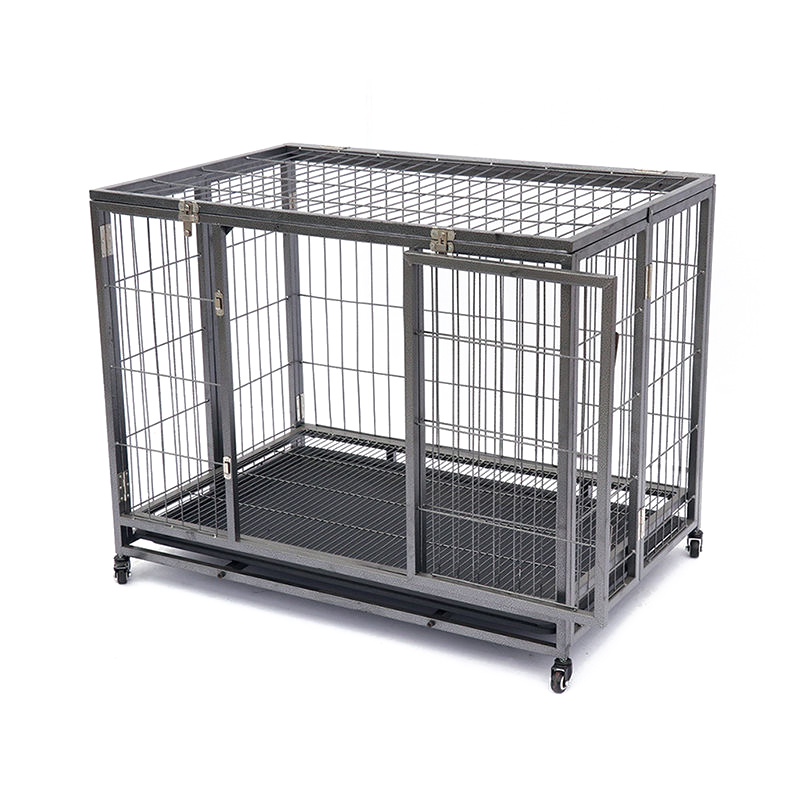
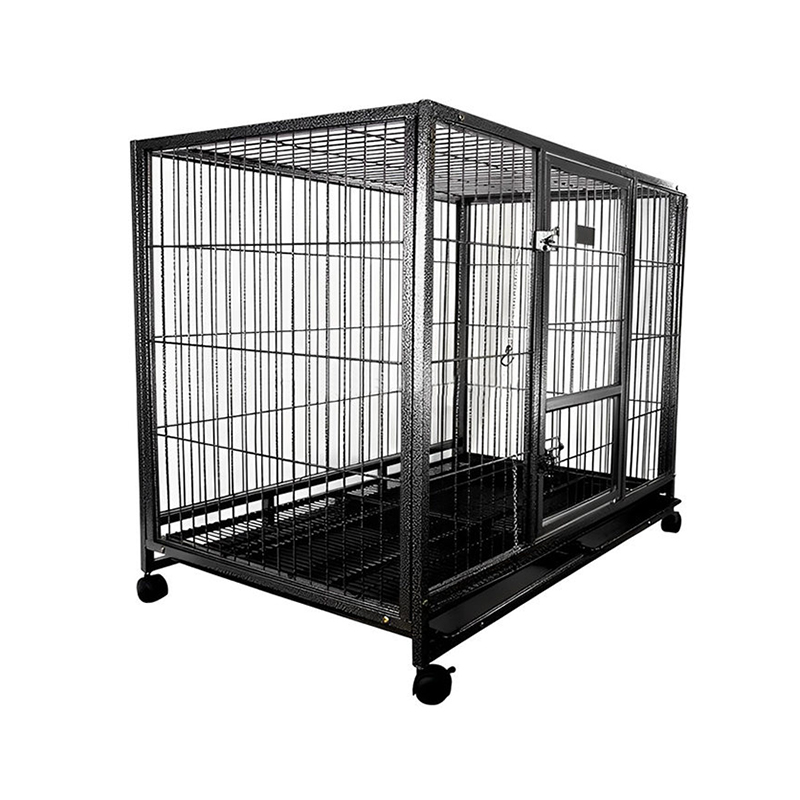
Metal dog cages and tray-based crates
Slide the tray out first and empty it before anything else. Loose bedding goes straight into a bag, not into a sink. Then wipe the tray with warm water and a mild dish soap, rinse, and dry it fully before it goes back in. The frame itself needs only a damp cloth on the bars and a check of the slide runners, where hair accumulates and causes the tray to jam. Foldable models should be wiped at the hinge points, because trapped moisture there is the first place rust appears.
A well-built open-top or foldable tube cage with a deep slide-out tray turns this into a five-minute job. If your tray needs scraping or the door blocks access to the rear corners, the design is working against you rather than for you.
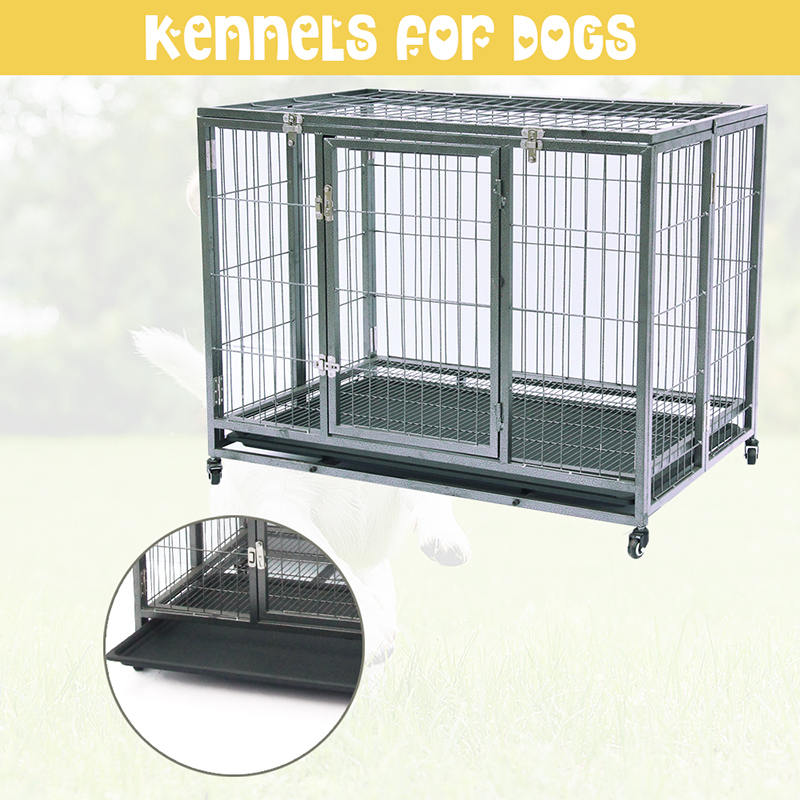 Open Top Tube Foldable Metal Dog CageProduct IntroductionView Product →
These products have the highest cleaning stakes because they live inside living spaces. The routine is different from an open wire crate. Scoop the litter box daily, replace litter weekly, and wipe the interior of the cabinet with a pet-safe cleaner rather than a heavy disinfectant, because residual chemical odour will push a cat away from the box. Sealed interior panels and a pull-out tray make the difference between a two-minute weekly wipe and a forty-minute deep clean.
Ventilation matters as much as wiping. A cabinet that hides the box but traps air will smell regardless of how often it is cleaned. Look for rear or side vents, and for a design where the litter area is physically separated from the resting area, since cats strongly prefer that arrangement.
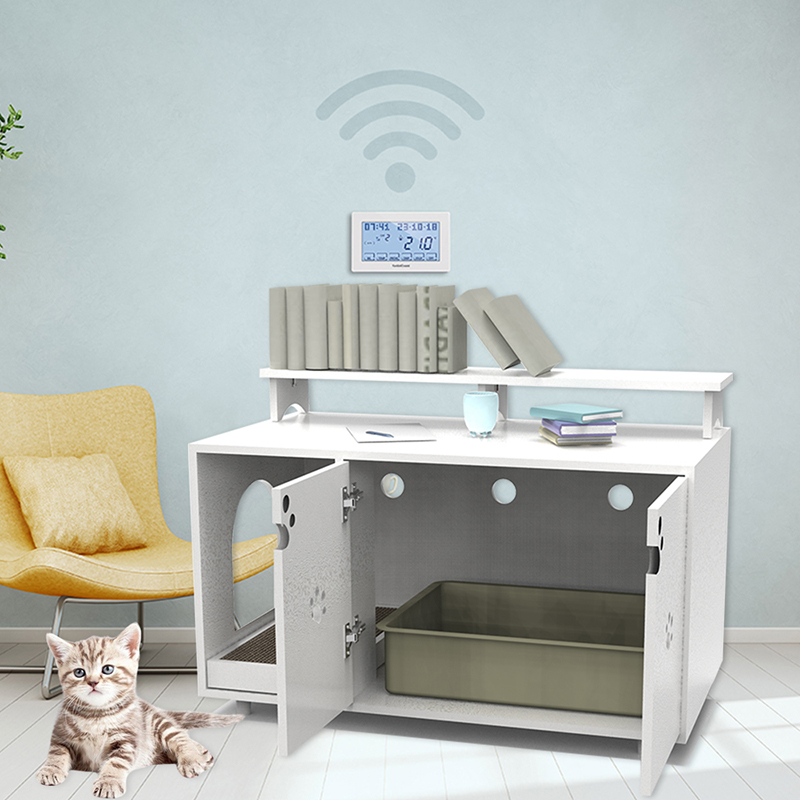 Furniture Cat Washroom Large Hidden Litter Cabinet Furniture Cat CageProduct IntroductionView Product →
Bird cages and parrot breeding cages
Birds produce droppings that dry quickly and stick firmly, and they scatter seed husks and feather dust in every direction. Daily paper changes under the grate handle most of the load. Weekly, remove the grate, the perches and the food and water cups, wash them separately in hot soapy water, rinse thoroughly, and let them dry completely before reassembly. Monthly, move the cage outdoors or into a shower area and rinse the whole frame.
Removable components are what make this practical. A breeding cage where the grate, tray and perches lift out without tools can be serviced in under half an hour. A cage where they are welded or screwed in place turns the same task into an afternoon.
Small animal cages and outdoor playpens and runs
Rabbit hutches, guinea pig cages, chicken coops and folding metal pens share one characteristic: they sit close to the ground and collect soil, moisture and bedding. Scrape solid waste first, then rinse the floor panel, then disinfect and dry fully before fresh bedding goes in. Outdoor units need a UV-resistant cover or a shaded position, because constant sun exposure makes plastic trays brittle and dulls galvanised surfaces until they hold dirt.
Foldable pens should be folded and unfolded during cleaning, not left in one position for months. Joints that never move seize up, and a seized joint is the beginning of a broken frame.
Cages with removable grates, trays and perches convert a weekly chore into a routine task, while welded-in components turn the same job into an afternoon.
How Much Time Cleaning Cages Really Takes
Cleaning time is not a matter of opinion, it is a measurable weekly cost that owners and professional facilities both feel. A pet shop with fifteen display cages, a breeding operation with forty units, or a household with two dogs and a cat all experience the same thing: minutes per cage multiplied by cages per week. The difference between a well-designed cage and a poorly designed one is rarely small, and it compounds across every unit on site. The chart below compares indicative weekly maintenance time for common cage types under normal use. Figures are illustrative rather than laboratory measurements, and they assume one adult animal per enclosure, standard bedding, and no unusual illness or spill events.
Indicative weekly cleaning time by cage type (minutes per cage)
Open-top metal dog cage with slide-out tray34 min
Furniture-style cat cage with hidden litter cabinet38 min
Foldable metal dog playpen with top cover46 min
Outdoor small animal or poultry run58 min
Wooden cat villa or enclosed cabinet72 min
Large steel and wood parrot breeding cage95 min
The chart shows a spread of nearly three to one between the fastest and slowest cage types. That spread is not driven by how many animals live inside or how messy they are. It is driven by how many components can be removed, how much surface area is exposed to residue, and how many corners are difficult to reach.
The metal dog cage with a slide-out tray sits at the low end because almost everything is accessible. The tray comes out in one motion, the bars are coated and smooth, and there are no enclosed cavities. Maintenance is quick, predictable and requires no special tools. In professional settings, this predictability is often worth more than the absolute number, because staffing and scheduling depend on tasks that take a known amount of time.
The furniture-style cat cage with a hidden litter cabinet lands slightly higher, and the reason is instructive. The cabinet itself is not difficult to wipe. The extra time comes from the litter box, the interior cavity and the need to check ventilation. This is why sealed interior panels and a pull-out inner tray matter so much in this product family. A cabinet built with those two features can sit close to the metal cage in total time. One built without them can double the figure within a year as odour accumulates.
The foldable playpen sits higher again, because it is usually configured with a top cover and a floor pad, both of which must be removed, washed and dried. Outdoor runs climb further because they collect soil, grass and moisture, and because drying takes longer in open air. Wooden cat villas are slower still, since wood cannot be soaked and each panel has to be wiped and dried individually. Parrot breeding cages top the chart because the combination of dried droppings, seed husks, feather dust and multiple removable accessories creates more individual steps than any other category.
Read across the figures and a practical rule emerges. Every component that lifts out without tools saves roughly eight to twelve minutes a week. Every enclosed cavity that cannot be opened for inspection adds a similar amount. Every unsealed wood surface adds ongoing time because residue cannot be fully removed, only thinned.
For a household with one cage, the difference between 34 and 72 minutes a week is an hour of free time over a month. For a breeding facility with thirty cages, it is more than fifty hours a week at the top end, which is a staffing problem rather than an inconvenience. For a retailer running display units, it determines how often staff can realistically refresh a cage during trading hours.
The practical conclusion is that cleaning time should be treated as a specification, not an afterthought. When comparing quotations from two cage manufacturers, ask for the number of tool-free removable parts, the tray depth, the door opening dimensions and the coating thickness. Those four numbers predict weekly maintenance time more accurately than any product photograph, and they are the same numbers that determine how many replacement units a buyer will ship in year three.
Weekly cleaning time varies by nearly three to one across cage types, and tool-free removable parts are the single biggest lever on that number.
A Practical Cleaning Cages Routine: Daily, Weekly, Monthly
Most hygiene failures are not caused by a lack of effort but by an unclear division between tasks. Splitting the work into three frequencies keeps each session short and prevents the buildup that turns a routine wipe into a full restoration.
Daily tasks
- Remove fresh droppings, uneaten fresh food and soiled bedding before they dry.
- Rinse food and water bowls and refill with clean water.
- Scoop the litter box and check the tray under the cage for overflow.
- Wipe any visible stain on bars or panels with a damp cloth while it is still soft.
- Check that the cage is dry, since standing moisture is the main driver of odour and corrosion.
Weekly tasks
- Remove the animal to a safe holding area and inspect the cage for damage or sharp edges.
- Take out the tray, grate, perches, bowls and any removable pads.
- Wash removable parts in warm water with a mild dish soap or a purpose-made cage cleaner.
- Wipe the frame, bars, hinges and slide runners with a damp cloth.
- Rinse thoroughly, since soap residue can irritate skin and paws.
- Dry every part completely before reassembly, ideally in open air or with a clean towel.
- Replace bedding and return the animal once the cage is fully dry.
Monthly tasks
- Disassemble anything that comes apart without tools, including panels and connectors.
- Deep clean the full frame, paying attention to corners, weld areas and the underside of the floor panel.
- Inspect coating for scratches, chips or rust, and treat small areas immediately.
- Check hinges, latches, castors and folding mechanisms, and lubricate metal joints with a pet-safe product.
- Replace worn bedding, chewed pads and degraded floor liners.
The single most common scheduling mistake is skipping the monthly inspection. A two-millimetre paint chip found in month two takes five minutes to treat. The same chip found in month twelve is a rust patch that stains bedding and requires the panel to be replaced. Training staff or family members to run the monthly list takes one afternoon and prevents most long-term deterioration.
A three-tier routine works only when the monthly inspection happens, because untreated coating damage is what turns a clean cage into a corroding one.
Disinfectants, Water and Safety When Cleaning Cages
Cleaning removes visible residue. Disinfecting reduces the organisms that remain. These are two different jobs, and doing the second without the first wastes the product entirely, since organic matter neutralises most disinfectants on contact.
- Mild dish soap and warm water. The default for weekly cleaning. Effective on grease, oils and most fresh residue, and safe for coated metal, plastic and sealed wood.
- Diluted white vinegar. Useful against mineral deposits and light odour on metal and plastic. Not a disinfectant on its own. Do not use on unsealed wood or on galvanised surfaces left to dwell.
- Pet-safe quaternary ammonium products. Effective when used at the label dilution and left for the stated contact time. Always rinse and dry before the animal returns.
- Bleach solutions. Effective but easy to misuse. Never mix with ammonia-based products or vinegar, always dilute to label strength, and always rinse until no odour remains.
- Steam. Excellent for grates, trays and hard surfaces, and it avoids chemical residue entirely. Not suitable for sealed wood or for any component that may warp.
A note on materials
Powder-coated steel and stainless steel tolerate most pet-safe disinfectants. Galvanised surfaces should be rinsed thoroughly and dried immediately. Unsealed wood should be cleaned with the minimum amount of moisture possible, because the risk is not the cleaner but the water carrying it into the grain. Fabric pads and hammocks go into a washing machine on a hot cycle and must dry completely before reuse.
A note on the animal
Birds and small mammals are far more sensitive to airborne chemicals than dogs and cats. With birds, move the cage to a well-ventilated area or outdoors before using any product with a strong odour, and never spray anything directly toward the animal. With rodents and rabbits, residual detergent on cage bars causes skin irritation, so rinsing is not optional. With cats, strong-smelling disinfectants are a common reason a litter box is abandoned, even when the box itself is spotless.
Disinfectant only works on a surface that has already been cleaned, rinsed and dried, and residue left behind causes more problems than the germs it replaced.
What Wholesale Buyers Should Ask a Cage Manufacturer
For importers, distributors and private-label brand owners, cleaning performance is a commercial risk rather than a household chore. A model that generates hygiene complaints produces returns, negative reviews, retailer pressure and eventually lost shelf space. The questions below are the ones that separate suppliers who understand this from suppliers who only quote a price.
- What is the coating thickness, and how is it verified? Ask for a micron range and for the method used to check it, not a general statement about quality.
- How many parts can be removed without tools? This single number correlates strongly with owner satisfaction and with lower return rates.
- What is the tray depth and the slide clearance? Deep trays with controlled clearance reduce leakage complaints more than any other single change.
- How are panel edges sealed on furniture-style cages? Unsealed edges are the leading cause of odour complaints in this category.
- What corrosion testing has been done? Salt spray hours give a comparable figure across suppliers and predict outdoor performance.
- Can dimensions be adjusted for the target market? Retailers in different countries work with different shelf and floor dimensions, and flexible sizing reduces the need for custom tooling later.
- What is the packaging standard for container loading? Cages are bulky, and carton design determines how many units fit per container and how many arrive with bent bars.
- What is the sample lead time and the production lead time at peak season? Hygiene-related redesigns need to be validated on physical samples before mass production.
Fujian Pet Home operates as a combined manufacturing and trading business, controlling design, sampling and production in-house across metal dog cage, furniture-style cage and small animal product lines. For buyers, that structure matters most at the moment a specification change is requested, because design, tooling and production sit with the same team rather than being split across intermediaries.
It is also worth treating cleaning performance as a selling point rather than a technical footnote. Retail listings that state tray depth, tool-free disassembly and coating durability answer a question shoppers are already asking, and they reduce the volume of after-sales enquiries that a distributor has to handle.
Buyers who specify coating thickness, tool-free part count, tray clearance and sealed edges at the quotation stage avoid most hygiene complaints before a single unit ships.
Common Mistakes When Cleaning Cages and How to Avoid Them
Most of the damage caused during cleaning cages is accidental and entirely avoidable. The list below covers the errors that appear most often in after-sales conversations.
- Soaking wooden panels. Water enters unsealed grain, swells the board and creates a permanent odour source. Wipe and dry instead.
- Using a high-pressure hose on coated metal. Pressure drives water into seams and chips coating at edges, and the damage appears weeks later as rust blisters.
- Mixing cleaning chemicals. Bleach with vinegar or ammonia produces dangerous fumes. Use one product at a time, rinse between uses.
- Returning the animal before the cage is dry. Damp bedding and damp trays produce odour within hours regardless of how thoroughly the cage was washed.
- Scrubbing rust spots with steel wool. This removes the surrounding coating and accelerates corrosion. Treat the spot, then repair the finish.
- Ignoring the runners and hinges. These are the parts that fail first, and they are rarely on anyone's cleaning list.
- Over-cleaning with strong disinfectant. Sterile-smelling cages cause cats to avoid litter boxes and irritate the respiratory tracts of birds and rodents.
- Letting bedding sit too long. Changing bedding on schedule costs less than restoring a stained tray.
One maintenance habit deserves particular emphasis. Keep a small repair kit with touch-up coating, replacement bolts and a spare set of castors. Small parts fail before large ones, and a cage that can be repaired in ten minutes is a cage that stays in service for years rather than being replaced as a whole.
Almost all cleaning-related damage comes from excess water, mixed chemicals or abrasives, so the safest routine is the gentlest one that still removes residue.
FAQ: Cleaning Cages
How often should cleaning cages be done?
Spot-clean daily, carry out a full wash weekly, and complete a deep clean monthly. Cages housing birds or multiple small animals may need the weekly clean twice a week because residue sets faster and airborne dust accumulates quickly.
What is the safest disinfectant for cleaning cages around pets?
A pet-safe quaternary ammonium disinfectant at label dilution, or steam, is the safest general choice. Whatever product you use, clean first with soap and water, rinse, apply the disinfectant, allow the stated contact time, then rinse again and dry fully before the animal returns.
Can I use vinegar for cleaning cages?
Diluted white vinegar is effective against mineral deposits and light odour on metal and plastic. It is not a disinfectant on its own, and it should not be left to dwell on galvanised surfaces or used on unsealed wood.
How do I remove dried droppings from a bird cage?
Soak the affected area with warm water for ten minutes to soften the crust, then wipe with a mild dish soap solution. If the surface is rough or rusty, the residue will keep bonding, which usually means the cage finish needs repair or the cage needs replacing.
Why does my cat litter cabinet still smell after cleaning?
Almost always because urine has reached an unsealed surface, a gap between panels or a fabric liner. Wiping the visible surfaces will not remove the source. Check panel edges, the base of the cabinet and any absorbent material, and replace unsealed components with sealed, removable ones where possible.
Is it safe to clean a cage while the pet is inside?
Spot-cleaning around a calm animal is usually fine. For weekly and monthly cleaning, move the animal to a secure holding area, both to protect it from cleaning products and to let you inspect the cage thoroughly for damage.
How do I prevent rust on a metal cage?
Dry the cage completely after every wash, treat chips and scratches as soon as they appear, and avoid abrasive pads. In humid or outdoor settings, choose a galvanised or stainless option and keep the unit off wet ground.
Do cages with more removable parts really make cleaning easier?
Yes, and the effect is measurable. Each component that lifts out without tools saves roughly eight to twelve minutes a week, because it can be washed separately and dried faster than a fixed panel.
Persistent odour after cleaning is nearly always a design or material issue, not a sign that the owner is cleaning incorrectly.
Related Resources and Product Lines
If you want to go deeper into the structural features that make cages easier to maintain, two starting points are useful for buyers and owners alike.
- Why the open-top design on a heavy tube metal dog cage improves access, hygiene and pet safety, which explains how door geometry changes both cleaning time and daily handling.
- New arrivals in pet furniture, where furniture-style cages and coordinated indoor pieces are grouped for buyers looking to build a complete range around the same design language.
These pages sit alongside the full cage catalogue, which spans metal dog cages, furniture-style dog and cat cages, cat trees and villas, bird and parrot breeding cages, and small animal cages, hutches and outdoor runs.
Cleaning cages will always be part of owning or selling pet products, but the amount of work it demands is decided long before anyone picks up a cloth. Tray depth, door geometry, weld finish, coating thickness and tool-free part count determine whether a cage takes five minutes a week or an hour. For owners, that means looking past appearance and asking about construction. For importers, distributors and brand owners working with a cage manufacturer, it means writing those numbers into the specification so that hygiene performance is guaranteed rather than hoped for. Get the four or five measurable details right at the design stage, and every clean that follows becomes shorter, easier and far less likely to generate a complaint.
Related Products
Your pet deserves good, Contact now.
Whether you want to become our partner or need our professional guidance or support in product selections and problem solutions, our experts are always ready to help within 12 hours globally.
 CONTACT US

QUICK LINKS
PRODUCTS
-
Address
- Room 501,Unit 1 ,Buliding 6,Wuyi Guoji Xincheng,No.379,Zhuxi Avenue,Jianyang District,Nanping City, Fujian Province.
- No. 139-6 , Tongyu Middle Road, Nantong, Jiangsu, China
-
Mobile
- +86-13616986006
-
E-mail :

Copyright © 2025 Pet Home (Haian) Co., Ltd All Rights Reserved. Custom Pet Cages Manufacturers OEM/ODM Pet Household Products Factory

