
 EN
EN
 English
 中文简体
中文简体
Home / News / Industry News / Crate Size by Breed: A Practical Sizing Guide for Pet Owners and Wholesalers
News


Crate Size by Breed: A Practical Sizing Guide for Pet Owners and Wholesalers
 2026.10.05
 Industry News
Content
- 1 Why Crate Size by Breed Needs Real Measurements Behind It
- 2 Crate Size by Breed Quick Reference Table
- 3 How to Measure a Dog Correctly Before Buying a Crate
- 4 Crate Size by Breed for Puppies: Growth, Dividers, and Timing
- 5 Small, Medium, Large, and Giant Breeds: Sizing Logic That Works
- 6 Crate Type vs. Breed Size: Metal, Furniture-Style, Soft, and Outdoor
- 7 Visual Guide: Recommended Crate Length by Breed Size Group
- 8 Common Crate Sizing Mistakes That Lead to Returns and Stress
- 9 Crate Size by Breed for Multi-Pet Homes and Commercial Buyers
- 10 Maintenance, Safety, and Long-Term Fit
- 11 FAQ: Crate Size by Breed
- 11.1 What size crate does my breed need?
- 11.2 Should I size up or down if my dog is between sizes?
- 11.3 Can a crate be too big for a dog?
- 11.4 How do I measure my dog for a crate?
- 11.5 Do different crate types have different internal sizes?
- 11.6 What size crate does a puppy need?
- 11.7 How often should I check crate fit?
- 12 Explore Crate Lines by Size and Style
A customer once ordered a 36-inch crate for a Labrador Retriever puppy because an online chart listed “Labrador” under medium. Six weeks later, the puppy could not stand up without pressing his head against the top bars, and the retailer absorbed a return, a replacement shipment, and a frustrated review. That single mismatch shows why crate size by breed is not a simple lookup table. Breed gives you a starting range. Actual body length, height, age, coat thickness, and how the crate will be used decide the final size.
The practical answer is straightforward: measure the dog from the tip of the nose to the base of the tail, add 2 to 4 inches, and measure the dog’s height from the floor to the top of the head or ears while standing. Then compare that number with the crate’s internal dimensions, not its external footprint. Breed charts are useful for narrowing the field, but they should never override a real measurement. For puppies, buy for the expected adult size and use a divider panel. For senior dogs, add a little extra length for easier turning. For commercial buyers, standardize by crate size and weight class rather than by breed name alone, because breed names vary by country and registry.
Breed predicts a crate size range, but only nose-to-tail and floor-to-head measurements confirm the right fit.
Why Crate Size by Breed Needs Real Measurements Behind It
Breed standards describe adult height and weight, yet individual dogs within the same breed can vary by 20 percent or more. A German Shepherd from a working line may stand 26 inches at the shoulder and weigh 90 pounds, while a smaller show line may stand 24 inches and weigh 70 pounds. Both are still German Shepherds. If you use one breed average to choose a crate, you will be right for some dogs and wrong for many others.
Three measurements matter most. First, nose-to-tail length determines the crate’s internal length. The dog must be able to lie flat on its side without curling into a tight ball. Second, floor-to-head height determines the internal height. The dog should stand naturally without crouching. Third, shoulder width and elbow room determine whether the dog can turn around comfortably. A crate that is long enough but too narrow creates the same stress as a crate that is too short.
Add 2 to 4 inches to the length measurement for adult dogs. For puppies, add more if you plan to use the same crate through adulthood, but block off the extra space with a divider. A puppy that has too much room may eliminate in one corner and sleep in another, which slows house training. A senior dog may need 4 to 6 inches of extra length if it has arthritis or stiffness, because turning around takes more space.
Weight alone is a weak guide. A 60-pound Basset Hound and a 60-pound Border Collie have very different leg length, body depth, and standing height. The Basset Hound needs more floor space and a lower entry, while the Border Collie needs more height and a longer body area. This is why a crate size by breed chart should always include both weight and body dimensions.
Two dogs of the same breed and weight can need different crate sizes when their leg length and body depth differ.
Crate Size by Breed Quick Reference Table
The table below groups common breeds by adult weight and typical crate length. Use it as a first filter, then verify with the dog’s actual measurements. Crate sizes are usually named by length in inches, such as 24-inch, 30-inch, 36-inch, 42-inch, 48-inch, and 54-inch. Always check internal dimensions because manufacturers measure differently.
| Size Group | Adult Weight | Typical Body Length | Recommended Crate Length | Breed Examples |
|---|---|---|---|---|
| Toy | 2–10 lb | 10–14 in | 18–24 in | Chihuahua, Yorkshire Terrier, Maltese, Papillon |
| Small | 11–25 lb | 15–20 in | 24–30 in | Shih Tzu, Pug, Miniature Dachshund, French Bulldog |
| Medium | 26–50 lb | 21–28 in | 30–36 in | Beagle, Cocker Spaniel, Border Collie, Australian Shepherd |
| Large | 51–80 lb | 29–36 in | 36–42 in | Labrador Retriever, Golden Retriever, German Shepherd |
| Extra Large | 81–110 lb | 37–42 in | 42–48 in | Rottweiler, Bernese Mountain Dog, Great Pyrenees |
| Giant | 111–150+ lb | 43–50 in | 48–54 in | Great Dane, Mastiff, Saint Bernard, Irish Wolfhound |
For a dog that falls between two sizes, choose the larger crate for adult dogs and use a divider for puppies. A crate that is slightly too large is safer than one that is too small, provided you add bedding or a divider to prevent the dog from feeling exposed. However, a crate that is far too large can reduce the den-like security that many dogs need, especially during crate training.
When a dog sits between two crate sizes, size up for adults and use a divider for puppies.
How to Measure a Dog Correctly Before Buying a Crate
Measurement takes five minutes and prevents most returns. Use a soft tape measure and a flat wall. Have a second person hold the dog if possible. Treats help, but do not let the dog sit or lie down during the length measurement, because a sitting dog measures shorter than a standing dog.
Length Measurement
Stand the dog on all fours. Measure from the tip of the nose to the base of the tail, following the curve of the body. Do not pull the tape tight. Add 2 to 4 inches. If the dog is a puppy, measure the parents if available, or use the breed’s adult size range and add 4 to 6 inches for growth. Write the number down in inches and centimeters, because some imported crates use metric dimensions.
Height Measurement
Measure from the floor to the top of the head or the highest point of the ears, whichever is taller. The dog should stand naturally, not stretch upward. Add 2 to 3 inches of headroom. For dogs with erect ears, such as German Shepherds or Huskies, add 3 to 4 inches so the ears do not touch the top. For flat-coated breeds, 2 inches is usually enough.
Width and Turning Room
Measure the widest part of the chest, usually just behind the front legs. Add 2 to 3 inches. The dog must be able to turn around without hitting the sides. If the crate has a divider, remember that the divider reduces usable length, so choose a crate that is large enough for the adult dog even with the divider installed.
Also consider the crate’s door opening. A dog with a broad chest may struggle with a narrow door even if the interior is wide enough. Furniture-style crates often have smaller door openings than wire crates, so check the door width and height before purchase.
Measure standing length, standing height, and chest width, then add 2 to 4 inches to each dimension.
Crate Size by Breed for Puppies: Growth, Dividers, and Timing
Puppies are the most common source of crate sizing errors. A 10-week-old Labrador Retriever may weigh 15 pounds and fit a 24-inch crate, but it will not stay that size for long. Buying a small crate for a puppy usually means buying another crate within three months. Buying an adult-size crate immediately is more economical, but the extra space must be managed.
Use a divider panel to reduce the crate to the puppy’s current size. The divider should fit snugly across the width of the crate, not the length. A loose divider can be pushed out of place and may injure the puppy. Start with just enough room for the puppy to stand, turn around, and lie down. Expand the space as the puppy grows. Most puppies can use the full adult-size crate by 6 to 12 months, depending on breed.
Puppy crate size by breed also depends on expected adult weight. Toy breeds may reach adult size by 8 months. Large breeds may continue growing until 18 months. Giant breeds can grow until 24 months. If you are buying for a Great Dane puppy, plan for a 48-inch or 54-inch crate from the beginning, and use a divider for the first year.
Do not use a crate that is too large without a divider. Puppies instinctively avoid soiling their sleeping area, but if the crate is large enough to have a separate elimination zone, they may use it. This is not defiance; it is normal den behavior. A divider turns a large crate into a correctly sized puppy crate.
Buy the adult-size crate for a puppy, then use a snug divider to shrink the space during house training.
Small, Medium, Large, and Giant Breeds: Sizing Logic That Works
Breed size groups are useful for inventory planning and first-round selection, but each group has exceptions. The notes below explain what to check before you commit to a crate size.
Toy and Small Breeds
Toy breeds such as Chihuahuas and Yorkshire Terriers often fit 18-inch to 24-inch crates. Small breeds such as Pugs and Shih Tzus usually need 24-inch to 30-inch crates. Watch for brachycephalic breeds, including French Bulldogs and Boston Terriers. They have broad chests and short noses, so they may need a wider crate and better ventilation rather than a longer one. A 30-inch crate with a wide door often works better than a narrow 36-inch crate.
Medium Breeds
Beagles, Cocker Spaniels, and Border Collies typically fit 30-inch to 36-inch crates. Border Collies are longer than they appear because of their body shape, so measure nose-to-tail carefully. A 36-inch crate is often the safer choice for an adult Border Collie. Australian Shepherds and similar herding breeds may need 36 inches or even 42 inches if they are large for the breed.
Large Breeds
Labradors, Golden Retrievers, and German Shepherds usually need 36-inch to 42-inch crates. German Shepherds often need 42 inches because of their height and long body. Labrador Retrievers vary widely; a field-line Labrador may weigh 80 pounds and need a 42-inch crate, while a smaller show-line dog may fit 36 inches. Always measure the individual dog.
Extra Large and Giant Breeds
Rottweilers, Bernese Mountain Dogs, and Great Pyrenees need 42-inch to 48-inch crates. Great Danes, Mastiffs, and Saint Bernards may need 48-inch to 54-inch crates. Giant breeds also need stronger materials. A lightweight wire crate designed for a 40-pound dog may bend or fail under a 120-pound dog. Look for heavy-duty tubing, reinforced doors, and secure latches. For outdoor use, a waterproof cover and rust-resistant coating are important.
For furniture-style crates, giant breeds are often better served by custom or oversized models. Standard end-table crates usually stop at 42 inches or 48 inches. A Great Dane may need a dedicated indoor enclosure rather than a decorative end table. If the crate doubles as furniture, check the weight capacity of the top panel and the internal height before buying.
Giant breeds need both a larger crate and a stronger frame; standard wire crates may not be safe for dogs over 100 pounds.
Crate Type vs. Breed Size: Metal, Furniture-Style, Soft, and Outdoor
Crate type affects usable space. A 36-inch wire crate and a 36-inch furniture-style crate may have the same external length but different internal dimensions because of thicker walls, a wooden frame, or a raised floor. Always compare internal measurements.
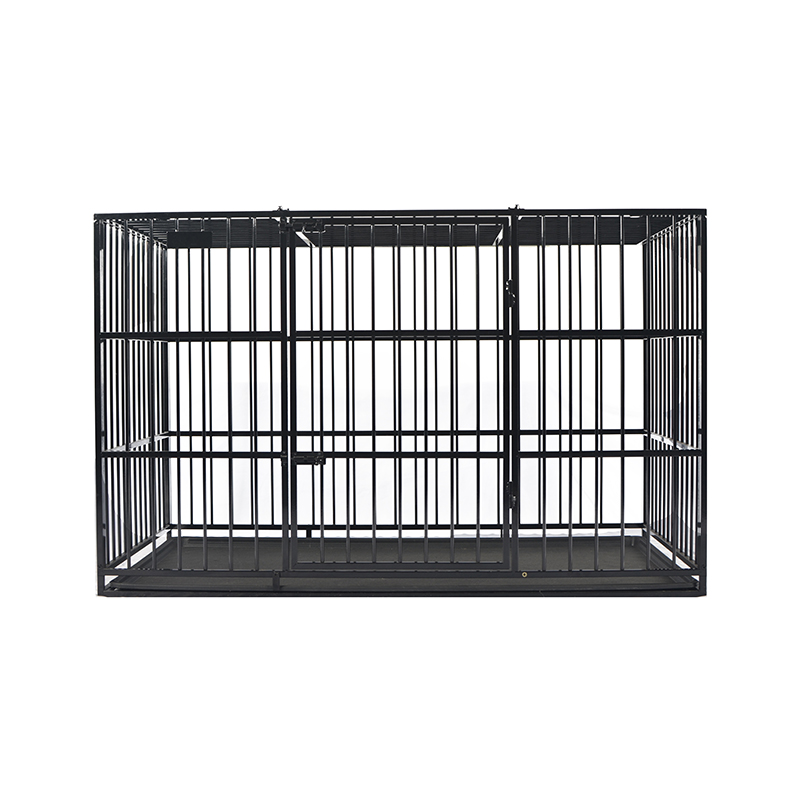
Metal crates are the most adjustable for breed size. They often come with divider panels, multiple doors, and folding frames. Heavy-duty tube crates are suitable for large and giant breeds, especially those that chew or push against the door. Open-top designs can make it easier to reach a nervous dog and improve airflow. If you want to understand how open-top engineering affects safety and daily use, see this article on open-top heavy tube metal dog cage design.
Furniture-style crates are popular for indoor dogs because they double as end tables, side tables, or TV stands. They work best for small and medium breeds that sleep quietly and do not chew wood. For a Labrador that likes to dig at the floor, a wooden crate may show wear quickly. For a French Bulldog or Shih Tzu, a furniture-style crate can be an excellent space-saving choice. A well-designed indoor dog crate end table can fit a 30-inch to 42-inch dog while hiding the crate in plain sight.
Soft crates are lightweight and good for travel, but they are not ideal for dogs that chew or scratch. A 30-inch soft crate may fit a Beagle for car travel, but it should not be the primary crate for a dog that is left alone for long periods. Outdoor crates need weather protection. A waterproof cover, elevated floor, and rust-resistant frame are essential for dogs that spend time outside. Large outdoor dog cages with waterproof covers are common for working breeds and guardian breeds.
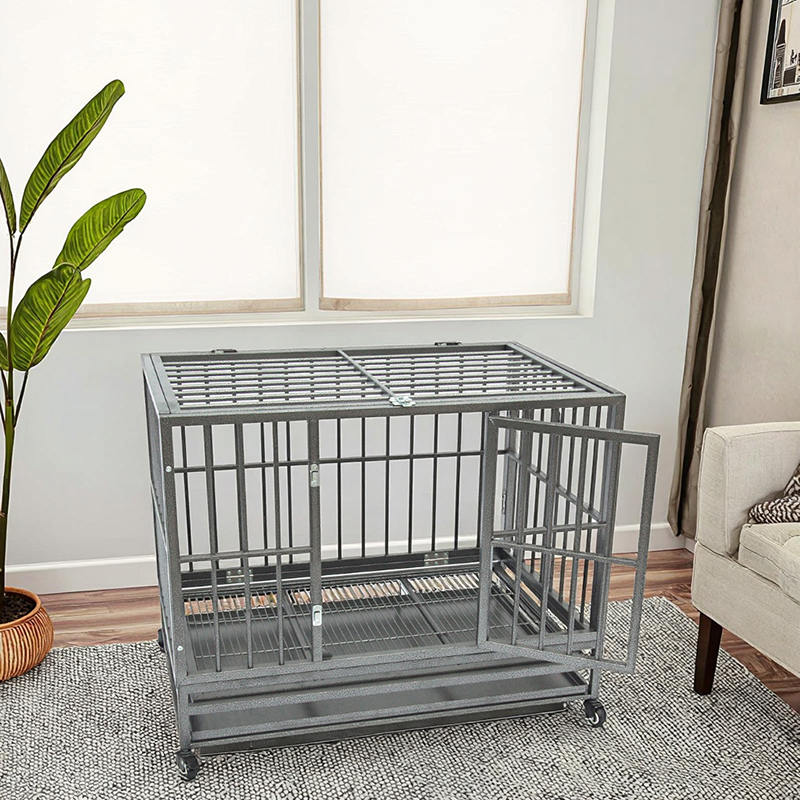 Open Top Heavy Tube Metal Dog CageProduct IntroductionView Product →
  Indoor Dog Crate End Table Wooden Furniture Style Dog CageProduct IntroductionView Product →
 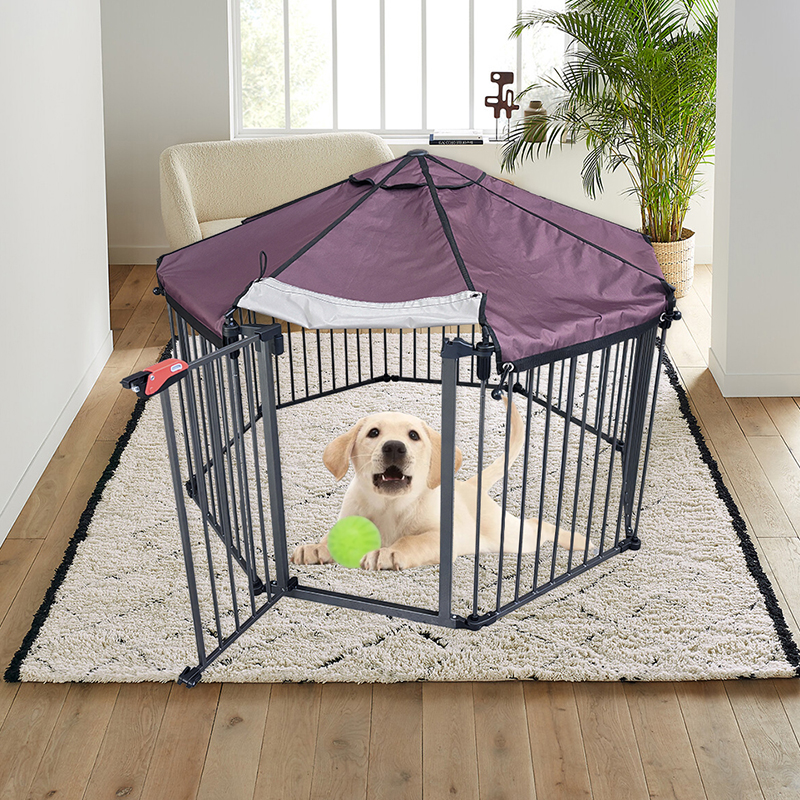 Outdoor Heavy Duty Tube Big Dog Cage with Waterproof CoverProduct IntroductionView Product →
Compare internal dimensions by crate type; the same nominal size can fit very differently once frame thickness and door openings are included.
Visual Guide: Recommended Crate Length by Breed Size Group
The chart below translates the breed size groups into recommended internal crate lengths. It assumes an adult dog measured from nose to tail with 2 to 4 inches of added space. The bars are not a substitute for measuring your dog. They are a planning tool for retailers, wholesalers, and owners who need a quick comparison. The sizes move in 6-inch increments because most crate manufacturers build standard molds around those lengths. If your dog falls between two bars, choose the larger length for adult dogs. If you are buying for a puppy, choose the adult bar and use a divider.
Recommended Internal Crate Length by Breed Size Group
The first trend is that crate length rises faster than weight in the medium and large groups. A 50-pound dog may need a 36-inch crate, while an 80-pound dog may need a 42-inch crate. That is only a 6-inch increase for a 30-pound difference, which shows why weight alone is unreliable. Body length and leg length matter more once dogs pass 40 pounds.
The second trend is that toy and small breeds have a wide overlap. A large Pug may need a 30-inch crate, while a small Beagle may also fit a 30-inch crate. Breed names are less useful than actual measurements in this range. Retailers should stock both 24-inch and 30-inch crates in similar quantities because the boundary between toy and small is not clean.
The third trend is that extra-large and giant breeds jump to 48-inch and 54-inch crates. These sizes are less common in retail stores, so online orders and specialty suppliers often fill the gap. For a manufacturer or wholesaler, this is an opportunity to offer heavy-duty frames, reinforced doors, and waterproof outdoor models that standard pet stores may not carry.
The fourth trend is that the chart uses internal length, not external length. A 42-inch crate with thick wooden panels may have only 38 inches of internal space. A 42-inch wire crate may have 41 inches. That 3-inch difference can decide whether a German Shepherd can lie flat. Always ask for internal dimensions before ordering in bulk.
The fifth trend is that puppies need a different buying strategy. If a puppy is expected to reach the large group, the owner should buy a 42-inch crate immediately and use a divider. If the owner buys a 30-inch crate for a medium-breed puppy, it may work for a few months but will need replacement. For wholesalers, selling divider panels alongside larger crates reduces returns and improves customer satisfaction.
The sixth trend is that senior dogs often need the next size up. A senior Labrador that used a 36-inch crate for years may become stiff and need a 42-inch crate for easier turning. The chart does not show age, but age affects usable space. Adding 4 to 6 inches of length for a senior dog is a practical recommendation.
The seventh trend is that climate and coat affect crate use. A thick-coated Husky may prefer a cooler wire crate with good airflow, while a short-coated Whippet may need bedding and a draft-free cover. The crate length stays the same, but the accessories change. This is why a crate size by breed guide should be paired with bedding and cover recommendations.
The eighth trend is that multi-dog homes need individual measurements. Two Beagles may fit one 36-inch crate for travel, but they should not share a crate for daily confinement unless the crate is specifically designed for multiple dogs. Dogs need space to lie apart without touching. If they cannot, use two crates or a larger playpen.
The ninth trend is that commercial buyers should map crate sizes to shipping containers and retail shelf space. A 54-inch crate takes significantly more container volume than a 24-inch crate. Mixed containers with 24-inch, 30-inch, 36-inch, and 42-inch crates often sell better than single-size containers because pet owners need different sizes for different life stages.
The tenth trend is that the most profitable product lines are not always the largest. Toy and small crates sell in higher unit volumes, while giant crates sell at higher prices but lower volumes. A balanced inventory includes both. The chart helps buyers see the gaps and avoid overstocking one size while missing another.
Use the chart to plan inventory and first-round selection, then confirm every order with internal dimensions and real dog measurements.
Common Crate Sizing Mistakes That Lead to Returns and Stress
The most common mistake is buying by weight alone. A 50-pound Basset Hound and a 50-pound Siberian Husky need different crate shapes. The Basset Hound needs more floor space and a lower entry, while the Husky needs more height. Weight is a useful filter, but it should never be the only number.
The second mistake is using external dimensions. A crate advertised as 36 inches may be 36 inches outside but only 33 inches inside. For a dog that measures 32 inches nose-to-tail, that leaves almost no room to spare. Always ask for internal length, internal width, and internal height.
The third mistake is buying a crate that is too large for a puppy without a divider. The puppy may sleep in one corner and eliminate in another, which makes house training harder. The fourth mistake is buying a crate that is too small for an adult dog because the owner wants to save space. A dog that cannot stand or turn around may develop anxiety, chewing, or barking.
The fifth mistake is ignoring the dog’s coat and climate. A thick-coated dog in a hot climate needs more ventilation, not a smaller crate. A short-coated dog in a cold climate needs a cover and bedding, not a larger crate. The sixth mistake is forgetting about future growth. A Great Dane puppy may fit a 36-inch crate at 4 months but need a 54-inch crate at 18 months.
The seventh mistake is choosing a decorative crate without checking weight capacity. A furniture-style crate may look sturdy, but the top panel may not support a jumping cat or a child. If the crate doubles as furniture, check the load rating. The eighth mistake is buying a crate with a door that is too small. A broad-chested dog may fit inside but struggle to enter and exit.
Most crate returns come from weight-only sizing, external dimensions, and missing dividers for puppies.
Crate Size by Breed for Multi-Pet Homes and Commercial Buyers
Multi-pet homes need a different approach. Two small dogs may each fit a 24-inch crate, but they may prefer to sleep together in a 36-inch crate if they are bonded. However, daily confinement in one crate can cause guarding if one dog tries to control the space. The safest rule is one crate per dog, with enough room for each dog to stand and turn independently.
For breeders, boarding facilities, and rescue organizations, crate size by breed becomes an inventory and welfare issue. A shelter may need a stack of 24-inch, 30-inch, 36-inch, and 42-inch crates. Stackable designs save floor space, but they must be stable and well ventilated. Metal crates with removable trays are easier to clean and disinfect. Furniture-style crates are less practical for shelters because they are heavier and harder to sanitize.
For wholesalers and retailers, the most useful crate size by breed data is a matrix of size, weight range, and breed examples. This matrix helps staff answer customer questions quickly. It also reduces returns because customers can compare their dog’s measurements with the internal dimensions of each crate. A simple chart at the point of sale can prevent a 42-inch crate from being sold to a customer who actually needs a 36-inch crate.
B2B buyers should also consider packaging and shipping efficiency. A 54-inch crate may not fit in a standard parcel network, so it may need freight shipping. A 24-inch crate can ship by parcel and is easier to stock in small retail spaces. If you are a manufacturer, supplier, or wholesaler serving multiple markets, offer a range that covers toy through giant breeds and label each crate with internal dimensions in both inches and centimeters.
One crate per dog is the safest rule for multi-pet homes, and internal dimension labels reduce returns for retailers.
Maintenance, Safety, and Long-Term Fit
A correctly sized crate still needs maintenance. Check the door latches, hinges, and bars every month. A bent bar or loose latch can create an escape point or an injury risk. For metal crates, touch up scratches with a pet-safe coating to prevent rust. For wooden crates, check for chewed edges and loose screws. A furniture-style crate that is chewed may splinter, so remove it if the dog is a determined chewer.
Bedding affects fit. A thick mattress can reduce internal height by 2 to 3 inches. If the dog’s ears touch the top with bedding installed, remove some bedding or choose a taller crate. A thin mat or a flat pad is often better for large dogs. For senior dogs, an orthopedic mat can improve comfort, but it may also reduce usable height. Measure with the bedding in place.
Temperature and ventilation matter. A crate that is too small can overheat quickly because the dog cannot move away from its own body heat. A crate that is too large may be drafty in winter. In hot climates, choose a wire crate with good airflow. In cold climates, add a cover that allows ventilation but blocks drafts. Never cover the entire crate in hot weather.
Long-term fit changes with age. A puppy that fits a 30-inch crate at 4 months may need a 36-inch crate at 8 months. A senior dog may need a 42-inch crate after developing arthritis. Review the fit every six months. The dog should be able to stand, turn, and lie flat without touching the sides or top. If it cannot, it is time for a larger crate.
Measure with bedding in place, check latches monthly, and review crate fit every six months as the dog ages.
FAQ: Crate Size by Breed
What size crate does my breed need?
Use the breed’s adult weight and body length as a starting range, then measure your dog. A Labrador Retriever usually needs a 36-inch to 42-inch crate. A German Shepherd often needs a 42-inch crate. A Chihuahua usually fits an 18-inch to 24-inch crate. Always check internal dimensions, because a 36-inch crate from one manufacturer may be smaller inside than a 36-inch crate from another.
Should I size up or down if my dog is between sizes?
For adult dogs, size up. A slightly larger crate is safer than a crate that is too small. Add bedding or a divider to reduce extra space if the dog seems anxious. For puppies, buy the adult size and use a divider. Do not buy a small puppy crate that will be outgrown in a few months unless you plan to use it for travel later.
Can a crate be too big for a dog?
Yes, especially for puppies and anxious dogs. A crate that is too large may not feel like a secure den, and a puppy may eliminate in one corner. Use a divider to adjust the space. For adult dogs, a crate that is one size larger is usually fine if it is furnished with bedding and the dog does not soil it.
How do I measure my dog for a crate?
Measure from the tip of the nose to the base of the tail while the dog is standing. Measure from the floor to the top of the head or ears. Measure the widest part of the chest. Add 2 to 4 inches to the length and 2 to 3 inches to the height. For puppies, use the expected adult size and add extra length for growth.
Do different crate types have different internal sizes?
Yes. A wire crate, a furniture-style crate, and a soft crate with the same nominal length can have different internal dimensions. Wooden frames, thicker walls, and raised floors reduce usable space. Always compare internal length, width, and height, not just the advertised size.
What size crate does a puppy need?
Buy the crate size the puppy will need as an adult, then use a divider to reduce the space to the puppy’s current size. A puppy should have enough room to stand, turn around, and lie down, but not enough room to sleep in one corner and eliminate in another. Expand the space as the puppy grows.
How often should I check crate fit?
Check every six months for adult dogs and every month for puppies. A dog should be able to stand without crouching, turn around without hitting the sides, and lie flat on its side. If the dog’s ears touch the top or its body presses against the door, move to a larger crate.
Breed charts narrow the range, but the final crate size must be based on standing length, standing height, and chest width.
Explore Crate Lines by Size and Style
If you are comparing crate types for a specific breed size, start with the product category that matches your dog’s weight and living space. Metal crates offer adjustable dividers and strong ventilation, while furniture-style crates blend into indoor rooms. For buyers who need consistent sizing across multiple orders, review the category pages and confirm internal dimensions before placing a bulk request.
Match the crate category to the dog’s measured size first, then choose the style that fits your home or retail program.
Crate size by breed is a useful shortcut, but it is not a final answer. The most reliable method is to measure the dog, compare internal dimensions, and adjust for age, coat, mobility, and crate type. Puppies need adult-size crates with dividers. Senior dogs often need extra length. Giant breeds need stronger frames and larger doors. Retailers, wholesalers, and manufacturers can reduce returns by labeling internal dimensions clearly and offering a balanced range from toy to giant. When in doubt, choose the larger crate for an adult dog and make it comfortable with bedding, a divider, or a cover. A well-fitted crate is not a cage; it is a safe, quiet space that supports training, travel, and daily rest.
The right crate size comes from the dog’s measurements, not from the breed name alone.
Related Products
Your pet deserves good, Contact now.
Whether you want to become our partner or need our professional guidance or support in product selections and problem solutions, our experts are always ready to help within 12 hours globally.
 CONTACT US

QUICK LINKS
PRODUCTS
-
Address
- Room 501,Unit 1 ,Buliding 6,Wuyi Guoji Xincheng,No.379,Zhuxi Avenue,Jianyang District,Nanping City, Fujian Province.
- No. 139-6 , Tongyu Middle Road, Nantong, Jiangsu, China
-
Mobile
- +86-13616986006
-
E-mail :

Copyright © 2025 Pet Home (Haian) Co., Ltd All Rights Reserved. Custom Pet Cages Manufacturers OEM/ODM Pet Household Products Factory

