
 EN
 English
 中文简体
Home / News / Industry News / do ferrets need cages: Applications, Selection Criteria, and Practical Guidance
News


do ferrets need cages: Applications, Selection Criteria, and Practical Guidance
 2026.10.26
 Industry News
Content
- 1 Do Ferrets Need Cages? The Practical Answer
- 2 Why a Cage Matters for Ferret Safety
- 3 How Much Time Should a Ferret Spend in a Cage?
- 4 Cage Size, Bar Spacing, and Layout
- 5 Materials, Ventilation, and Cleaning
- 6 Setting Up the Inside of a Ferret Cage
- 7 Playpens, Travel Carriers, and Exercise Areas
- 8 Indoor Versus Outdoor Housing
- 9 Buying Checklist for Retailers, Wholesalers, and Brand Owners
- 10 Common Mistakes That Lead to Escapes
- 11 Frequently Asked Questions
- 11.1 Do ferrets need cages?
- 11.2 How big should a ferret cage be?
- 11.3 What bar spacing is safe for ferrets?
- 11.4 Can ferrets live outdoors in a cage?
- 11.5 How many hours a day can a ferret stay in a cage?
- 11.6 Can I use a rabbit hutch for a ferret?
- 11.7 What should go inside a ferret cage?
- 11.8 Do ferrets need a playpen?
- 12 A Cage Is a Tool, Not a Lifestyle
A ferret can sleep through an afternoon and then wake up ready to investigate every gap under the sofa, every cable behind the television, and every closed door in the hallway. That contrast is why the cage question comes up so often. The short answer is that yes, ferrets need a cage, but the cage is not meant to be a full-time apartment. It is a safe place for rest, overnight sleep, meal times, and short periods when no one can supervise. The real welfare question is not whether a cage exists in the home, but whether the cage is large enough, secure enough, ventilated enough, and balanced with daily time outside.
This guide looks at ferret housing from both sides of the market: the pet owner choosing a first setup and the trade buyer sourcing small animal cages, playpens, and related products. The practical points are similar. Ferrets are small, flexible, curious, and surprisingly strong for their size. A cage that looks sturdy to a person can still fail at a latch, a bar gap, or a wire floor. Getting those details right matters more than choosing the most elaborate design.
Do Ferrets Need Cages? The Practical Answer
Ferrets need a cage because they cannot safely have free run of a home every hour of the day. They chew, dig, climb, squeeze, and test boundaries. A secure cage gives them a controlled space for sleep and recovery, and it gives the owner a reliable place to put them when cooking, cleaning, opening outside doors, or handling other pets. The cage also makes litter training and feeding more consistent, especially in a busy household.
What ferrets do not need is a cage used as a substitute for interaction. A ferret kept in a small cage for most of the day may become bored, overweight, or frustrated. Many ferret owners aim for several hours of supervised activity outside the cage each day, often split into morning and evening sessions because ferrets tend to sleep in long blocks. The exact schedule depends on the household, the ferret's age, health, and temperament, and whether there are safe rooms where the animal can move without risk.
The most useful way to think about housing is in layers. The cage is the secure base. A playpen is a flexible exercise zone. A travel carrier is for vet visits and short transport. None of these replaces the others. A large cage does not make a playpen unnecessary, and a playpen does not make a cage safe for overnight use. Ferrets need both containment and controlled freedom, and the balance changes with the home, the ferret, and the season.
A ferret cage should be a safe base for sleep and supervision gaps, not a permanent replacement for daily play and social contact.
Why a Cage Matters for Ferret Safety
Ferrets are domestic animals, but their bodies are built for moving through tight spaces. A gap that seems too small to matter can become an escape route. Once out, a ferret may find wires, small toys, cleaning products, reclining furniture, open windows, or other pets. A properly built cage reduces those risks when the owner cannot watch. This is especially important in homes with children, visitors, or doors that open to the outside.
Cage design also affects rest quality. Ferrets sleep deeply, sometimes for many hours at a time. A quiet, draft-free cage with a dark sleeping area gives them a predictable place to settle. Multi-level cages can work well because ferrets like to climb, but levels must have safe ramps, solid floors, and edges that prevent falls. A tall cage with narrow shelves may look impressive but offer little usable space. A shorter cage with a wide footprint and secure doors may be more practical.
There is also a behavioral reason to use a cage. Ferrets often do well with routine. Returning to the same cage after play helps mark the difference between active time and rest time. A litter box in a consistent corner, food and water in fixed positions, and bedding that carries familiar scent can make the cage feel less like a box and more like a territory. That does not mean the ferret should be shut away whenever it is inconvenient. It means the cage should be set up so the animal chooses to use it comfortably.
For households with dogs or cats, separate housing is usually the safer choice. Ferrets are predators of small prey, but they are also small enough to be injured by larger pets. Even a friendly dog can react suddenly. A cage with strong latches and a design that keeps other animals from reaching through the bars is a basic precaution. The same applies to multi-ferret homes: group housing can work, but introductions need care, and a new ferret should not be dropped into an established cage without a gradual process.
Safety comes from the whole setup, not just the cage frame: latch strength, bar spacing, floor comfort, and separation from other pets all matter.
How Much Time Should a Ferret Spend in a Cage?
There is no single number that fits every ferret, but a useful pattern is easy to describe. Ferrets sleep for a large part of the day, and many owners use the cage for those long rest periods and for overnight sleep. Outside the cage, the ferret needs supervised exercise, exploration, and social contact. The chart below shows a practical range rather than a strict rule. It helps owners and product planners think in terms of daily patterns instead of a fixed cage size alone.
Approximate daily pattern for a pet ferret
Sleep and rest in the cage14-18 hours
Supervised play and exercise3-4 hours
Meals, litter, and settling1-2 hours
Short supervision gapsVariable
The chart is not a schedule to force on an animal. It is a reminder that cage time and play time are linked. A ferret that sleeps in a cage for long stretches still needs active, alert time outside it. For owners, the practical test is simple: when the ferret is awake and ready to move, is there a safe place to let it do so? For trade buyers, the lesson is equally practical. A cage range that only offers small single-level units misses the reality of how ferrets live in a home. Multi-level cages, playpens, and add-on panels all support the same daily pattern.
Our small animal and metal playpen ranges are often used in this broader context. A cage handles secure rest; a playpen handles supervised exercise and temporary containment. When buyers plan a ferret-friendly assortment, the strongest offer usually includes both, plus a carrier for transport. The products do not need to be marketed as ferret-only items. They need to be presented with clear dimensions, bar spacing, latch details, and recommended use so the buyer can match the product to the animal.
Cage time should support sleep and safety, while awake time should include supervised movement and exploration.
Cage Size, Bar Spacing, and Layout
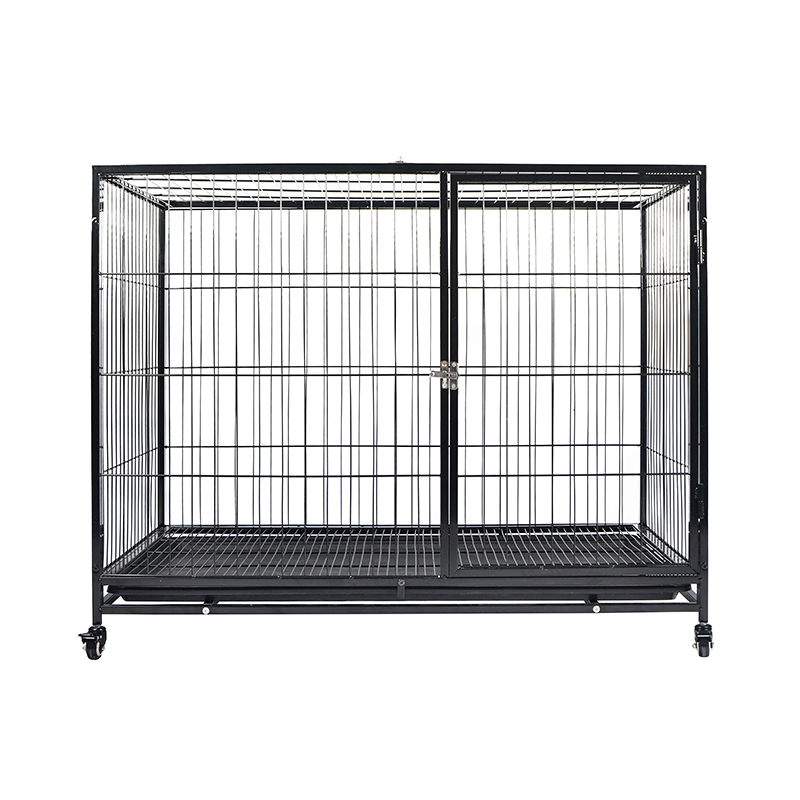
Cage size is the first thing many buyers ask about, but bar spacing is just as important. A large cage with wide gaps can still be an escape risk. For ferrets, a common starting point is a multi-level cage with a footprint of at least 24 inches by 24 inches per level and a height of around 36 inches or more for one or two animals. That is a working baseline, not a universal minimum. Larger is generally better if the cage has usable shelves, solid floors, and room for a litter box, sleeping area, food, and water without crowding.
Bar spacing should be tight enough to prevent a ferret from pushing its head or body through. A spacing of 1 inch or less is often used as a practical target, with careful checking of corners, door edges, and any removable panels. Latches matter too. A simple hook that a clever ferret can nose open is not enough. Look for secure door catches, reinforced corners, and welds that do not leave sharp points. Wire floors should be avoided or covered, because ferrets spend a lot of time on their feet and need solid, clean resting surfaces.
 Double-Door Metal Tube Rabbit Cage HutchA compact metal-tube hutch with double doors and safety latches; worth checking its bar spacing, latch security, and floor area for small-animal suitability.View Product →
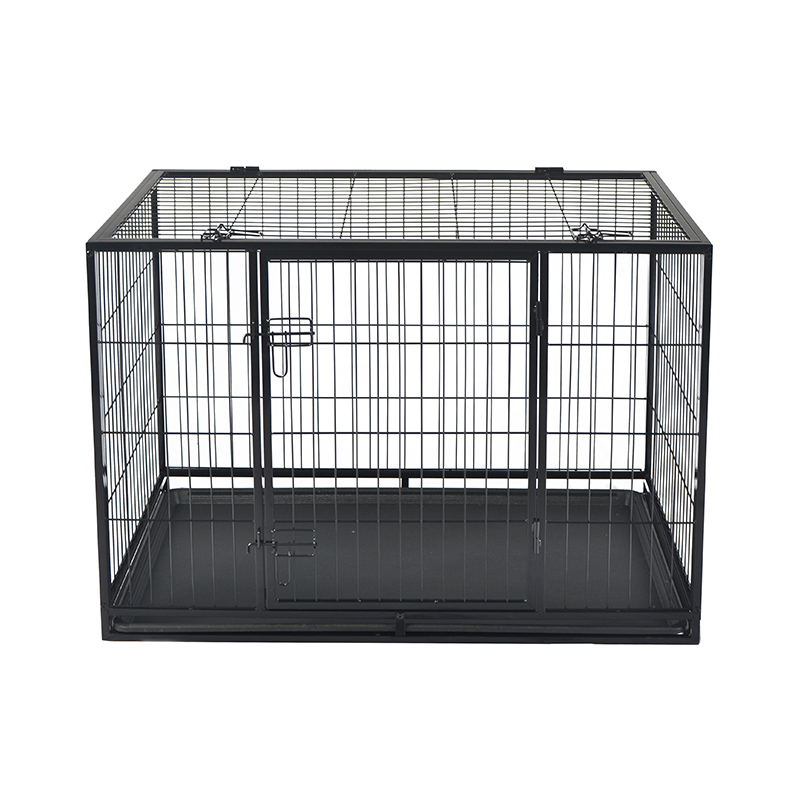
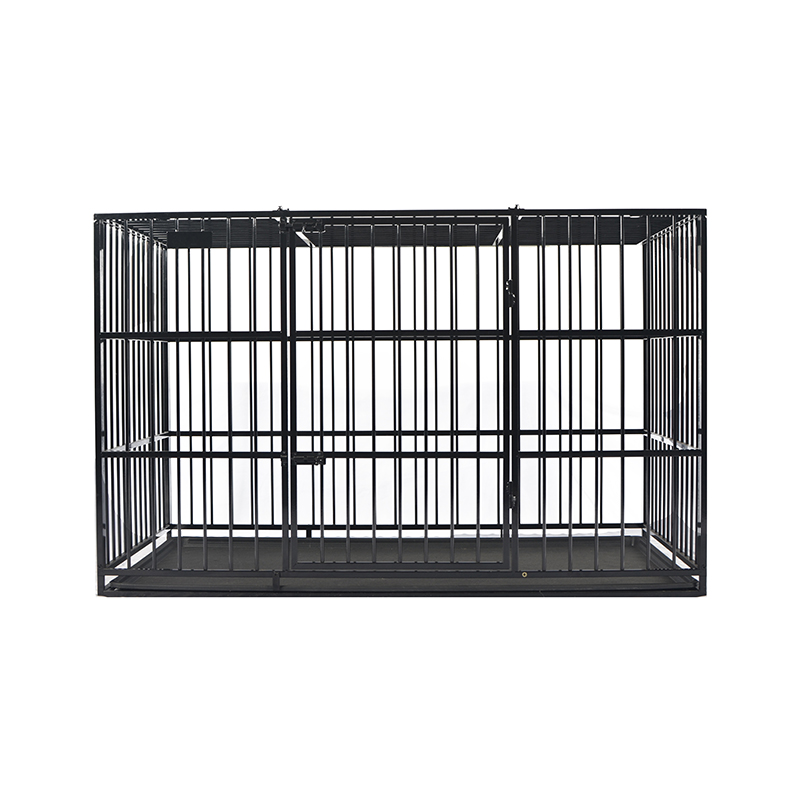
Multi-purpose small animal cages, such as rabbit-style hutches, can be adapted for ferrets only when the details are right. The double-door metal tube bunny rabbit cage hutch is an example of a compact metal unit that may suit small animals, but a ferret owner must check bar spacing, latch security, floor area, and whether the height allows a litter box and sleeping area. A rabbit hutch is not automatically a ferret cage. It becomes one only after the measurements and structure are checked against the animal's size and escape behavior.
| Housing format | Best use | Ferret checks | Limitations |
|---|---|---|---|
| Multi-level wire cage | Overnight sleep and supervised gaps | Bar spacing, latch strength, solid shelves, ramp safety | Can be cramped if shelves are narrow; wire floors need cover |
| Foldable metal playpen | Supervised exercise and room zoning | Top cover, panel clips, base stability, gap size | Not a substitute for a secure sleeping cage |
| Rabbit-style hutch | Small animal housing where dimensions fit | Height, door latches, bar spacing, ventilation | Often too shallow for a litter box and sleeping area together |
| Travel carrier | Vet visits and short transport | Ventilation, secure door, easy cleaning | Too small for daily housing |
The table points to a simple buying rule: do not compare cages by height alone. Compare usable floor space, shelf depth, door access, and the number of safe resting places. A cage with three narrow levels may be less useful than a cage with two wide levels. For retailers and wholesalers, this is also a merchandising point. Clear size labels and use-case guidance reduce returns and complaints because the customer can see whether the cage fits a ferret, a rabbit, or another small animal.
For ferrets, bar spacing and latch security are not secondary details; they are part of the cage's basic size and safety.
Materials, Ventilation, and Cleaning
Metal is the most common material for ferret cages because it is strong, easy to clean, and allows airflow. Powder-coated steel is a practical choice when the coating is even and free from chips. Galvanized wire can work, but buyers should check for rough edges and areas where moisture may sit. Wooden cages can be suitable if the wood is protected and the ventilation is adequate, but wood can absorb odor and moisture over time. A wooden unit with a metal frame or removable trays is easier to maintain than a solid wooden box with poor airflow.
Ventilation is easy to overlook because a cage can look open while still trapping stale air. Ferrets are sensitive to heat, and a closed or poorly ventilated enclosure can become uncomfortable quickly. Avoid placing a cage in direct sun, next to a radiator, or in a damp corner. A cage with wire panels on several sides and a removable top or front door gives better air movement. If the cage has solid panels, check that the open areas are large enough and that the animal cannot Overheat during warm weather.
Cleaning should be simple enough to happen often. Removable trays, pull-out litter areas, and wipeable surfaces make a real difference. Use a pet-safe cleaner, rinse thoroughly, and let the cage dry before the ferret returns. Bedding should be changed regularly, and litter should be cleaned daily. Avoid strong aromatic cleaners, cedar shavings, and dusty bedding. Ferrets have sensitive respiratory systems, and a cage that smells clean to a person can still be irritating to the animal.
- Choose smooth, coated metal or sealed wood with no splinters or sharp welds.
- Check that trays and shelves can be removed without dismantling the whole cage.
- Allow airflow on more than one side, especially in warm rooms.
- Use paper-based litter or another low-dust option that does not stick to feet.
- Dry the cage fully before adding bedding, food, or water.
A ferret cage should be strong enough to contain the animal and simple enough to clean often, because odor and heat build up quickly in poor housing.
Setting Up the Inside of a Ferret Cage
The inside of the cage matters as much as the frame. A ferret needs a sleeping area, a litter area, food and water, and some space to move. A hammock or soft bed gives a raised resting place, but it should not block the main traffic path. A litter box should sit in a corner and be large enough for the ferret to turn around. Food and water should be placed where they are easy to reach and less likely to be soiled. Heavy bowls are usually better than light ones because ferrets like to dig and push.
Ramps and shelves should have a lip or a textured surface so the ferret does not slide. Solid floors are kinder to feet than bare wire. If the cage comes with wire shelves, cover them with removable liners or solid panels. Tunnels, soft toys, and dig boxes can be added during supervised play, but they should not crowd the cage or create places where a ferret can become stuck. Avoid small openings that can catch a head or leg. Ferrets are flexible, but that does not make every gap safe.
- Place the cage in a quiet, dry area away from direct sun and drafts.
- Set up one sleeping spot and one litter corner before adding extra accessories.
- Check that the water bottle or bowl cannot be tipped into the bedding.
- Use solid shelf covers or liners if the cage has wire floors.
- Rotate toys and bedding so the cage stays interesting without becoming cluttered.
- Leave room for the ferret to turn around at every level.
Temperature control is part of setup. Ferrets do not tolerate high heat well, so the cage should not sit in a hot spare room or beside a window that receives afternoon sun. A room with good general ventilation and a stable temperature is safer. In winter, avoid placing the cage directly against a cold exterior wall. In summer, check the room temperature during the hottest part of the day. A comfortable room for a person in light clothing is usually a reasonable starting point, but the cage should always have a shaded area and air movement.
A good ferret cage is organized around sleep, litter, food, and safe movement, not filled with accessories that reduce usable space.
Playpens, Travel Carriers, and Exercise Areas
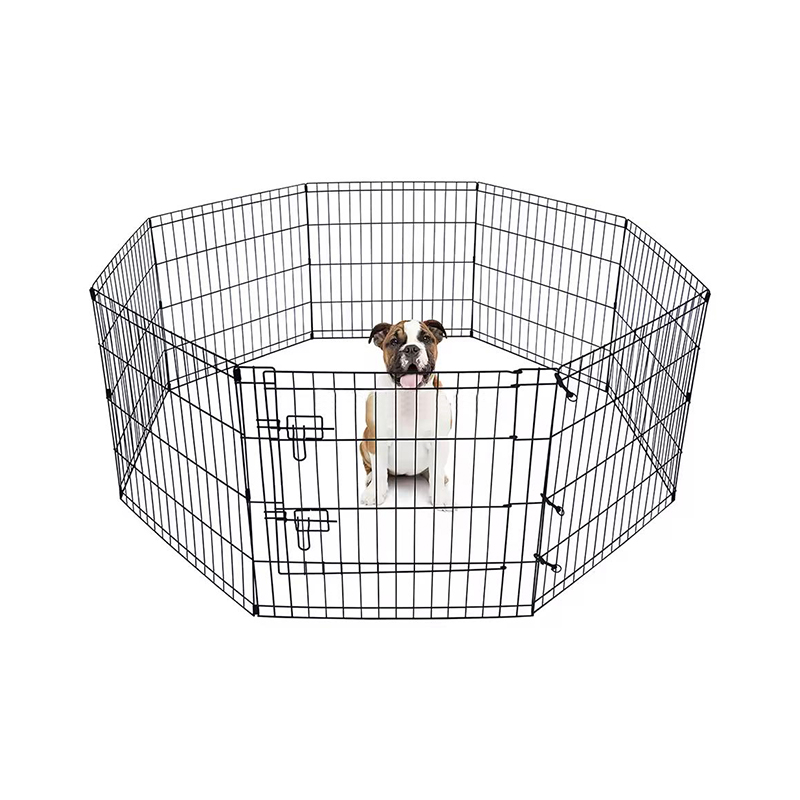
A playpen is useful, but it is not a cage replacement. It gives a ferret room to move during supervised exercise, and it can protect a temporary area when furniture is being moved or guests are visiting. A foldable wire playpen with secure panels can work well for this purpose, especially when the owner can watch the animal. The pen should be tall enough or covered enough to prevent climbing escapes. Ferrets can climb wire, so a top cover or a pen design that limits grip points is worth considering.
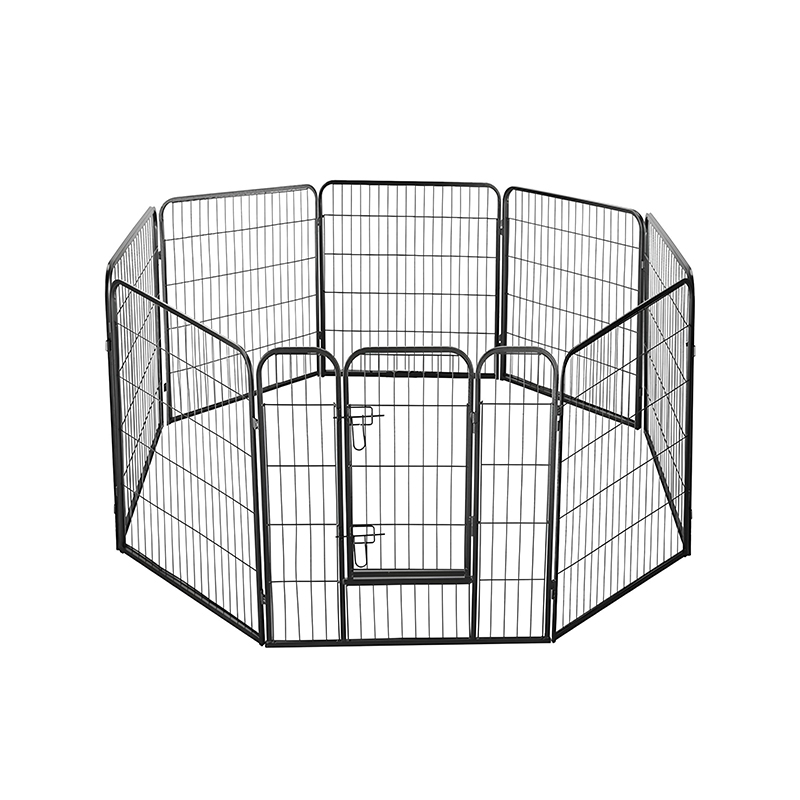
 8-Panel Foldable Wire Metal Pet PlaypenAn eight-panel foldable wire playpen with a sliding-lock door; useful for supervised exercise or temporary zones when panel height, gaps, and stability are checked.View Product →
Our 8-panels metal pet fence foldable wire dog playpen is an example of a modular pen format that can be adapted for small animals when the panel height, gap size, and base stability are appropriate. It is not a ferret-specific product, so the buyer should check the bar spacing and whether the pen can be anchored securely. The advantage of a panel system is flexibility. It can shape a corner exercise area, block a doorway, or create a temporary zone for cleaning. The disadvantage is that panels can be pushed or climbed if they are not set up with care.
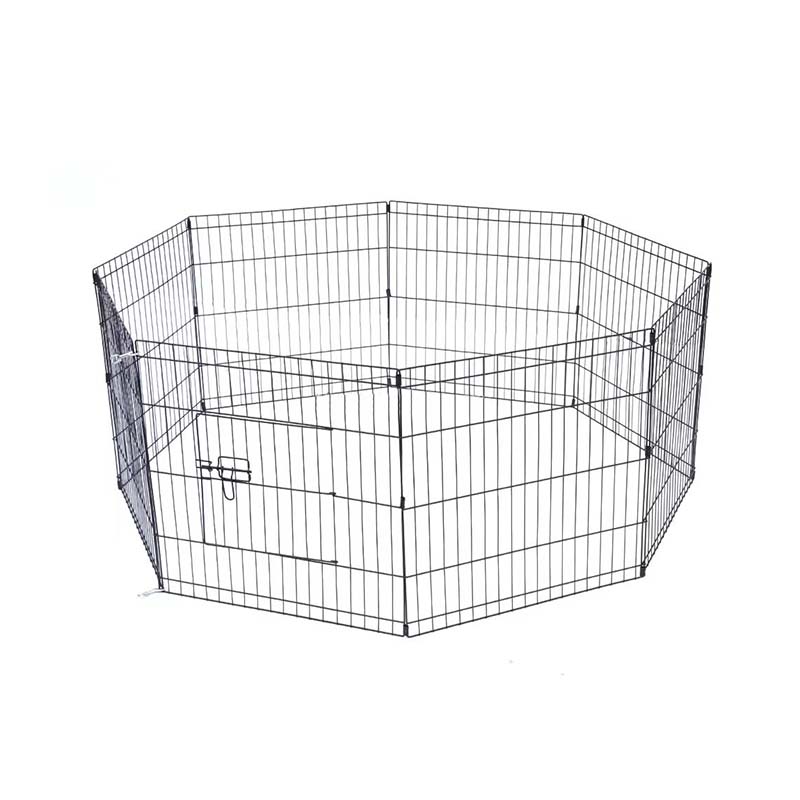
For exercise areas with more escape risk, a covered pen is often more practical. The foldable puppy rabbit metal run dog playpen with top cover is designed around a contained run format, and the cover can help discourage climbing out. A ferret should still be supervised. No playpen replaces a secure cage for overnight housing, and no pen should be left in a yard or balcony without shade, water, and a plan for weather changes. A covered pen is a management tool, not a guarantee against escape.
 Foldable Metal Run Playpen with Top CoverA foldable metal playpen with breathable top cover and slide-lock door; useful for supervised contained exercise, not as a secure overnight cage.View Product →
Travel carriers are a separate category. A carrier should be small enough to feel secure but large enough for the ferret to stand, turn, and lie down. It needs ventilation, a secure door, and a base that does not slide in a car. A carrier is not a daily cage, and it should not be used for long periods except during transport or at the vet. For owners, a simple checklist helps: secure latch, easy cleaning, good airflow, and a familiar blanket from the cage. For buyers, carriers work best when sold as part of a wider small animal range rather than as an isolated item.
Playpens support supervised exercise and temporary zoning, while a secure cage remains the only reliable overnight housing.
Indoor Versus Outdoor Housing
Ferrets are generally indoor animals. Outdoor housing is rarely appropriate because ferrets are sensitive to heat, cold, damp, noise, and predators. A hutch in a garden may look convenient, but it exposes the animal to weather changes and to animals that can reach through or dig under the structure. Ferrets are also escape artists, and an outdoor cage must be far more secure than a typical rabbit hutch. Even a well-built outdoor enclosure does not solve the need for daily social contact and supervised exercise.
Supervised outdoor time can be different from outdoor housing. A secure playpen on a shaded lawn, with water and constant supervision, can give a ferret new smells and surfaces. The pen should have a top or a design that prevents climbing out, and the owner should watch for dogs, birds of prey, and gaps at ground level. The ferret should be brought inside if it becomes too warm, too cold, or stressed. Outdoor time should be short and controlled, not an all-day arrangement.
Indoor housing also allows better monitoring. The owner can see whether the ferret is eating, drinking, using the litter box, and sleeping normally. Small changes in behavior are easier to notice in a room than in a garden. For retailers, this is a useful message to attach to product descriptions: indoor cages and playpens are for household use, while outdoor pens are for supervised activity, not permanent housing. Clear use labels reduce the risk of a customer using a product in a way it was not designed for.
Ferrets should live indoors with stable temperatures and close monitoring; outdoor pens are for short supervised activity, not permanent housing.
Buying Checklist for Retailers, Wholesalers, and Brand Owners
For trade buyers, ferret housing is a niche within the wider small animal market, but it overlaps with rabbit, guinea pig, cat, and dog products. A cage that suits a ferret often suits another small animal if the dimensions and bar spacing are right. That overlap is useful for inventory planning. A manufacturer or supplier does not need a separate ferret-only production line to serve the category. It needs to offer clear dimensions, secure latches, sensible bar spacing, solid shelf options, and packaging that explains the intended use.
The first buying question is whether the product is being sold as a primary cage, a playpen, or a carrier. Each has different requirements. A primary cage needs secure doors, a litter area, and enough usable floor space. A playpen needs panel stability, safe gaps, and a top-cover option. A carrier needs ventilation, a strong handle, and a base that is easy to clean. Mixing these categories in one product description creates confusion. A wholesaler or brand owner should ask for separate specifications and separate photography for each use case.
The second question is compliance and consistency. Powder coating should be even and free from chips. Welds should be smooth. Latches should be tested repeatedly, not just opened once. Packaging should protect corners and panels during container loading. If the product is flat-packed, the assembly instructions should be clear enough for a pet owner to follow without special tools. For OEM and ODM projects, the buyer should define bar spacing, wire diameter, shelf depth, door position, and finish before sampling. Small changes in these details can turn a safe cage into an unsuitable one.
The third question is merchandising. Ferret owners often search for cage size, bar spacing, multi-level layout, and playpen options. Product pages that answer those questions are more useful than pages that only list a height. Retailers can group cages by animal size and supervision level. Wholesalers can build assortments around a primary cage, a playpen, and a carrier. Brand owners can use the same platform to offer a starter setup and an expansion set. The goal is not to force every product into a ferret label. The goal is to make the suitability easy to understand.
Related site links for buyers: review the main catalog and the new arrivals before requesting samples or discussing an OEM project.
For trade buyers, the strongest ferret-friendly range is built on clear use categories, tested latches, accurate bar spacing, and packaging that explains how the product should be used.
Common Mistakes That Lead to Escapes
Most ferret cage failures are not dramatic. They happen at a door that was not fully closed, a latch that loosened over time, a gap between panels, or a playpen that was set up on an uneven floor. Ferrets are persistent. If there is a weak point, they may find it. The first mistake is choosing a cage by height alone. A tall cage with narrow shelves and wide bar spacing is less secure than a shorter cage with a wide footprint and tight gaps.
The second mistake is using a rabbit hutch without checking the door and bar spacing. Rabbit products are designed for rabbits, not ferrets. A hutch may have a large opening, a simple latch, or a wire floor that is unsuitable for a ferret's feet. The third mistake is relying on a playpen for overnight housing. A playpen can be pushed, climbed, or tipped if it is not anchored. The fourth mistake is placing the cage near curtains, cables, or shelves that a ferret can reach through the bars. A cage is only secure if the space around it is also considered.
- Checking bar spacing only at the front panel and not at corners or door edges.
- Using a latch that can be nosed or pawed open.
- Leaving wire floors uncovered for long periods.
- Setting up a playpen without a top cover in an area with climbable furniture.
- Placing the cage beside a window, radiator, or draughty door.
- Assuming a product labeled for rabbits is automatically safe for ferrets.
Escape prevention is a check of the whole setup: cage, latches, playpen, room, and the habits of the people using them.
Frequently Asked Questions
Do ferrets need cages?
Yes, ferrets need a secure cage for sleep, overnight rest, and short periods when no one can supervise. The cage should not replace daily supervised play and social contact. A ferret that is awake and active needs a safe space to move, explore, and interact with its owner.
How big should a ferret cage be?
A practical starting point for one or two ferrets is a multi-level cage with at least 24 inches by 24 inches of usable floor space per level and around 36 inches of height. Larger is generally better if the shelves are wide and the layout leaves room for a litter box, sleeping area, food, and water.
What bar spacing is safe for ferrets?
A spacing of 1 inch or less is often used as a practical target, but the whole structure should be checked. Corners, door edges, and removable panels can create larger gaps. Latches should be secure enough that a ferret cannot nose them open.
Can ferrets live outdoors in a cage?
Outdoor housing is generally not recommended. Ferrets are sensitive to heat, cold, damp, and predators, and they are skilled at escaping. Supervised outdoor play in a secure pen is different from permanent outdoor housing. The main living space should be indoors with stable temperatures and close monitoring.
How many hours a day can a ferret stay in a cage?
There is no single number. Ferrets sleep for long periods, and many owners use the cage for those rest hours and overnight. The important balance is that awake ferrets get supervised time outside the cage, often several hours split across the day. Health, age, and temperament affect the right routine.
Can I use a rabbit hutch for a ferret?
Sometimes, but only after checking the details. A rabbit hutch may have bar spacing, latches, floor area, or height that do not suit a ferret. It should not be assumed to be escape-proof. Check the door security, gap size, ventilation, and whether there is room for a litter box and a sleeping area.
What should go inside a ferret cage?
A ferret cage needs a sleeping area, a litter box, food and water, and safe movement space. Solid shelf covers or liners help if the cage has wire floors. Hammocks and soft beds can be useful, but they should not crowd the cage or block ramps.
Do ferrets need a playpen?
A playpen is useful for supervised exercise and temporary zoning, but it is not a replacement for a secure cage. Ferrets can climb and push against panels, so a covered pen or a well-anchored setup is safer. The owner should still supervise the animal.
The most reliable answer is that ferrets need a secure cage and daily supervised time outside it, with size, bar spacing, and latches checked before purchase.
A Cage Is a Tool, Not a Lifestyle
The ferret cage debate becomes simpler when the cage is treated as a tool. It is there to keep the animal safe when no one can watch, to give it a consistent sleeping place, and to make feeding and litter routines easier. It is not there to replace exercise, companionship, or a stimulating room. A well-chosen cage has tight bar spacing, secure latches, solid resting surfaces, good ventilation, and enough usable space for the ferret to turn, sleep, eat, and use a litter box without being cramped.
For pet owners, the practical next step is to measure the room, check the cage details, and plan a daily play routine before bringing the ferret home. For retailers, wholesalers, and brand owners, the next step is to present cages and playpens with clear use categories and honest measurements. A product that is described as a small animal cage should say what it is not suitable for as clearly as it says what it is suitable for. That kind of clarity builds trust and reduces returns.
Ferrets are curious, social, and active animals. They need a safe base, but they also need a life beyond it. The right cage supports that life by making rest secure and supervision easier. It does not take the place of daily interaction, exploration, and careful setup. When the cage, playpen, and room are planned together, the ferret gets both containment and freedom in the right measure.
A ferret cage works best as a secure base for rest and supervision gaps, paired with daily supervised activity and a room that has been checked for escape risks.
Related Products
Your pet deserves good, Contact now.
Whether you want to become our partner or need our professional guidance or support in product selections and problem solutions, our experts are always ready to help within 12 hours globally.
 CONTACT US

QUICK LINKS
PRODUCTS
-
Address
- Room 501,Unit 1 ,Buliding 6,Wuyi Guoji Xincheng,No.379,Zhuxi Avenue,Jianyang District,Nanping City, Fujian Province.
- No. 139-6 , Tongyu Middle Road, Nantong, Jiangsu, China
-
Mobile
- +86-13616986006
-
E-mail :

Copyright © 2025 Pet Home (Haian) Co., Ltd All Rights Reserved. Custom Pet Cages Manufacturers OEM/ODM Pet Household Products Factory

